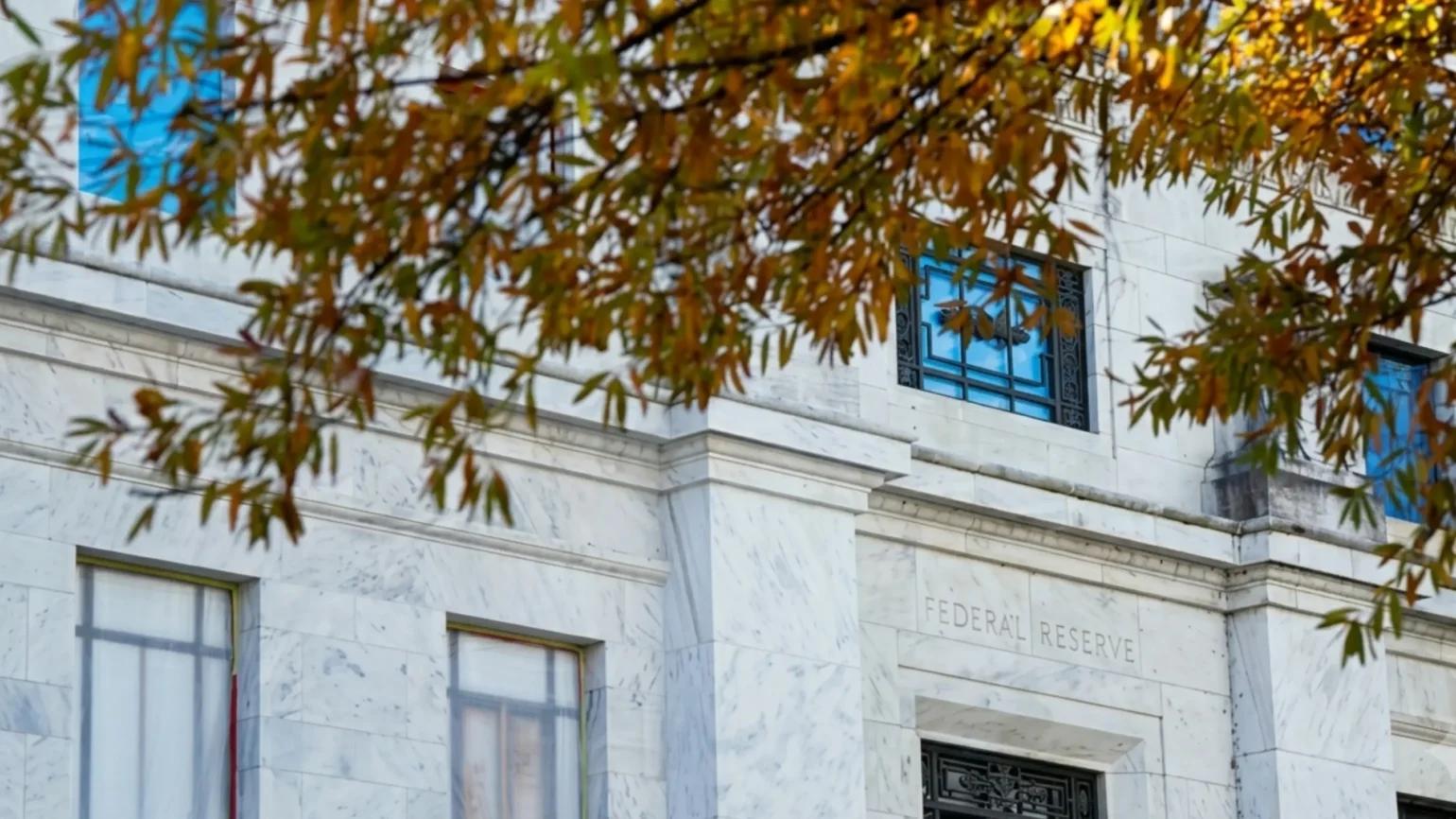

The U.S. 10-year Treasury yield has returned to levels near 4.75%, putting renewed pressure on borrowing costs as investors confront an uncomfortable combination of elevated inflation, expectations that Federal Reserve policy may remain tight, and uncertainty over the economic effects of higher energy prices.
The U.S. Treasury’s daily yield-curve data show the 10-year constant-maturity yield reached 4.75% on July 31. It subsequently eased before rising again, reaching 4.72% on August 10, the latest official Treasury closing observation available before Tuesday’s session.
That distinction matters. A Treasury yield is not a rate set directly by the Federal Reserve. It is a market price that moves as investors continually reassess inflation, future Fed policy, economic growth and the return they require for holding longer-term government debt.
Investozora’s guide to Fed rates and Treasury yields explains that relationship in more detail. The current move is being driven less by one isolated event than by several forces pointing in the same direction.
Inflation is still keeping pressure on long-term rates
Inflation remains one of the strongest reasons investors are demanding higher yields on longer-dated Treasury securities. The Bureau of Labor Statistics reported in its June Consumer Price Index release that headline consumer prices were 3.5% higher than a year earlier, even after the overall CPI fell 0.4% during June. Core CPI, which excludes food and energy, was up 2.6% over 12 months.
Those numbers do not determine the 10-year Treasury yield mechanically. But persistent inflation matters to bond investors because the fixed dollars they receive from a Treasury security become less valuable in real purchasing-power terms when prices rise faster. Investors therefore tend to demand more compensation when they believe inflation may remain elevated.
The Federal Reserve has reached a similar conclusion about the broader inflation environment. In its July Monetary Policy Report to Congress, the Fed said inflation had risen during 2026 and remained above the Federal Open Market Committee’s 2% longer-run objective, partly because of supply shocks and higher energy prices.
That inflation backdrop is one reason the market remains highly sensitive to each new inflation report. The next major test arrives with the July CPI release scheduled by BLS for August 12 at 8:30 a.m. Eastern Time.
For investors trying to understand why that report matters so much to monetary policy, Investozora has separately examined the link between inflation data and Fed decisions.
The Fed is giving bond investors little reason to expect rapid easing
The second major pressure on Treasury yields is monetary policy. At its July 28-29 meeting, the Federal Open Market Committee kept the federal funds target range at 3.50% to 3.75%.
More important for the bond market, the Fed continued to describe inflation as elevated. Three voting members, Beth Hammack, Neel Kashkari and Lorie Logan, dissented from the decision because they preferred a quarter-percentage-point rate increase. That does not mean another rate increase is guaranteed. It does show that the debate inside the Fed is no longer simply about how quickly rates can be lowered.
The Fed’s July Monetary Policy Report also documented an important shift already underway in financial markets. According to the report, the market-implied path for the federal funds rate had moved higher since the start of 2026, while nominal Treasury yields had also risen. The Fed estimated that the 10-year Treasury yield had increased roughly 35 basis points from the beginning of the year through early July.
That connection helps explain why even investors who never trade federal-funds futures should pay attention to the Fed. Changing expectations for the future policy rate can move yields across the Treasury curve well before the FOMC actually changes its target. Investozora’s broader explanation of how the Federal Reserve controls interest rates provides the institutional mechanics behind that transmission.
Energy prices have complicated the inflation outlook
The inflation problem has also become harder because of energy. The Federal Reserve specifically cited energy-related supply shocks when it described inflation as elevated in its July policy statement and Monetary Policy Report.
Energy shocks can affect Treasury yields through more than one channel. Higher fuel and transportation costs can lift near-term inflation, alter expectations about future prices and make it harder for investors to assume the Fed will soon move toward significantly easier policy.
The important distinction is that higher oil prices do not automatically cause the 10-year yield to rise. Treasury yields reflect many factors at once. But when energy prices reinforce an already elevated inflation backdrop, investors have another reason to question how quickly inflation can return toward the Fed’s target.
That uncertainty becomes especially important when the market is already debating whether the next policy move could be another rate increase rather than a cut.
Why the 10-year yield can rise even when the Fed does nothing
The Fed’s policy rate and the 10-year Treasury yield are related, but they are not the same rate. The federal funds rate primarily anchors very short-term borrowing conditions. A 10-year Treasury security, by contrast, forces investors to think about what inflation, interest rates and economic conditions could look like over an entire decade.
In simplified terms, a long-term Treasury yield reflects expectations for future short-term interest rates plus additional compensation investors require for committing money over a long period and accepting uncertainty about inflation and interest-rate movements.
That is why the 10-year yield can move sharply between Federal Reserve meetings. Bond investors do not wait for policymakers to announce the future. They continuously reprice securities as the expected future changes.
The Fed’s own July report offers a useful example. The federal funds target range had remained at 3.50% to 3.75% since the start of the year, yet Treasury yields had risen because market expectations about the future path of monetary policy had changed.
The yield curve is sending a broader message
The movement is not limited to the 10-year note. Treasury data for August 10 showed the 2-year yield at 4.25%, the 10-year at 4.72%, the 20-year at 5.25% and the 30-year at 5.25%. That upward slope between shorter and longer maturities matters.
It suggests investors are demanding substantially more compensation to lend to the federal government for decades than they require for shorter periods. That difference can reflect several overlapping forces, including inflation uncertainty, future policy expectations and the additional risk attached to holding long-duration debt.
It should not, however, be treated as proof that investors expect one specific economic outcome. A Treasury yield contains several components, and those components can change for different reasons.
Higher Treasury yields can reach mortgages and other borrowing costs
For households, the importance of a 4.7%-plus 10-year Treasury yield goes well beyond government bonds. Treasury securities serve as critical benchmarks throughout financial markets. Mortgage-backed securities and many corporate and consumer credit instruments are priced relative to Treasury yields plus additional spreads for credit, liquidity, prepayment or other risks.
That means a sustained rise in Treasury yields can make it harder for borrowing costs to fall even if the Federal Reserve leaves its own policy rate unchanged.
The relationship is especially important in housing. Mortgage rates do not simply equal the 10-year Treasury yield, but movements in longer-term Treasury rates are a major part of the financing environment behind mortgage pricing. Investozora explains those connections in its guide to how Treasury yields affect mortgages and savings.
For prospective homebuyers, that means waiting for a Federal Reserve rate cut is not enough by itself. Mortgage rates could remain elevated if longer-term Treasury yields stay high.
For savers, the effects can work differently. Higher market yields can help keep returns on some CDs, money-market instruments and savings products competitive, although banks decide their own deposit rates and do not automatically match Treasury-market movements.
What could push the 10-year yield higher from here
The next direction is not predetermined. A stronger-than-expected inflation report could cause investors to reassess how restrictive Federal Reserve policy may need to become. If markets begin expecting higher short-term rates for longer, that could place additional upward pressure on Treasury yields.
Continued energy-related inflation pressure could reinforce the same concern. But the opposite scenario also exists. A materially softer inflation report, weaker economic activity or evidence that price pressures are easing sustainably could reduce expectations for future Fed tightening and pull Treasury yields lower.
That is why the current 4.7%-plus level should be viewed as a market observation, not a forecast. The Federal Reserve has not promised a September rate increase, and the 10-year Treasury yield does not tell investors with certainty what the FOMC will decide.
What happens next
The immediate catalyst is the July Consumer Price Index report on Wednesday, August 12. That release will give markets another direct reading on whether inflation is moving closer to the Fed’s 2% objective or remaining strong enough to justify a restrictive policy stance.
After that, investors will receive the minutes of the Fed’s July meeting on August 19, followed by the next scheduled FOMC meeting on September 15-16, according to the Federal Reserve’s current monetary-policy calendar.
Those events could change both expectations for the federal funds rate and the pricing of longer-term Treasury securities. For now, the move toward 4.75% is sending a fairly clear message: investors are demanding substantial compensation to hold long-term U.S. government debt while the inflation outlook and the future path of Federal Reserve policy remain unsettled.
The question now is not simply whether the Fed will change rates. It is whether the next inflation data give the bond market enough reason to believe that high rates will eventually become less necessary.