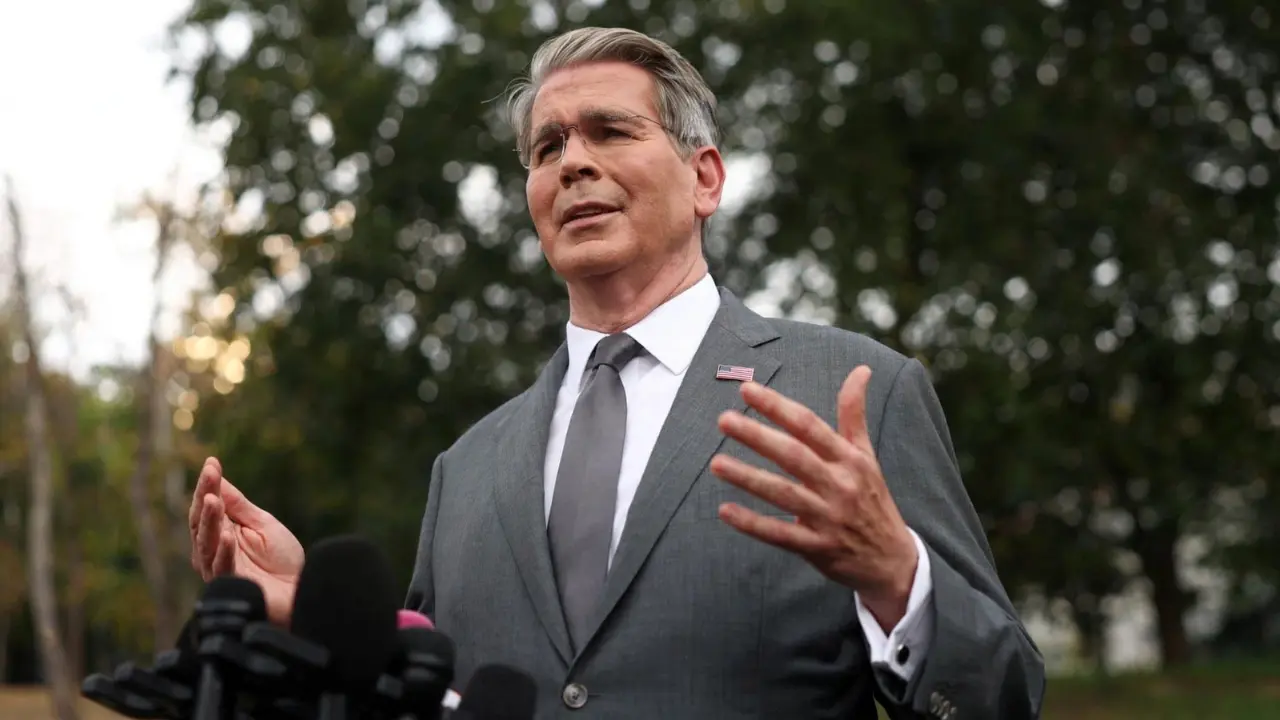

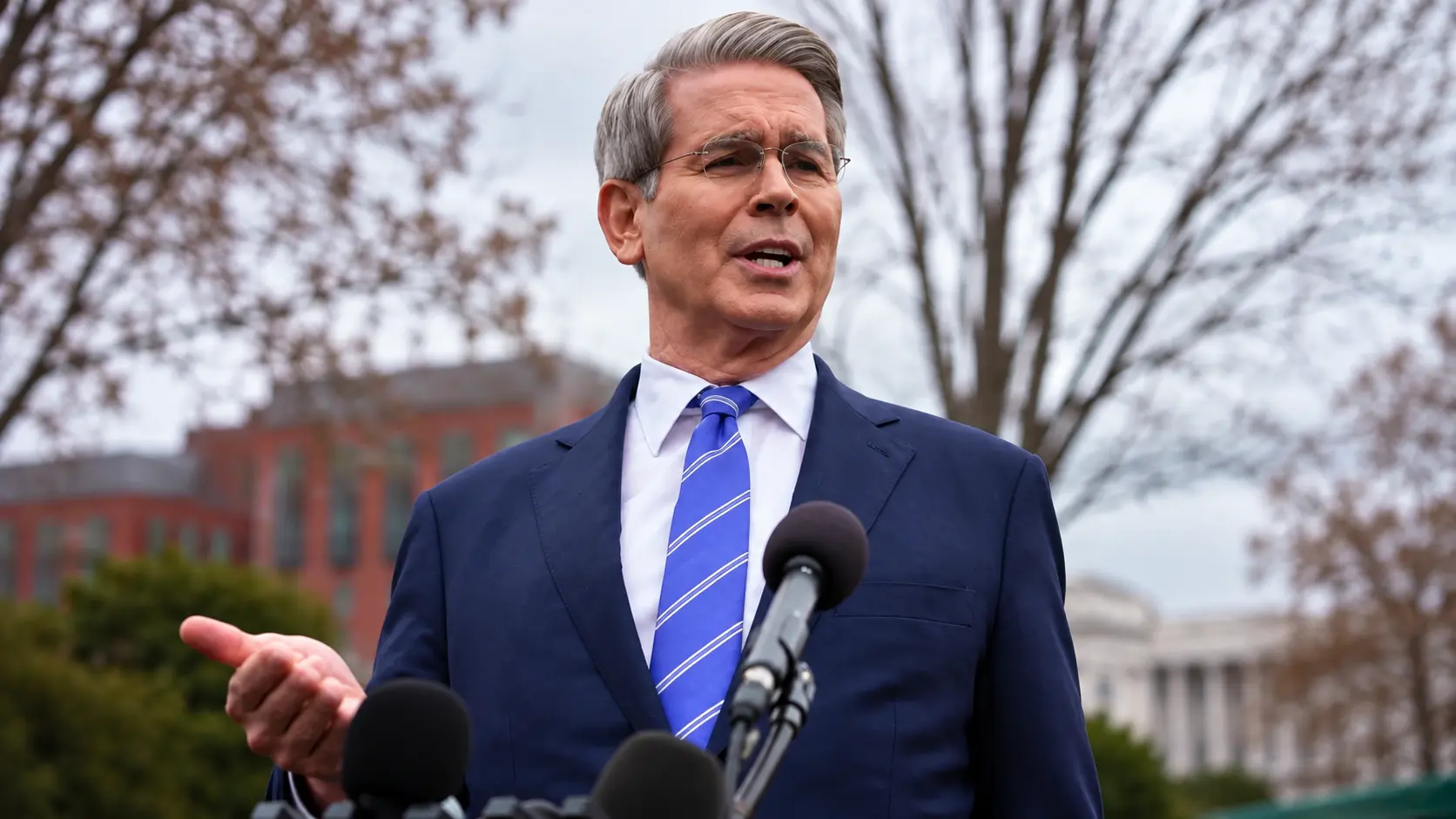
Treasury Secretary Scott Bessent is facing lawmakers Tuesday as the 10-year U.S. Treasury yield climbed above 5% to its highest level since 2007, putting the administration’s economic and debt strategy under fresh scrutiny at the same time the Federal Reserve begins a closely watched policy meeting. The 10-year yield traded as high as about 5.038% Tuesday morning, according to real-time market reporting on the Treasury move.
That is an intraday market reading, not an official Treasury closing rate. The Treasury Department’s latest published daily yield curve showed the 10-year par yield at 4.97% on Monday, September 14, up from 4.96% on September 11 and 4.79% on September 2, according to Treasury’s official September 2026 daily yield-curve data.
Using those official Treasury figures, the 10-year yield rose 18 basis points between September 2 and September 14. Tuesday morning’s 5.038% intraday high was another 6.8 basis points above Monday’s official rate. Those differences are Investozora calculations, not figures published by Treasury. The timing gives Bessent’s appearance before Congress unusual significance.
The House Financial Services Committee scheduled Bessent to testify at 10 a.m. ET Tuesday in a full committee hearing titled “The Annual Testimony of the Secretary of the Treasury on the State of the International Financial System.”
The committee’s official hearing notice names Bessent as the sole witness. The hearing was scheduled before Tuesday’s jump in yields. What changed is the market backdrop surrounding it.
When Investozora reported Monday that the 10-year yield was nearing 5%, Treasury’s most recent official rate was still below that threshold, as explained in Investozora’s September 14 report on the 10-year Treasury yield. Tuesday’s trading moved the benchmark above 5% and to a level not seen since 2007.
Treasury’s historical rate records confirm that comparable 10-year yields were last seen in 2007. By late December 2007, the official 10-year rate had already fallen to 4.04%, as shown in Treasury’s historical daily yield-curve archive. The comparison does not mean today’s economy is repeating 2007. It shows how unusual the current level of long-term borrowing costs has become.
Long-term Treasury yields matter well beyond government bonds. The 10-year yield is an important reference point across U.S. financial markets, including mortgage pricing and corporate borrowing, while higher yields also increase the return investors demand to finance federal debt.
Investozora has previously explained that the 10-year yield is not controlled directly by either Treasury or the Federal Reserve. It reflects several forces at once, including expectations for future short-term rates, inflation, economic growth, government borrowing and the additional return investors demand for holding longer-term debt, as detailed in Investozora’s analysis of why Treasury yields are staying high. That distinction matters in assessing Bessent’s role.
Treasury manages federal borrowing and the structure of government debt issuance, but the market determines the prices and yields at which Treasury securities trade after they are issued.
The Federal Reserve separately controls its short-term policy rate and can influence broader financial conditions, but it does not set the 10-year Treasury yield. Tuesday’s rise has occurred as investors weigh several pressures at the same time.
Oil prices have remained elevated, increasing concern that energy costs could keep inflation under pressure. Markets are also preparing for the Federal Reserve’s September 15–16 meeting, while investors continue to assess the amount of U.S. government borrowing that must be absorbed by the bond market. Reuters reported that Tuesday’s rise in yields coincided with higher energy prices and changing expectations around Federal Reserve policy in its latest U.S. markets assessment.
Those factors should not be treated as proof that any single development caused Tuesday’s move. Treasury yields trade continuously and can react simultaneously to inflation expectations, Fed expectations, economic data, debt supply and changes in investor risk appetite.
The latest move also follows a significant test of demand for long-term government debt. Treasury’s $22 billion 30-year auction last week cleared at a 5.308% high yield while still attracting substantial investor demand, as Investozora reported in its coverage of the September 30-year Treasury auction.
The result showed that buyers remained willing to purchase long-duration government debt, but at historically elevated yields. That is the central issue now confronting policymakers: demand for Treasury securities has not disappeared, but investors are requiring substantially higher returns than they did through much of the post-financial-crisis period.
For households, Tuesday’s move does not create an automatic change in mortgage, credit-card or savings rates. Those rates are set through different markets and institutions. But a sustained 10-year Treasury yield above 5% would keep an important part of the U.S. borrowing environment unusually restrictive.
For the federal government, higher yields can also make newly issued and refinanced debt more expensive over time. The effect is gradual because existing Treasury securities generally keep their original coupon until maturity; the government does not instantly refinance the entire debt stock at Tuesday’s market rate.
What happens next could change this story quickly. The Federal Reserve is holding its September policy meeting Tuesday and Wednesday, meaning expectations for the future path of short-term rates could change after the decision and Chair Kevin Warsh’s explanation of the outlook.
New inflation data, movements in oil prices, Treasury financing decisions and Bessent’s testimony could also shift demand for government bonds. The most immediate development to watch is what Bessent tells lawmakers about the rise in long-term borrowing costs and Treasury’s approach to the market.
As Tuesday’s hearing began, the verified development was already clear: the 10-year Treasury yield had crossed 5% in intraday trading and reached its highest level since 2007 just as the Treasury secretary appeared before the congressional committee responsible for oversight of the international financial system.
That combination turns what was already a bond-market story into an immediate test of how the administration explains America’s rising long-term borrowing costs.