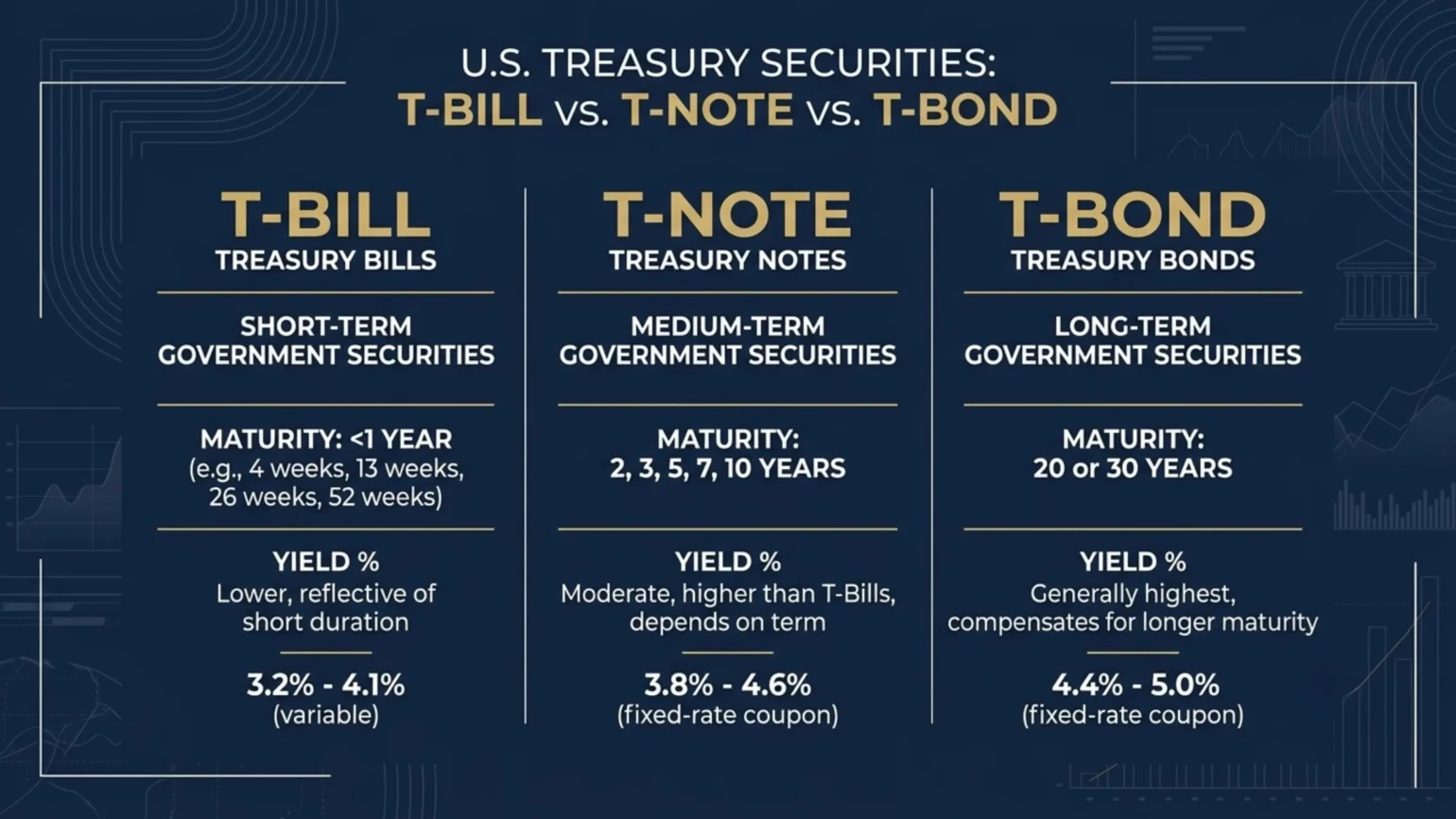

Updated: June 25, 2026 – Treasury Inflation-Protected Securities, or TIPS, are U.S. government bonds that automatically adjust their principal value in line with the Consumer Price Index. When inflation rises, the value of your TIPS investment rises with it. When inflation falls, the principal adjusts downward. The Treasury pays interest twice yearly on that adjusted principal, meaning your income also tracks inflation over time.
TIPS represent one of the most structurally sound inflation hedges available to individual investors because the underlying guarantee comes directly from the U.S. federal government. In a sustained inflation environment like the one that defined 2022 through 2025, the mechanics of TIPS principal adjustment delivered real value that ordinary Treasury bonds could not match. Understanding precisely how that adjustment mechanism works is essential before committing capital to any TIPS position.
How TIPS Principal Adjusts
Every TIPS bond carries a fixed coupon rate, but that rate applies to a principal that moves with the Consumer Price Index for All Urban Consumers, known as CPI-U. The Bureau of Labor Statistics publishes CPI-U data monthly, and the Treasury uses a three-month lagged version of that index to recalculate TIPS principal values. This lag means inflation data from March affects TIPS adjustments in June, giving investors advance visibility into the direction of their principal before adjustment actually occurs.
If you purchase $10,000 in TIPS with a 1.5% coupon and inflation runs at 4% over the following year, your adjusted principal climbs to approximately $10,400. Your next semiannual coupon payment then applies the 1.5% coupon rate to $10,400 rather than to the original $10,000. The compounding effect of this architecture makes TIPS substantially more powerful than nominal bonds during extended inflationary cycles. The Treasury Direct platform allows individual investors to purchase TIPS directly without broker fees.
The Treasury auctions TIPS in five-year, ten-year, and thirty-year maturities. New TIPS enter the market through the same competitive auction system used for all federal debt instruments. Secondary market purchases are also available through brokers and exchange-traded funds that hold TIPS portfolios. Understanding the Treasury auction process is particularly valuable for investors who want to participate at issuance rather than paying secondary market premiums or discounts.
Real Yield and the Inflation Breakeven Rate
Real yield is the single most important number when evaluating a TIPS position. The real yield on TIPS represents the return above inflation that an investor will receive. A TIPS with a real yield of 2.1% pays 2.1% above whatever CPI-U reports over the life of the bond. This contrasts with nominal Treasury yields, which embed an expected inflation premium but do not adjust if actual inflation deviates from market expectations.
The inflation breakeven rate describes the gap between nominal Treasury yields and TIPS real yields at the same maturity. As of June 2026, the 10-year breakeven rate sits near 2.35%, according to Federal Reserve published data. This means the bond market is pricing roughly 2.35% average annual inflation over the next decade. An investor who believes actual inflation will exceed 2.35% annually will find TIPS the more attractive instrument. An investor who believes inflation will stay below that threshold would favor nominal Treasuries on pure yield grounds.
The Federal Reserve’s June 2026 rate decision under Chair Kevin Warsh has recalibrated TIPS pricing across the yield curve. Because TIPS real yields move inversely to demand, institutional buying of TIPS in anticipation of persistent inflation drives real yields lower even as nominal yields remain elevated. Monitoring this relationship requires understanding how Treasury yields affect savings and mortgages across the broader financial system.
TIPS vs Series I Bonds
Many investors conflate TIPS with Series I Savings Bonds. Both instruments adjust for inflation, but their structural mechanics differ significantly. Series I bonds use a composite rate that blends a fixed base rate with a CPI component reset every six months. I bonds are limited to a $10,000 annual purchase per Social Security number through TreasuryDirect. They cannot be held in brokerage accounts or tax-advantaged retirement plans.
TIPS carry no purchase limit for secondary market or ETF positions. Institutional investors, pension funds, and retail investors can hold TIPS inside IRAs, 401(k) plans, and taxable brokerage accounts. TIPS ETFs such as broad inflation-protected bond funds allow diversification across maturities without requiring direct bond management. The current I bond composite rate and 2026 yield comparison provides a side-by-side reference for investors deciding between the two instruments.
One important tax consideration applies to both instruments. The annual principal adjustment on TIPS is taxable as ordinary income in the year it accrues, even though the investor does not receive that adjustment as cash until maturity or sale. This phantom income creates a tax drag in taxable accounts. Holding TIPS inside a tax-deferred account such as a traditional IRA eliminates this issue entirely.
The 2026 Inflation Environment
The current macroeconomic backdrop materially affects the risk-reward profile of TIPS. Inflation pressures in 2026 reflect a complex combination of federal fiscal expansion under the One Big Beautiful Budget Act, lingering supply chain adjustments, and a Federal Reserve navigating the transition from Powell-era accommodation to Warsh-era recalibration. The broader mechanics of U.S. money movement illuminate how federal fiscal disbursements feed into the inflation dynamics that ultimately drive TIPS principal adjustments.
The BLS publishes CPI-U data monthly, and the BLS inflation measurement methodology explains precisely how the basket of goods used in CPI calculation is constructed and updated. TIPS investors should monitor CPI releases with the same attention that stock investors give to earnings reports, because each CPI print directly determines the next principal adjustment cycle for all outstanding TIPS positions.
Five-year TIPS currently carry a real yield of approximately 2.1%, a historically attractive level reflecting the Federal Reserve’s sustained restrictive posture. Ten-year TIPS real yields near 2.2% offer a modest term premium above the five-year. Thirty-year TIPS real yields near 2.35% price in the full uncertainty of multi-decade inflation trajectories. The yield curve dynamics for 2026 provide additional context for positioning across maturities.
What is the minimum purchase for TIPS?
The minimum purchase for TIPS through TreasuryDirect is $100. Treasury auctions sell TIPS in increments of $100, and secondary market purchases through brokers typically have no minimum beyond the broker’s standard account minimums. TIPS ETFs are accessible at whatever share price the fund trades on exchange.
Are TIPS safe if deflation occurs?
TIPS include a deflation floor at the original principal amount. If cumulative deflation reduces your adjusted principal below the original face value, the Treasury guarantees repayment of the original principal at maturity. This means TIPS carry no downside risk to principal from deflation beyond what a nominal Treasury of identical maturity would carry. The deflation floor makes TIPS asymmetrically attractive in environments where both inflation and deflation scenarios remain plausible.
How do TIPS fit inside a retirement account?
TIPS inside a traditional IRA or 401(k) eliminate the phantom income tax problem entirely. The annual principal adjustment accrues inside the account without triggering a current tax event. At distribution, ordinary income rates apply. Inside a Roth IRA, the adjustment accrues tax-free, making long-duration TIPS particularly efficient in that account type for investors with long horizons.
What happens to TIPS if the Fed raises rates further?
Rising nominal interest rates reduce the market price of all bonds, including TIPS, in the secondary market. However, TIPS real yields also adjust upward in rising rate environments, meaning newly issued TIPS become more attractive while existing TIPS trade at a discount. Investors who hold TIPS to maturity are protected from this mark-to-market volatility because the Treasury pays full adjusted principal at maturity regardless of secondary market prices during the holding period.
Technical Edge Cases and Escalation Pathway
Investors who purchase TIPS through TreasuryDirect can designate payable-on-death beneficiaries directly through their account settings. Estate settlement for TreasuryDirect accounts follows a specific claim process outlined at TreasuryDirect account management. Secondary market TIPS held through brokers transfer according to standard account beneficiary designations.
For TIPS held in taxable accounts, Form 1099-INT issued by TreasuryDirect reports the inflation adjustment as ordinary income annually. Brokerage-held TIPS receive Form 1099-OID reflecting original issue discount adjustments. The Treasury’s debt security overview provides authoritative documentation on how Treasury reports TIPS adjustments to taxpayers.
Investors seeking guidance on TIPS within qualified retirement plans should consult their plan administrator. The IRS Publication 1212 covers original issue discount reporting rules applicable to TIPS. Complaints about TreasuryDirect account access or transaction disputes can be directed to the Bureau of the Fiscal Service at 1-844-284-2676.
What You Should Do Now
- Determine your current inflation exposure by reviewing your existing bond holdings and calculating the percentage allocated to nominal bonds versus inflation-adjusted securities.
- Access TreasuryDirect to open an individual account and review current TIPS auction schedules and real-yield rates before the next issuance.
- Consult IRS Publication 1212 if you hold TIPS in a taxable account to understand how annual principal adjustments are reported for tax purposes.
- Compare the current TIPS breakeven inflation rate against your personal inflation expectations using the Federal Reserve’s published H.15 data release.
- If you hold TIPS inside a retirement account, confirm with your plan administrator that the account custodian reports TIPS adjustments correctly on Form 1099.