

Institutional cash reserves have pushed money market funds to a historic asset record this year. Money market funds now attract retail savers seeking safety without sacrificing yield, following the same pattern institutions set months earlier.
Where Institutional Cash Is Flowing
The shift reflects a broader move toward short-term safety across the financial system. Government money market funds concentrate holdings in Treasury bills, agency debt, and repurchase agreements. That structure keeps each fund’s net asset value anchored near a stable $1.00 per share.
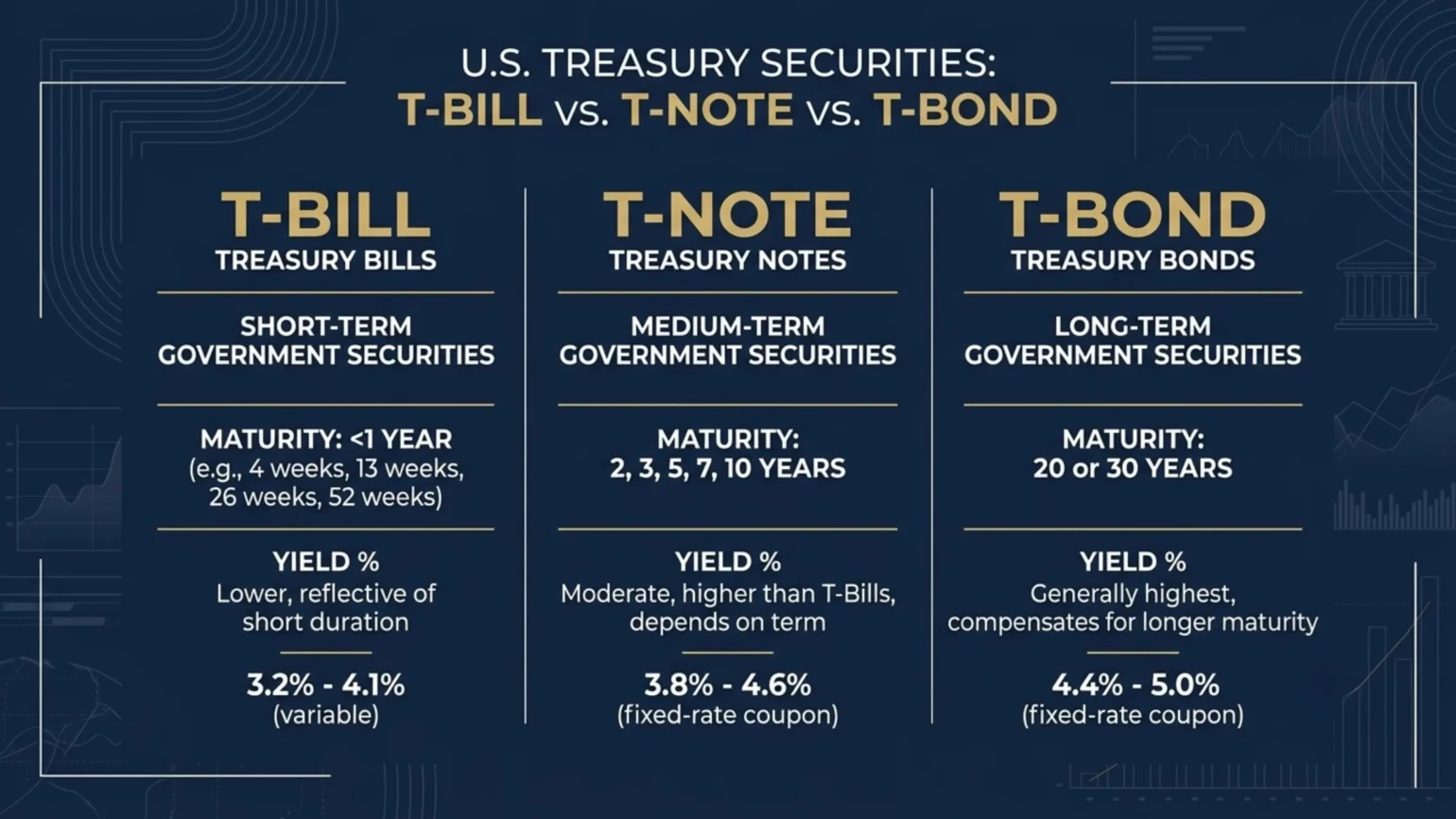
Record cash inflows into these vehicles reflect genuine caution among institutional treasurers and everyday savers alike. The same conditions driving corporate cash into these funds also shape how treasury bill mechanics function underneath the surface. Every dollar sitting in a government money market fund is effectively financing short-term federal borrowing.
1. Vanguard Federal Money Market Fund
VMFXX functions as Vanguard’s primary sweep vehicle for cash awaiting reinvestment. It invests at least 99.5 percent of assets in cash, government securities, and fully collateralized repo agreements. That structure makes it one of the most conservative broad government funds available to retail investors.
Full holdings and expense disclosures for VMFXX are verified against official SEC guidance on registered investment companies. Investors comparing this fund directly against a government debt instruments purchase often find nearly identical underlying exposure with a slightly different fee structure.
2. Fidelity Government Money Market Fund
SPAXX holds a similarly conservative portfolio focused on government securities and repurchase agreements. It maintains exceptionally high credit quality suited for immediate capital preservation, which explains why it functions as Fidelity’s default cash sweep for most brokerage accounts.
Savers weighing SPAXX against a direct treasury bill mechanics purchase should note that the fund trades a small expense ratio for same-day liquidity and automatic reinvestment, something an individual bill purchase cannot offer.
3. American Century Capital Preservation Fund
CPFXX, the American Century Capital Preservation Fund, appears frequently inside customized institutional cash sweep arrangements. It focuses its allocations on short-term U.S. Treasury debt obligations, giving it a narrower and more conservative mandate than a general government fund.
That narrow focus tends to appeal to institutional treasurers managing operating cash rather than retail savers, though the underlying safety profile remains comparable to the larger retail funds on this list. Reviewing the treasury cash balance alongside a fund like this gives added context for how much short-term federal paper is actually available for these portfolios to hold.
4. Schwab Value Advantage Money Fund
Schwab’s Value Advantage money market funds round out the group, engineered specifically as a purchased yield vehicle to maximize returns for retail brokerage accounts. Savers willing to skip the fund wrapper entirely can instead pursue direct treasury purchases through the federal government’s own retail platform.
That path removes any fund expense ratio but requires managing individual bill maturities manually. Some investors split cash between a fund like this and a laddered bill position to balance convenience against yield.
5. Vanguard Treasury Money Market Fund
VUSXX rounds out the list as a narrower, Treasury-only alternative to VMFXX. Rather than blending government agency debt and repo agreements, VUSXX concentrates almost entirely on direct U.S. Treasury securities and Treasury-backed repurchase agreements.
That narrower mandate makes VUSXX marginally more conservative than a standard government fund, and it typically carries a lower expense ratio as a result. Savers focused specifically on the state tax exemption advantage discussed below often prefer this structure, since a higher concentration of direct Treasury holdings usually means a larger share of the fund’s dividend qualifies for the exemption.
The Breaking Buck Risk
Money market funds carry one structural risk that many savers overlook entirely. These funds are not insured by the FDIC the way a standard bank savings account is protected. A fund can theoretically break the buck if its net asset value drops below $1.00 per share.
That scenario requires extreme liquidity stress or credit defaults within the underlying short-term debt portfolio. Reviewing deposit insurance coverage rules helps savers understand exactly where the protection line sits between a money market fund and a bank account.
Government money market funds carry lower default risk than prime funds holding corporate debt, given their concentration in Treasury and agency instruments. Reviewing the treasury cash balance alongside broader liquidity conditions gives savers added context for how much cash the federal government itself is managing at any given moment. A recent rate decision from the Federal Reserve also shapes the yield these funds pay out from month to month.
The State Tax Exemption Hack
Most comparison sites rank funds purely on their raw seven-day SEC yield. That approach misses a significant advantage built into funds holding direct Treasury obligations. Dividend income tied to direct Treasury holdings is exempt from state and local income tax nationwide.
A fund like VMFXX or VUSXX, both of which hold Treasury obligations at scale, passes much of that exemption through to shareholders. In high-tax states, a slightly lower raw yield can still produce a higher after-tax return once the state exemption is factored in. Savers in states without income tax will not see this advantage, since there is no state tax to exempt in the first place.
Comparing savings yield trends against a taxable-equivalent money market yield gives a clearer picture than looking at the raw published rate alone. Reviewing the yield curve shape also helps explain why short-term fund yields move independently of longer-term rates. A benchmark yield explained comparison shows why money market funds and longer bonds often move in opposite directions during the same period.
Savers building a longer ladder can check the bill maturity guide alongside the auction calendar schedule to time purchases around upcoming Treasury auctions. All of these cash instruments ultimately clear through the same broader liquidity system that moves federal payments across the country every business day. Savers who want to verify these mechanics directly can consult the SEC investor protection guide before selecting a fund provider.
Choosing among these five government money market funds comes down to a narrow set of real differences once safety is assumed. Expense ratio, state tax exposure, and sweep convenience matter more than small daily changes in the published yield. Savers who understand those three factors typically end up with more cash at the end of the year than those chasing the highest published number alone.