The Federal Open Market Committee holds its next meeting July 28 and 29, with a decision due at 2 p.m. Eastern on the 29th. The June meeting ended in a 12 to 0 vote to hold the federal funds rate at 3.50 percent to 3.75 percent, and minutes released July 8 showed the committee split evenly on whether a 2026 hike is warranted.
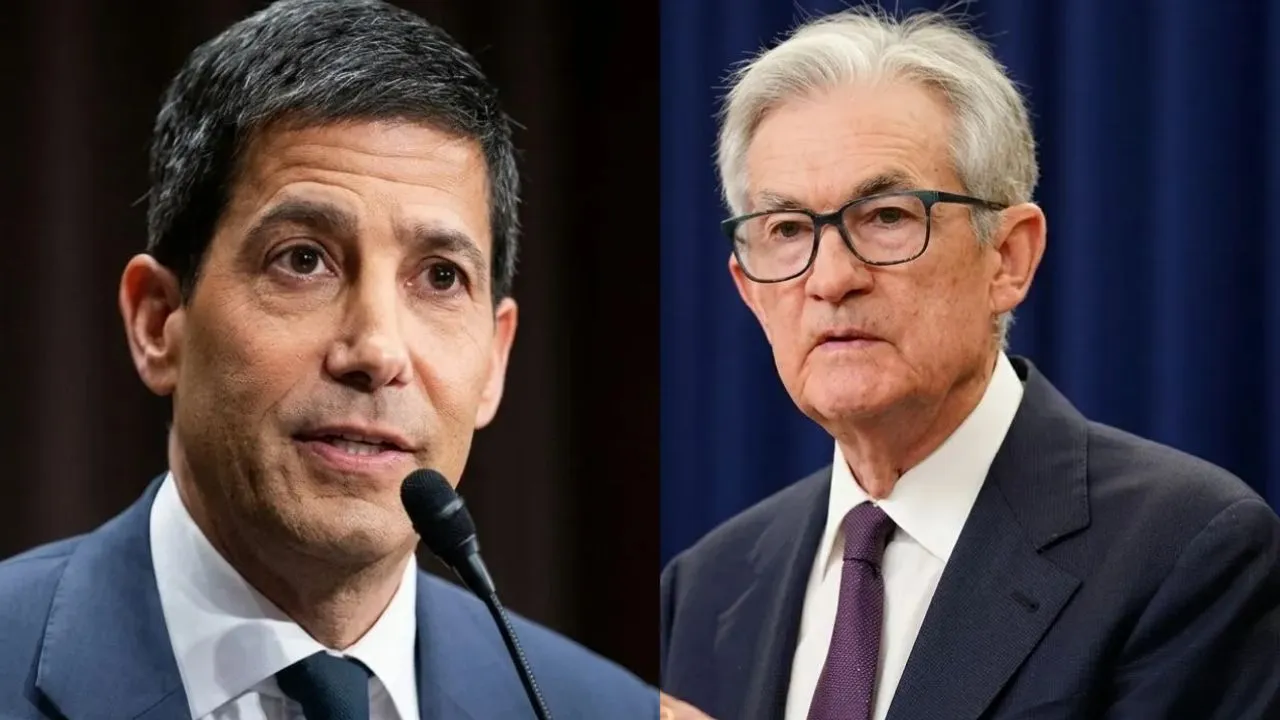
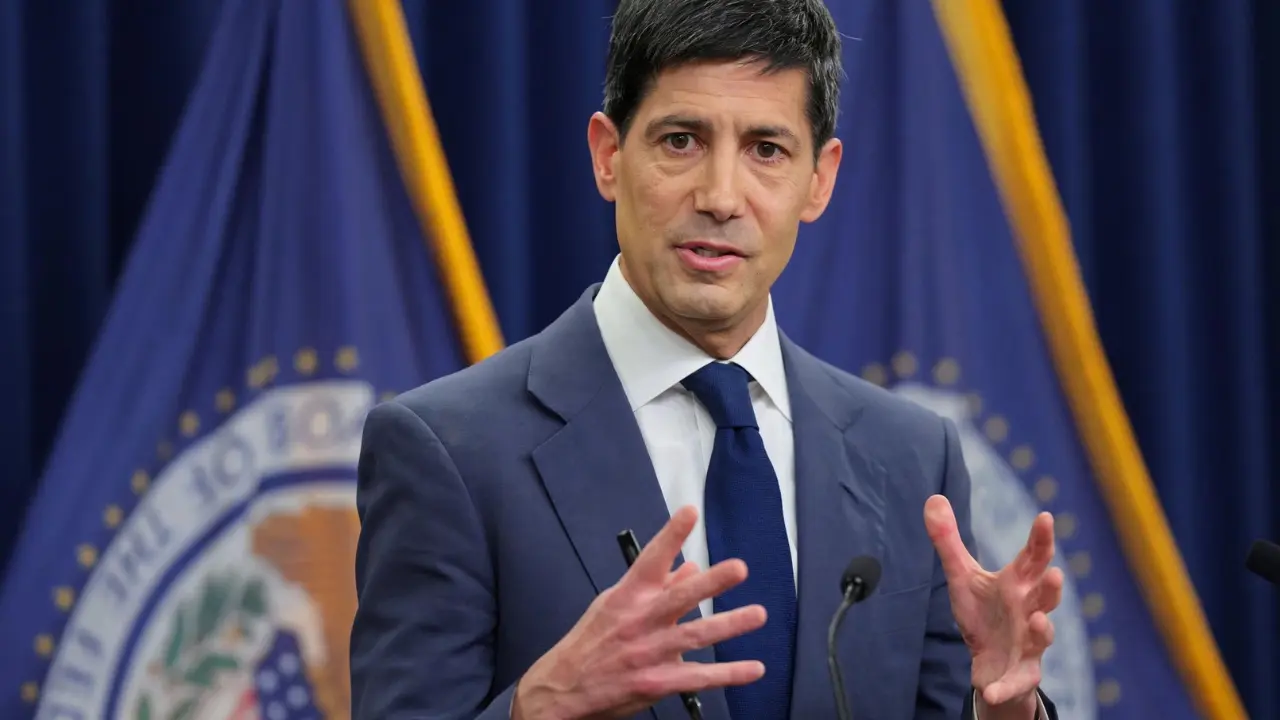
Kevin Warsh’s rate decision on July 29 is shaping up as the first real test of whether the Federal Reserve intends to undo the cuts it made through 2025.
When Warsh was sworn in as Fed chair on May 22, 2026, he inherited a benchmark rate that had already fallen three-quarters of a percentage point over the prior year, landing at 3.50 to 3.75 percent by December 11, 2025. The question in front of him now is not whether to cut further, but whether the committee is prepared to move the other direction entirely.
What The June Meeting Showed
At his first meeting as chair on June 16 and 17, Warsh’s committee voted unanimously to hold rates steady for a fourth consecutive time. What stood out was not the hold itself, which markets expected, but the projections released alongside it.
The fed dot plot showed nine of nineteen policymakers penciling in at least one rate hike before the end of 2026, a sharp reversal from March, when the median projection still called for cuts. Eight officials favored no change, and only one still saw room for a reduction.
Warsh himself declined to submit a personal projection, citing his opposition to detailed forward guidance. At his press conference he described the Fed’s new policy statement, trimmed to 130 words, as intentionally curt. He told reporters the recent past need not be prologue, a line widely read as a signal that the easing cycle of 2025 should not be assumed to continue.
Why Inflation Changed The Math
The Federal Reserve’s June statement noted that inflation remains elevated relative to the Committee’s 2 percent goal, pointing in part to supply shocks tied to the conflict in the Middle East. The committee’s own updated forecast raised its 2026 core inflation projection to 3.3 percent, up from 2.7 percent as recently as March, while trimming its growth outlook to 2.2 percent for the year.
Consumer prices told a similar story heading into the meeting. Annual inflation reached a three-year high near 4.2 percent in May, driven largely by an energy spike connected to the Iran conflict, though a subsequent ceasefire has since allowed gas prices to ease back.
That combination, a labor market that has kept pace with the workforce and inflation still running well above target, is what pushed nine committee members toward a hike scenario for the first time in this cycle.
The Reader Impact Right Now
For anyone carrying a variable-rate loan, a home equity line, or credit card debt, the immediate takeaway is that borrowing costs are unlikely to fall further in the near term, and a hike would push them higher still.
The fed rate has already pushed 30-year mortgage rates back toward 7 percent, complicating both new purchases and refinancing decisions for households that had been waiting for relief. Two-year Treasury yields jumped as much as 16 basis points in the hours after the June decision, a move that tends to ripple into everything from auto loans to adjustable-rate mortgages.
Savers, on the other hand, are in a different position. Money market funds and high-yield savings accounts have continued paying competitive rates precisely because the Fed has not resumed cutting, and a hike would likely push those yields higher still, at least temporarily.
A Split Committee, A Weak Jobs Report
The picture complicated further after Warsh’s first meeting. The June jobs report, released by the Bureau of Labor Statistics in early July, showed just 57,000 new payrolls, the weakest reading in four months, with April and May figures revised down by a combined 74,000.
That miss caused markets tracked by the fomc minutes release to quickly trim the odds of a near-term hike, since a cooling labor market is traditionally a reason for the Fed to hold rather than tighten.
The minutes themselves, released July 8, revealed a committee split nine to nine on whether a hike is appropriate at all in 2026, underscoring just how contested Warsh’s first real policy choice has become.
Unlike his predecessor, Warsh has held far fewer public appearances between meetings, a pattern Bank of America strategists noted was consistent with his stated preference to speak less and let the data lead.
What This Means For You
None of this changes what has already happened to your bills and your savings, but it does shape what comes next. If the July 29 decision holds rates steady again, as most economists still expect given the weak jobs data, borrowing costs should stay roughly where they are through the summer.
If the committee instead leans toward the hike several of its members have signaled, expect mortgage, credit card, and auto loan rates to tick upward within days, while savings account and CD yields likely follow in the same direction.
Readers managing debt payments right now may want to prioritize paying down variable-rate balances before any hike takes effect, while those with cash sitting in low-yield accounts can watch for savings rate increases at their own bank following the decision. Investozora will publish a full breakdown of the July 29 outcome the same day it’s announced, along with what it means for the savings account rate at major banks.
Two developments outside the Fed’s control are also worth watching. The Strait of Hormuz ceasefire, if it holds, should keep easing energy-driven inflation pressure, which would argue against a hike. A weaker July jobs report, on the other hand, would give the doves on the committee more room to argue for another hold.
For a deeper look at how a rate move would ripple into your own bank deposit timing and payment schedules, Investozora’s guide to the us money movement system breaks down how Fed policy connects to the mechanics of how money actually reaches your account.
Readers tracking how this decision interacts with retirement income should also see our companion piece on social security tax rules, since Treasury yield movements tied to Fed policy directly affect the COLA calculations discussed there.
Will the Fed definitely raise rates in July?
No. As of publication, the committee remains divided, and the weak June jobs report has reduced market-implied odds of a July hike. A September move is seen by some analysts as more likely if a hike happens at all, since the July meeting includes no updated economic projections to support such a shift.
What You Should Do Now
If you carry variable-rate debt, consider whether paying it down before July 29 makes sense for your budget, since a hike would raise your payments almost immediately. If you’re shopping for a CD or high-yield savings account, it may be worth waiting a few weeks to see whether rates move higher after the decision.
Either way, the safest approach is to check your own bank’s current rate sheet rather than assume a hike or hold based on national headlines alone, and to consult the Federal Reserve’s own meeting calendars for the exact time of the July 29 announcement.