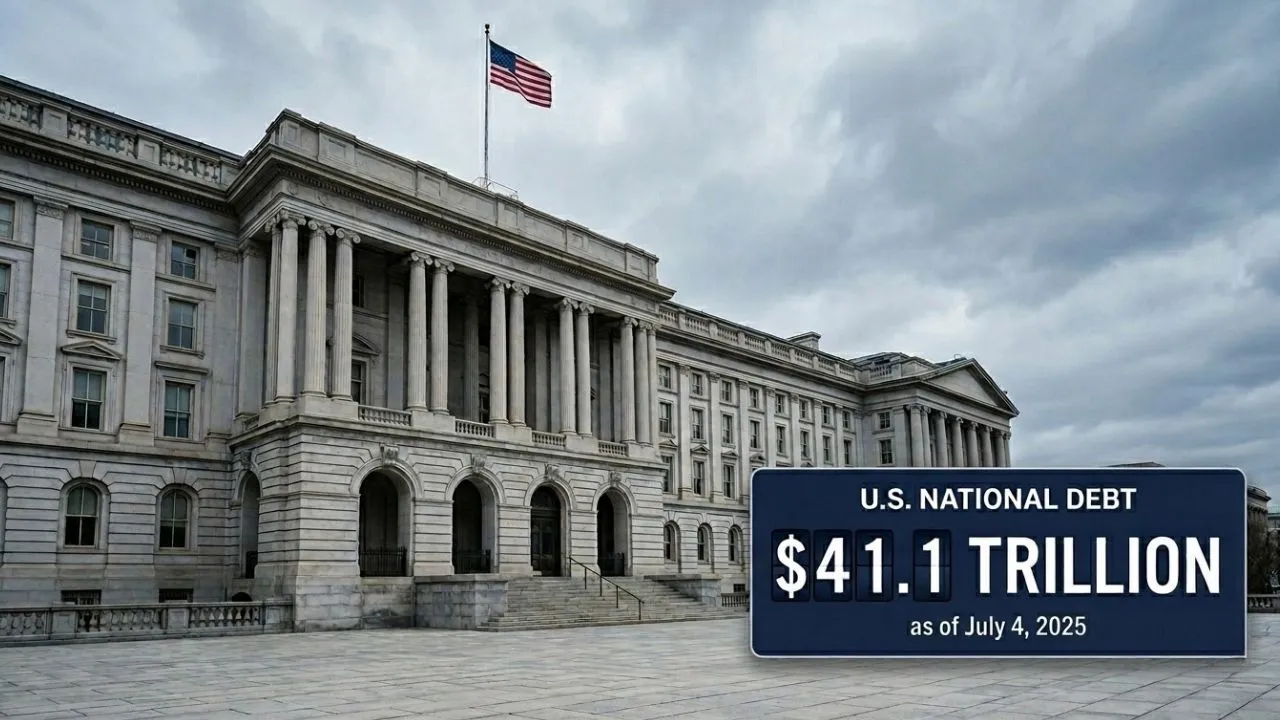


AAA’s national average for regular gasoline stands at $3.99 a gallon, up from $3.79 on July 7, following the reinstatement of a U.S. naval blockade near the Strait of Hormuz. The Treasury Department has not yet acted on a proposed federal gas tax suspension.
The national average for a gallon of regular gasoline has climbed back toward $4 after a brief summer dip, and the reason sits roughly 7,000 miles away, in a shipping channel off the coast of Iran.
The Strait of Hormuz carries close to a fifth of the world’s crude oil, and it has become the single biggest swing factor in what American drivers pay at the pump this year.
A mid-June ceasefire briefly reopened the strait and pushed prices down to $3.79 a gallon on July 7. That truce broke down in mid-July, when U.S. forces struck Iranian targets and reimposed a blockade near the strait, and the pump price responded within days.
Readers following our broader coverage of the money movement system will recognize this as one more example of how a single supply shock ripples through household budgets, federal accounts, and monetary policy at the same time.
What changed this week
The reversal traces to a specific sequence of events rather than a vague sense of regional tension. A memorandum of understanding signed June 18 between the United States and Iran had reopened the strait to shipping traffic, and the Energy Information Administration responded by cutting its full-year Brent crude forecast.
That optimism proved short-lived. In mid-July, U.S. forces carried out additional strikes on Iranian missile, drone, and coastal defense facilities, and Washington reinstated its naval blockade of Iranian ports, along with a new transit toll on shipping traffic passing through the channel.
Brent crude jumped roughly 9% in a single session, touching the low $80s per barrel, while West Texas Intermediate settled near $79.60. A full breakdown of how these disruptions travel through global banking and fuel markets appears in our explainer on Fedwire liquidity timing, since crude-price shocks and dollar liquidity moves are more connected than most readers assume.
The practical effect for a household budget is straightforward even if the diplomacy behind it is not. Wholesale crude costs feed into refinery costs, and refinery costs feed into the price at the pump, typically with a lag of one to three weeks.
That lag is why the pump price is only now catching up to a blockade that resumed roughly a week ago, and why further increases remain plausible if the standoff continues.
Why the Strait matters
To understand why one shipping lane can move gas prices nationwide, it helps to see the physical scale involved. Roughly a fifth of global crude supply, along with a significant share of liquefied natural gas, passes through the Strait of Hormuz at its narrowest navigable point.
When that flow is disrupted, the effect is not confined to the Gulf region, it ripples through global benchmark prices, which is why a blockade thousands of miles away still shows up on a Texas gas station sign within days.
For readers who want the mechanics of how oil-driven inflation eventually touches federal benefit calculations, our piece on Hormuz closure inflation walks through that connection in detail.
The scale of this year’s disruption has been unusual by historical standards. Since the conflict began February 28, the strait has effectively closed to normal traffic on multiple occasions, and the Strategic Petroleum Reserve fell to roughly 319.5 million barrels as of the week ending July 3, according to the Energy Information Administration’s weekly petroleum report.
That is the lowest level since the early 1980s, a fact worth understanding on its own terms rather than as a prediction. A shrinking reserve limits the cushion available if the situation worsens, though it does not by itself guarantee a spike.
It is worth being precise about what is confirmed and what is not. The EIA’s July Short-Term Energy Outlook, published before this month’s ceasefire breakdown, projected retail gasoline closer to $3.60 a gallon for the second half of 2026, assuming the June 18 agreement held.
That assumption no longer holds given this week’s escalation, and the agency has not yet published a revised outlook reflecting it. Readers should treat any specific price prediction for August with real caution until EIA issues updated figures, which typically follows in its next monthly release.
The Treasury and tax angle
The renewed price pressure has revived a fight in Washington over the federal gas tax, and this is where the Treasury Department enters the story directly.
The federal excise tax on gasoline is 18.4 cents per gallon, unchanged for more than three decades, and it is the primary funding source for the federal Highway Trust Fund. In early June, Treasury Secretary Scott Bessent told the House Ways and Means Committee that the administration favored suspending that tax, confirming during Ways and Means testimony that the White House had formally requested such a move from Congress.
Only Congress can authorize a suspension, and despite several competing bills, none has been enacted as of this writing. Our explainer on the gas tax suspension proposal walks through the competing bills in more detail for readers who want the legislative history.
The mechanics behind the stall matter for understanding what happens next. The nonpartisan Congressional Research Service, in a CRS gas tax report, noted that suspending the federal gas tax would reduce Highway Trust Fund revenue substantially, with the Bipartisan Policy Center estimating a roughly $17 billion loss for a suspension running from May through September, before offsetting income-tax effects.
Several pending bills would require the Treasury’s general fund to backfill that lost revenue, adding to the federal deficit rather than simply redirecting existing funds.
That tradeoff, not a lack of political appetite, is the practical obstacle standing between the current proposal and an actual suspension. Readers curious about how Treasury manages competing demands on federal cash more broadly can see our explainer on the Treasury general account, the government’s main operating balance.
Secretary Bessent’s testimony also offered useful framing for readers trying to connect today’s gas prices to broader inflation figures. Asked directly whether gasoline factors into headline inflation, Bessent confirmed that it does, characterizing energy and food prices as the fastest-moving components of the inflation basket, distinct from the slower-moving core measures the Federal Reserve tends to emphasize.
That distinction matters the next time a monthly inflation report moves markets on the strength of an energy-driven swing, a dynamic we cover in more depth in our companion piece on the current Fed rate outlook.
What history suggests
Comparing today’s price to earlier points in 2026 helps put the $3.99 figure in context rather than treating it as an isolated data point. The national average began the year near $2.81 in early January, before the conflict began.
It surged to $4.55 by May 21, the year’s peak, as the initial closure of the strait took full effect. It then eased through June and early July as the ceasefire held, bottoming near $3.79 on July 7, before this month’s reversal.
The country has already lived through one full cycle of blockade, spike, diplomatic resolution, and partial relief this year. Whether the current escalation follows that same pattern toward resolution, or proves more durable, is not something any single source can responsibly predict, and this article does not attempt to.
What you should do now
For a household budget, the practical response to this volatility is less about predicting the next headline and more about building in a buffer. If a commute or trip is sensitive to fuel costs, filling up sooner rather than later reflects the current upward trend, and watching the EIA’s weekly petroleum status report, released every Wednesday, offers an early signal on crude inventories and refinery output.
Readers who want the most current number can check the AAA national average directly, since it updates daily from real transactions rather than futures speculation. For the federal gas tax proposal, the outcome depends on congressional action that has not occurred, so budgeting around an assumed tax cut would be premature.
The most reliable single indicator of where prices head over the next two to three weeks remains the price of Brent crude itself, since that cost flows through to the pump with a predictable, if not instantaneous, lag. For a plain-English breakdown of how federal payment timing works during periods of market stress, see our explainer on settlement window timing.
Methodology: This article combines publicly available data from the U.S. Energy Information Administration’s Short-Term Energy Outlook and Weekly Petroleum Status Report, AAA’s Daily Fuel Gauge Report, Congressional Research Service report R48948, and on-the-record congressional testimony from Treasury Secretary Scott Bessent. Fuel prices, crude benchmarks, and reserve figures were independently reviewed from those primary sources.