The Federal Reserve’s reverse repo facility, formally the Overnight Reverse Repurchase Agreement facility or ON RRP, lets eligible institutions like money market funds and banks lend cash to the Fed overnight in exchange for Treasury securities as collateral, earning a set interest rate in return. It functions as a floor under short-term interest rates and as a tool for managing the amount of cash sitting in the financial system.
The facility moved from a niche technical tool to front-page financial news during 2021 and 2022, when its balance surged past $2 trillion. By mid-2026, usage had fallen to a small fraction of that peak, a shift that says as much about the state of financial system liquidity as the facility’s original spike did.
This guide explains how the reverse repo facility works, why the Fed built it, what its rise and fall in usage has actually meant, and how it fits into the Fed’s broader toolkit for managing interest rates. For the bigger picture of how these Fed operations connect to the rest of the federal financial system, see our guide on how U.S. money moves.
What the reverse repo facility actually does
In a reverse repurchase agreement, the Federal Reserve sells a Treasury security to a counterparty with an agreement to buy it back the next business day at a slightly higher price.
The difference between the sale and repurchase price functions as interest paid to the counterparty. From the counterparty’s perspective, this is effectively a safe, overnight investment: cash goes to the Fed, Treasury collateral comes back, and the transaction unwinds the next day with interest earned at the ON RRP rate.
Eligible counterparties include money market funds, government-sponsored enterprises, primary dealers, and select banks. According to the Federal Reserve Bank of New York, money market funds have historically represented the overwhelming majority of the facility’s daily volume, since these funds need a reliable, ultra-safe place to park cash that yields a competitive short-term rate.
Why the Fed created this tool
The reverse repo facility was designed to solve a specific problem in the Fed’s framework for implementing monetary policy. The Fed sets a target range for the federal funds rate, the rate banks charge each other for overnight loans, and it uses several tools to keep the actual market rate within that target range.
Interest on reserve balances, paid to banks that hold reserves at the Fed, is one such tool, but banks are not the only major players in short-term funding markets. Money market funds and other non-bank institutions do not hold reserve accounts at the Fed and therefore cannot earn interest on reserve balances directly.
The ON RRP facility extends a similar floor to these non-bank participants. By offering a guaranteed, safe overnight rate, the facility discourages money market funds from lending cash into private markets at rates below what the Fed wants to prevail.
This helps keep the effective federal funds rate anchored within the FOMC’s target range even when a large share of short-term cash sits outside the traditional banking system. Understanding this mechanism also helps explain how the broader how the federal reserve controls interest rates framework functions in an environment of abundant bank reserves.
The 2021–2023 surge and what it revealed
Daily usage of the ON RRP facility rose from less than $1 billion in early 2021 to nearly $1 trillion by mid-2021, and eventually surpassed $2 trillion at points in 2022 and 2023.
This surge coincided with the Fed’s pandemic-era asset purchases, which pumped enormous amounts of cash into the financial system, alongside a temporary scarcity of alternative safe short-term investments as the Treasury drew down its cash balance following stimulus spending.
Money market funds, holding record levels of assets under management, needed somewhere safe to invest that cash, and the Fed’s facility offered the most attractive risk-free option available.
The Fed also expanded the facility’s eligibility and raised its counterparty limits during this period, first broadening access to smaller funds and later lifting the per-counterparty cap, which further encouraged usage.
At the time, then-Chair Jerome Powell stated publicly that the Fed was not concerned about the facility’s size, characterizing the buildup as a reflection of short-term funding market dynamics rather than a signal of financial instability.
Why usage has collapsed since then
By mid-2026, ON RRP balances had fallen to roughly $100 million on many days, a decline of more than 99 percent from the 2022–2023 peak. Several forces drove this shift.
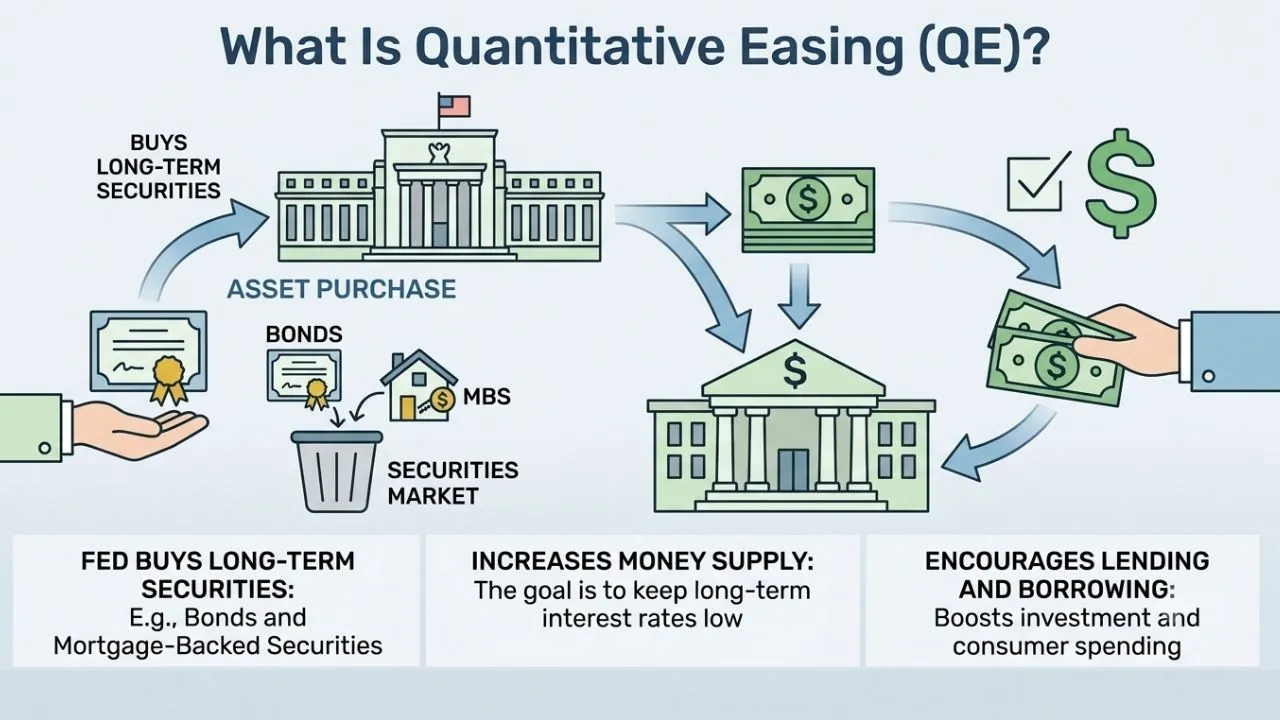
As the Fed continued shrinking its balance sheet through quantitative tightening fed balance sheet operations, reserves in the banking system gradually declined, and the Treasury simultaneously ramped up issuance of short-term bills to fund federal borrowing needs.
That expanded supply of Treasury bills gave money market funds an alternative, similarly safe, and often higher-yielding place to park cash instead of the Fed’s overnight facility.
In practical terms, the roughly $2 trillion that once sat in the reverse repo facility has been redeployed largely into Treasury bill purchases and other short-term instruments, a process closely tied to how the how U.S. treasury borrows money through its regular bill auction calendar.
The near-empty facility today suggests that the large reservoir of idle cash from the pandemic era has been largely absorbed back into the private market, leaving the banking system with an ample, but no longer excess, supply of reserves.
How the reverse repo rate is set and adjusted
The Federal Open Market Committee sets the ON RRP rate as part of its regular policy decisions, typically positioning it at or near the bottom of its target range for the federal funds rate. When the FOMC raises or lowers its target range, the ON RRP rate moves correspondingly.
As of mid-2026, the rate stood around 3.50 percent, consistent with the Fed’s prevailing target range under Chair Kevin Warsh. Because this rate acts as a floor, it directly shapes returns available to money market fund investors and, by extension, the broader landscape of best money market funds guide available to everyday savers parking cash in low-risk vehicles.
Reverse repo facility versus standing repo facility
It is worth distinguishing the reverse repo facility from its mirror-image counterpart, the standing repo facility. Where the ON RRP allows eligible institutions to lend cash to the Fed, the standing repo facility allows eligible institutions to borrow cash from the Fed against Treasury and agency mortgage-backed securities collateral.
The two facilities work together as bookends: the reverse repo facility sets a ceiling on how low short-term rates can fall, while the standing repo facility sets a ceiling on how high they can spike, since institutions facing a cash crunch can borrow from the Fed rather than bid up rates in the private market. Together they form part of the Fed’s broader toolkit alongside interest on reserve balances and the discount window.
Why this matters for everyday savers and borrowers
Although the reverse repo facility operates behind the scenes of institutional finance, its effects reach ordinary savers indirectly. The ON RRP rate helps anchor the broader structure of short-term interest rates, which in turn influences yields on money market mutual funds, high-yield savings accounts, and short-term certificates of deposit.
When the facility’s rate rises alongside Fed policy tightening, savers often see improved yields on cash-equivalent accounts within weeks, an effect closely related to trends covered in our guide on savings account rate after fed decisions.
On the borrowing side, the facility’s role in keeping the effective federal funds rate within target also supports the broader chain of rate transmission that eventually touches the prime rate federal reserve explained and, from there, variable-rate credit products including credit cards and home equity lines of credit.
What to watch going forward
The reverse repo facility’s near-empty balance as of mid-2026 puts renewed focus on bank reserve levels, since a facility with minimal daily usage no longer functions as a meaningful buffer against reserve scarcity.
Fed officials, including staff at the New York Fed’s Open Market Trading Desk, monitor repo market rates and reserve conditions closely for signs of stress, similar to the volatility seen in September 2019 when reserve scarcity briefly caused overnight repo rates to spike well above target.
Continued growth in Treasury bill issuance, ongoing balance sheet runoff, and any shift in the FOMC’s target range will all influence whether ON RRP usage stays near zero or rebuilds in the months ahead.
Bottom line
The Federal Reserve’s reverse repo facility allows money market funds and other eligible institutions to lend cash to the Fed overnight against Treasury collateral, helping anchor short-term interest rates within the FOMC’s target range.
Its usage ballooned past $2 trillion during the pandemic-era liquidity surge and has since collapsed to near-zero levels as that excess cash migrated into Treasury bills and other short-term instruments.
While it operates far from the public eye, the facility remains a core piece of the machinery that keeps the federal funds rate on target and, by extension, shapes the interest rates savers and borrowers see every day.