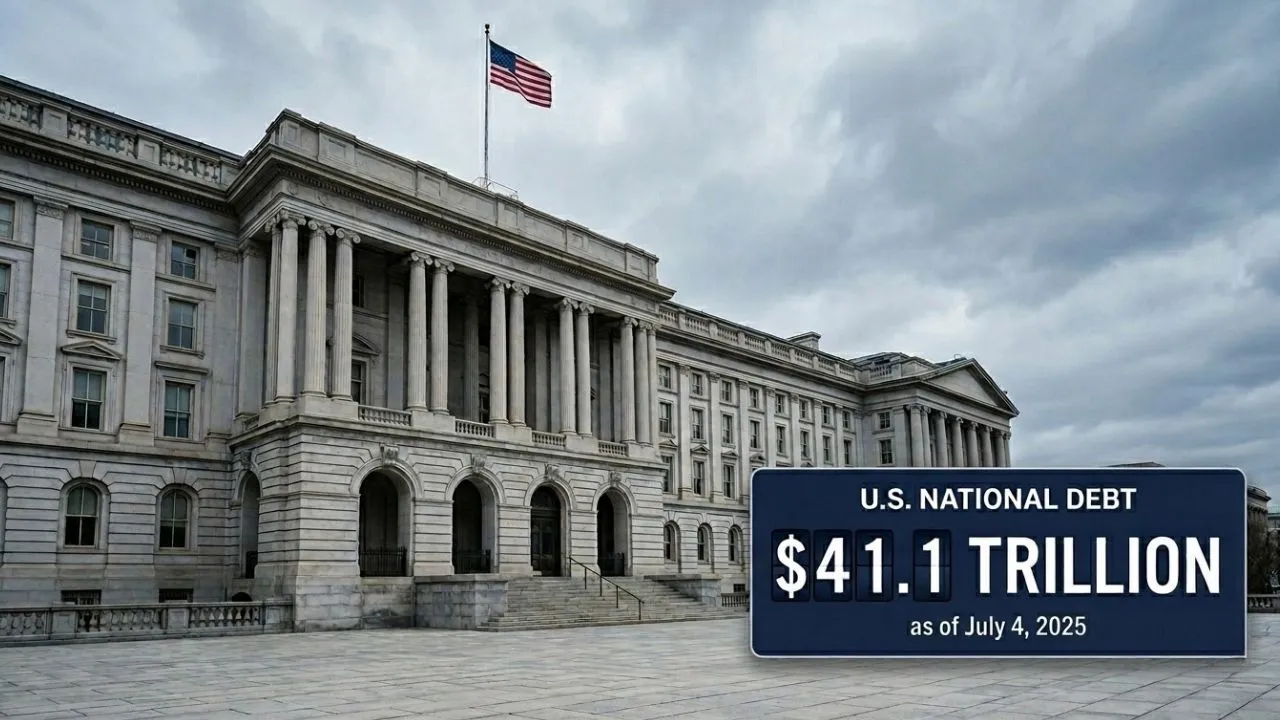


The U.S. federal budget deficit reached about $1.97 trillion through August, leaving just one month in fiscal year 2026 and putting the government’s shortfall already above the total deficit recorded for all of fiscal 2025.
Treasury’s August figures, released Friday, showed a cumulative deficit of about $1.966 trillion for the first 11 months of the fiscal year. The August deficit itself was about $167 billion, with roughly $360 billion in receipts and $527 billion in outlays. The government’s fiscal year ends Sept. 30.
The new figures closely confirm the Congressional Budget Office’s estimate released two days earlier. In its August 2026 Monthly Budget Review, CBO estimated an 11-month deficit of $1.967 trillion, based on Treasury data available at the time. CBO estimated receipts of $4.845 trillion and outlays of $6.812 trillion from October through August.
That creates an important comparison that is easy to miss. Treasury’s final accounts show that the federal government ran a $1.775 trillion deficit during the entire 2025 fiscal year. With September 2026 still to be counted, the current shortfall is already roughly $191 billion higher.
That is an increase of about 10.7% compared with the full-year 2025 deficit, according to an Investozora calculation using the current $1.966 trillion figure and Treasury’s final $1.7754 trillion fiscal 2025 deficit. Treasury’s official financial statements show the government collected $5.235 trillion and spent $7.010 trillion in fiscal 2025.
The comparison does not mean the final 2026 deficit must finish $191 billion above last year. September can materially change the result.
That happened last year. The government entered September 2025 with a deficit close to $1.97 trillion but then recorded a $198 billion September surplus, as receipts reached $544 billion while outlays totaled $346 billion. That brought the final fiscal 2025 deficit down to $1.775 trillion.
So the key question now is not whether the deficit has already crossed last year’s final level. It has. The question is how much September tax collections and spending will change the final FY2026 number. The underlying 11-month comparison also tells a more complicated story than the full-year comparison alone.
CBO calculated that receipts through August were about $154 billion, or 3%, higher than during the same period of fiscal 2025. Outlays were about $147 billion, or 2%, higher before adjusting for calendar effects. That left the unadjusted 11-month deficit roughly $6 billion below the comparable deficit at this point last year.
Payment timing, however, distorts that comparison. Some federal payments that normally would have been made in September 2025 were moved into August because Sept. 1 fell on the Labor Day holiday. After removing those calendar shifts, CBO estimated that the fiscal 2026 deficit through August was about $82 billion larger than the comparable 2025 shortfall.
The composition of the budget has also shifted. Individual income tax receipts through August increased by about $189 billion from the previous year, while payroll taxes rose by $50 billion.
Corporate income tax collections moved the other way, falling by about $96 billion, or 25%. Customs duties were roughly flat on a year-over-year basis after tariff refunds reduced collections during the year. On the spending side, some of the largest increases came from programs that are difficult to change quickly.
CBO estimated that, after adjusting for payment timing, spending on Social Security, Medicare and Medicaid increased by a combined $198 billion, or about 7%, compared with the first 11 months of fiscal 2025. Social Security spending increased by $78 billion, Medicare by $73 billion and Medicaid by $47 billion.
Interest costs are becoming another major part of the fiscal picture. Net interest on the public debt reached about $1.052 trillion through August, according to CBO, up $111 billion, or 12%, from the same period last year. CBO attributed the increase to a larger amount of federal debt and higher long-term interest rates, partly offset by lower short-term rates.
That distinction matters because the budget deficit and the national debt are related but are not the same number. The deficit measures how much federal spending exceeds receipts during a period. The debt is the accumulated amount the federal government owes after years of borrowing.
Investozora’s U.S. economy and federal finance dashboard tracks those measures separately, while its explanation of how the U.S. Treasury borrows money shows how persistent deficits translate into Treasury bill, note and bond issuance.
The financing pressure is already visible. In August, Treasury raised its estimate for privately held net marketable borrowing during the July-through-September quarter to $739 billion, $68 billion more than it had expected in May. Treasury said lower projected net cash flows were the main reason for the increase.
For households, a $1.97 trillion deficit does not automatically change a Social Security payment, tax refund or existing fixed-rate mortgage. Congress determines taxes and spending programs, while market interest rates are influenced by many factors beyond the deficit.
The longer-term connection comes through borrowing. Large and persistent deficits generally require Treasury to finance more government obligations, and the yield investors demand on that debt can affect financing costs across the economy. Investozora previously examined that link after total U.S. public debt crossed $40 trillion.
August’s monthly number also needs care. The $167 billion deficit was sharply smaller than a year earlier, but much of that difference reflected the timing of federal payments rather than a sudden improvement in the government’s underlying finances.
CBO estimated before Treasury’s final release that, after adjusting for those shifts, August 2026 would have produced a deficit around $267 billion, compared with about $257 billion in August 2025.
That means the smaller headline August deficit should not be read as evidence that the broader fiscal gap suddenly narrowed. September is now the final variable. A strong month for federal tax receipts could pull the full-year deficit below the current $1.97 trillion year-to-date level, just as it did last year. A weaker surplus or a September deficit would push the final figure higher.
The definitive FY2026 result will be known after Treasury publishes its September Monthly Treasury Statement following the Sept. 30 close of the fiscal year. Until then, $1.97 trillion is the confirmed year-to-date shortfall not the final fiscal 2026 deficit.