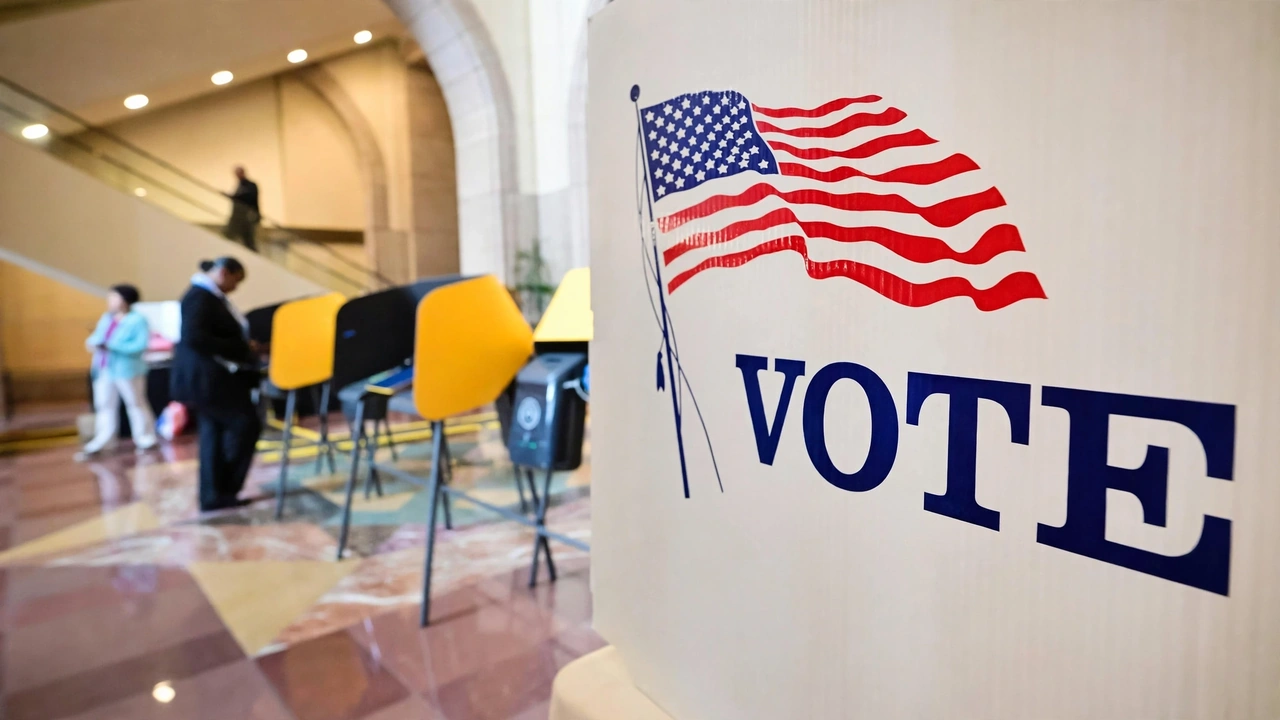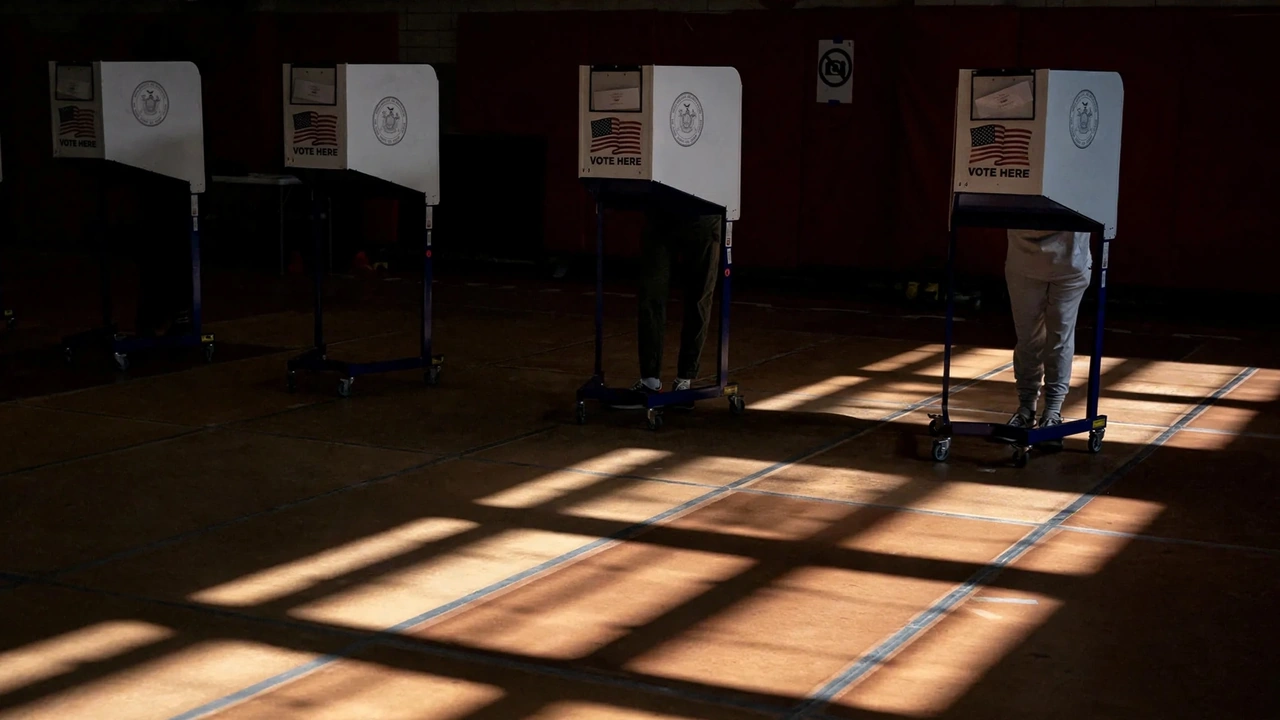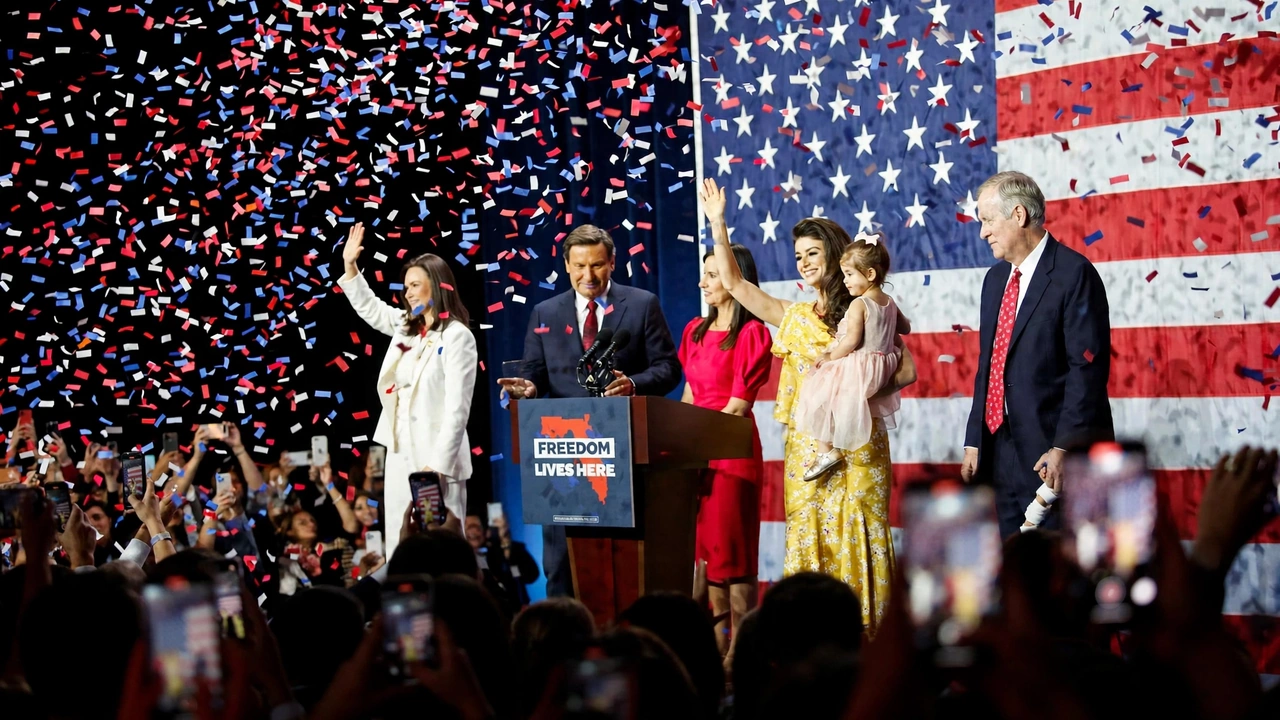
Americans vote in the November 3 midterm elections with control of Congress at stake, potentially reshaping federal tax legislation, government spending and budget negotiations during the final two years of President Donald Trump’s term.
Republicans enter the election holding narrow majorities in both chambers. Democrats need a net gain of four seats in each chamber to take control, according to Reuters’ election analysis. But the result raises a financial question that goes beyond which party wins: How much could a different Congress actually change taxes and federal spending while the White House remains under Republican control?
The distinction matters because Congress has several different forms of budgetary power. It can approve or reject annual funding, change tax law, revise spending programs and conduct oversight. Yet passing major new legislation generally requires agreement between both chambers and the president, alongside Senate procedural requirements.
An Investozora analysis of the Congressional Budget Office’s fiscal projections, Internal Revenue Service tax rules and congressional budget procedures finds that the election’s most immediate financial consequence could be the balance of power in federal funding negotiations. Broad tax-law reversals would face substantially greater obstacles.
Tax Law Changes
The election takes place after a major restructuring of federal tax law through the One Big Beautiful Bill Act, enacted July 4, 2025. The legislation extended significant provisions of the 2017 Tax Cuts and Jobs Act and introduced additional tax benefits. Some provisions were made permanent, while others have statutory expiration dates.
Under the IRS’s 2026 tax adjustments, the standard deduction is $16,100 for single filers, $32,200 for married couples filing jointly and $24,150 for heads of household. These figures are established under existing federal law. A change in congressional leadership would not, by itself, change those deductions.
Investozora previously examined the standard deduction and its implications for families under the expanded tax provisions. The same distinction applies to provisions covering qualified tips, overtime compensation and certain vehicle-loan interest deductions. Their eligibility rules, income restrictions and expiration dates are determined by statute, rather than election results.
For example, the tips deduction applies under specific conditions. A future Congress could propose changes, but legislation would still have to navigate the federal lawmaking process. A Republican-controlled Congress could pursue additional tax legislation aligned with the administration. A Democratic-controlled House or Senate could block those initiatives, seek revisions or introduce competing proposals.
However, even if Democrats controlled both chambers, President Trump would retain his veto power. Overriding a presidential veto generally requires a two-thirds vote in each chamber. That makes a sweeping reversal of existing tax legislation much less straightforward than a change in congressional control might suggest.
Spending Negotiations
The election could have a more direct effect on annual federal spending decisions. Congress determines discretionary appropriations for many government agencies, including funding for defense, transportation, education, scientific research and federal operations.
According to the Government Accountability Office’s federal budgeting overview, discretionary spending is generally provided through annual appropriations laws, while mandatory spending is primarily governed by existing statutes and eligibility formulas. This distinction creates two different opportunities for a new congressional majority.
First, lawmakers can negotiate the amount of funding available for individual federal departments and activities through appropriations. Second, Congress can attempt to change mandatory spending programs, although those changes generally require separate legislation.
A divided government could produce more difficult negotiations over discretionary appropriations, especially where lawmakers disagree about defense priorities, domestic programs or federal agency funding. The risk is not that every election automatically produces a government shutdown. It is that different political coalitions could have fewer shared priorities when funding legislation must pass.
Investozora’s federal budget guide explains how congressional spending authority connects to Treasury operations and government payments. For households, the distinction between funding negotiations and changes to benefit law is especially important.
Social Security retirement benefits and Medicare are not ordinarily reset through annual discretionary appropriations. Their underlying payment obligations are governed largely by federal statutes. Changing benefit formulas or eligibility conditions requires a different legislative process from adjusting an agency’s annual operating budget.
That does not make these programs immune to policy disputes. It means an election result should not be interpreted as an immediate reduction or increase in scheduled benefits. The longer-term challenge facing Social Security also remains distinct from the November election itself. Investozora has examined the trust fund outlook and the difficult legislative choices associated with future financing.
Deficit Constraints
The fiscal backdrop places limits on how much flexibility either party would have. In its February 2026 budget outlook, the Congressional Budget Office projected the following figures under its then-current-law baseline:
| Federal measure | Fiscal 2026 projection |
|---|---|
| Federal revenues | $5.6 trillion |
| Federal outlays | $7.4 trillion |
| Budget deficit | $1.9 trillion |
| Deficit as share of GDP | 5.8% |
| Debt held by public as share of GDP | 101% |
These are CBO projections, not the final Treasury accounting results for fiscal 2026. The agency’s baseline also projected the annual deficit would reach $3.1 trillion by 2036, with debt held by the public rising to 120% of gross domestic product. Investozora’s calculation: Using CBO’s published GDP ratios, the projected 2026 deficit of 5.8% of GDP exceeds the agency’s reported 50-year average of 3.8% by 2.0 percentage points.
That is approximately 53% higher than the historical average when measured relative to the 3.8% benchmark. The comparison concerns deficit-to-GDP ratios, not a 53% increase in federal borrowing or an inflation-adjusted dollar comparison. It suggests the next Congress would confront an unusually large baseline deficit before considering additional tax reductions or spending initiatives.
The February outlook also projected that the 2025 reconciliation legislation would raise cumulative deficits by approximately $4.7 trillion over the 2026–2035 period, including estimated macroeconomic and debt-service effects. That figure is not a forecast of what the midterm election will cost. It is CBO’s estimate of how previously enacted legislation affected its fiscal projections.
The agency also estimated that tariff changes reduced projected deficits, partly offsetting other policy effects. These estimates involve separate policy channels and assumptions; they should not be treated as permanent offsets guaranteed under every future trade or economic scenario.
Investozora previously reported on the federal deficit through August 2026. That earlier partial-year figure should not be confused with a final fiscal-year result. For lawmakers considering additional tax cuts or spending increases, the central constraint is that the federal government already faces substantial borrowing requirements.
Congressional Control
There are three materially different election outcomes. If Republicans retain both chambers, the administration would have a stronger opportunity to pursue its tax and spending priorities through unified political leadership. That would not guarantee enactment: narrow majorities, internal disagreements and Senate rules could still block legislation.
If Democrats capture the House while Republicans retain the Senate, major new tax legislation could become more difficult to enact without bipartisan agreement. The Democratic-controlled House could also use its legislative and oversight powers to press for changes to federal spending priorities.
If Democrats win both chambers, they could set congressional legislative priorities and advance competing budget proposals. Yet Trump could still veto legislation he opposes, making substantial statutory changes dependent on compromise or veto-proof support. The Senate presents another constraint.
Under its cloture rules, most legislation can face a 60-vote threshold to end debate. Certain budget reconciliation measures can advance through different procedures, generally allowing passage with a simple majority, subject to substantive restrictions.
The Congressional Research Service explains those differences in its budget procedures analysis. Reconciliation can facilitate changes to taxes and mandatory spending, but it is not an unrestricted means of passing every policy proposal. Nor would obtaining a simple Senate majority eliminate the requirement for presidential approval.
This is why winning either chamber may provide a party with substantial power to block legislation without necessarily giving it comparable power to enact its own fiscal agenda.
Household Consequences
For Americans planning around taxes, health costs, retirement income or government services, the election could change future policy negotiations before changing any existing legal entitlement. A new Congress could consider altering tax credits, deductions, eligibility restrictions or future expiration dates.
Health-related tax provisions are one area where legislative negotiations and regulatory implementation can overlap. Investozora has separately covered proposed health tax rules, illustrating why an agency proposal should not be confused with an enacted congressional change.
Federal funding debates could also affect agency operations and program administration, depending on the appropriations ultimately enacted. Investozora has reported on IRS collections, but federal tax receipts and congressional spending authority are separate fiscal measures. A higher collection total does not independently determine how Congress will allocate funding.
There is also a potential financial-market dimension. Changes to tax policy, federal borrowing expectations or spending plans can influence investors’ assessments of inflation, growth and Treasury financing requirements. However, an election result alone does not prove that Treasury yields, mortgage rates or stock prices will move in a particular direction.
Bond markets respond to multiple forces, including expected Federal Reserve policy, inflation, economic growth, debt issuance and global demand. Investozora’s analysis of Treasury yields explains those broader connections.
Its earlier examination of tax policy and Federal Reserve decisions also addresses the relationship between fiscal measures and monetary policy. Those relationships are economically relevant, but they do not establish that a specific election outcome will independently produce a particular interest-rate response.
The Next Congress
The November 3 election will determine the composition of the 120th Congress, whose term begins January 3, 2027. Until then, existing federal tax laws and spending obligations remain in force unless changed through the applicable legal processes.
The election results will establish which party controls each chamber, but the more consequential fiscal evidence will arrive afterward: the leadership selections, budget proposals, committee priorities, appropriations negotiations and actual legislation advanced in 2027.
For federal taxes, the decisive question will be whether a proposal can pass both chambers and become law. For annual spending, the more immediate question will be whether the new Congress and the White House can agree on government funding.
The same election could therefore produce significant changes in Washington’s negotiating power while leaving much of the existing tax code and the largest mandatory spending programs unchanged.