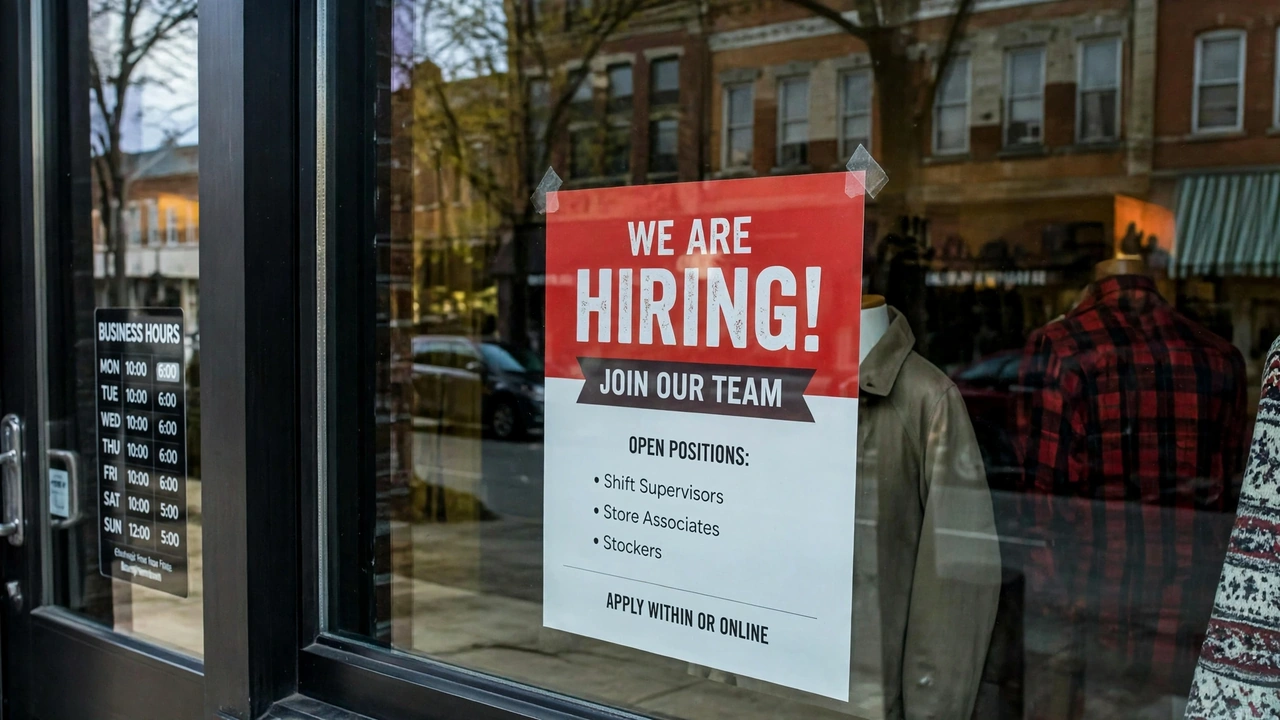
U.S. private employers added 86,000 jobs in October 2026, according to the ADP National Employment Report released Wednesday, November 4, matching September’s downwardly revised gain as hiring continued across most major industries.
The October employment report, produced by ADP Research in collaboration with the Stanford Digital Economy Lab, showed that service-providing businesses accounted for most of the new positions. Trade, transportation and utilities led the gains, while professional and business services recorded another month of job losses.
ADP also revised September’s employment increase down by 4,000, from 90,000 to 86,000. That changes the comparison with the original September ADP estimate: October hiring did not accelerate from the revised September pace, although both months showed positive employment growth.
Where Jobs Grew
Service-providing employers added 82,000 jobs in October, while goods-producing industries added 4,000. Trade, transportation and utilities gained 39,000 positions, followed by education and health services with 28,000 and leisure and hospitality with 19,000. Financial activities added 15,000 jobs, and construction gained 13,000.
The gains were partly offset by weakness elsewhere. Professional and business services lost 27,000 jobs, marking their third consecutive monthly decline, according to ADP. Natural resources and mining lost another 8,000 positions.
| Industry | October Job Change |
|---|---|
| Trade, transportation and utilities | +39,000 |
| Education and health services | +28,000 |
| Leisure and hospitality | +19,000 |
| Financial activities | +15,000 |
| Construction | +13,000 |
| Other services | +10,000 |
| Manufacturing | −1,000 |
| Information | −2,000 |
| Natural resources and mining | −8,000 |
| Professional and business services | −27,000 |
| Total private employment | +86,000 |
Source: ADP National Employment Report, October 2026. Monthly employment changes, seasonally adjusted.
My reading of the industry breakdown is that the positive national headline masks uneven employment conditions. Businesses were adding jobs overall, but the gains were concentrated in particular industries rather than extending uniformly across the economy.
ADP also reported gains among employers of every size. Establishments with 50 to 499 employees added 33,000 jobs, smaller establishments with fewer than 50 employees added 28,000, and those with at least 500 workers added 24,000. The individual establishment-size figures do not sum exactly to the headline because of rounding.
Regionally, the South led with 47,000 additional jobs, followed by the West with 28,000, the Midwest with 9,000 and the Northeast with 3,000. These monthly results provide a broader employment snapshot than ADP’s preliminary weekly hiring gauge, which measures a different, higher-frequency change in private employment.
Pay Growth Holds
ADP’s separate Pay Insights data showed median base pay increasing 3.2% from a year earlier in October. Workers who remained with their employers recorded 3.0% base-pay growth, while job-changers saw a 4.8% increase. Gross pay, which includes earnings beyond base compensation, rose 4.7% overall. Job-stayers recorded 4.4% growth, compared with 7.6% for job-changers.
ADP Chief Economist Nela Richardson attributed the stronger gross earnings growth among job-changers partly to bonuses, overtime and additional working hours. The difference between base pay and gross pay matters. Higher total earnings do not necessarily represent an equivalent increase in regular wage rates, and these figures do not establish changes in inflation-adjusted purchasing power.
Broader Labor Market
ADP’s report offers an independent measure of private employment based on anonymized payroll records covering more than 26 million U.S. workers. Its estimates are adjusted using broader employment benchmarks, including the Bureau of Labor Statistics’ Quarterly Census of Employment and Wages.
The government uses different surveys and measurement methods. Its latest September payroll report showed total nonfarm employment increasing by 29,000, while unemployment stood at 4.2%, according to the official BLS release. That government figure measures September employment across private and government payrolls, whereas ADP’s latest estimate measures October private employment.
The two should not be treated as directly comparable readings. Revisions also remain important. The government’s recent payroll revision history illustrates how initial estimates can change as additional employer records become available. Other labor-market indicators provide further context. The latest September JOLTS release showed 7.5 million job openings and 5.4 million hires, while quits rose to approximately 3.4 million.
The increase in September job quits offers a separate view of worker movement, while weekly jobless claims measure applications for unemployment insurance rather than net payroll growth. Together, these indicators help describe different parts of the labor market, but none establishes the direction of the economy from a single monthly reading.
What Comes Next
The October ADP figures arrive as investors and policymakers continue assessing employment conditions alongside inflation and economic activity. The relationship between the jobs report and rates remains important, particularly following the Federal Reserve’s October rate decision. However, the ADP estimate alone does not establish the central bank’s next policy move.
The Bureau of Labor Statistics is scheduled to release its October Employment Situation report on Friday, November 6, at 8:30 a.m. Eastern, according to the official release calendar. That report will provide a separate measure of October payroll growth, along with the unemployment rate.
ADP’s next National Employment Report, covering November, is scheduled for December 2, 2026, at 8:15 a.m. Eastern. For now, the central finding is straightforward: private employment continued growing in October at the same reported pace as revised September, with substantial differences between industries and employers.