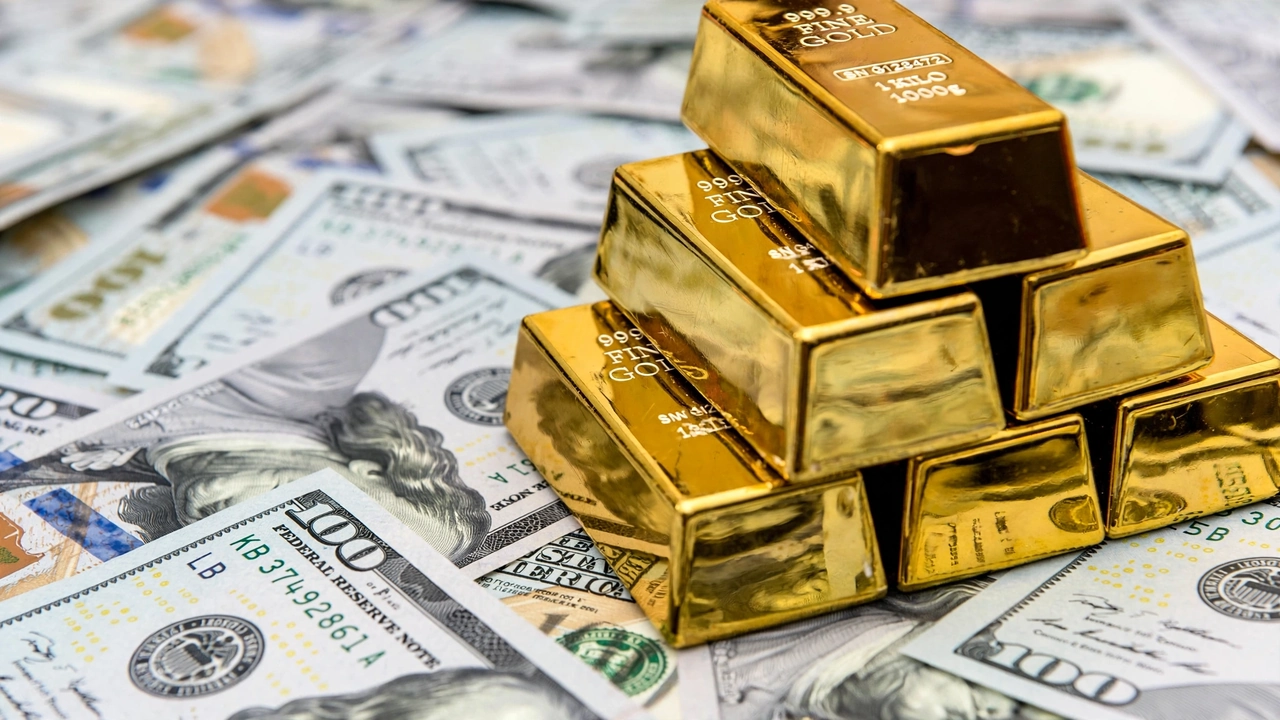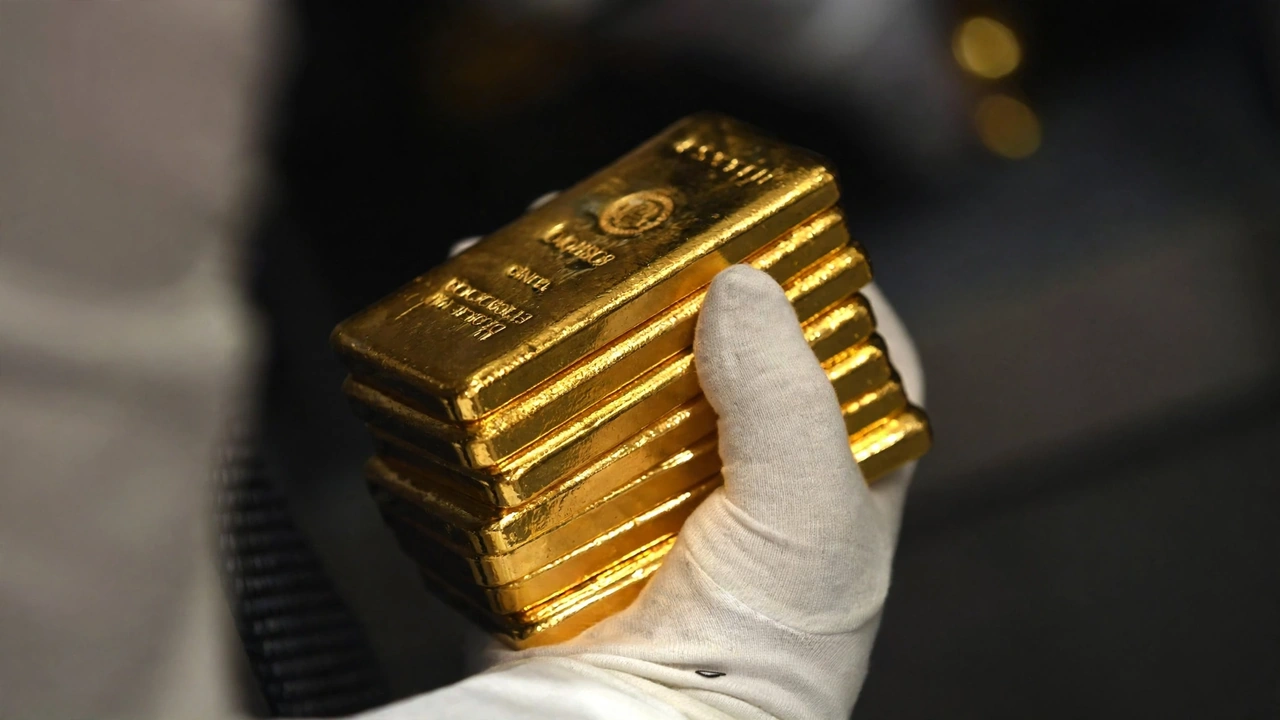
Gold prices climbed above $4,100 per troy ounce on Thursday, November 5, 2026, extending a sharp recovery as the U.S. dollar weakened and Treasury yields declined following the American midterm elections. Spot gold rose 1.6% to $4,124.89 by 07:52 UTC (2:52 a.m. Eastern Time), according to Reuters’ November 5 market report. Bullion had reached $4,146.63 earlier in the session, its highest level since October 20, while December U.S. gold futures advanced 1.5% to $4,135.40.
The rally followed a roughly 3.4% surge on Wednesday, November 4, marking gold’s strongest daily advance since August 19, according to Reuters. The important development is the combination of rising bullion prices, a softer dollar and declining government bond yields after several weeks of pressure on precious metals. For investors and physical-gold buyers, the recovery changes current market valuations, but it does not establish that gold has entered a sustained upward trend.
Gold’s Price Reversal
The November 5 advance marks a significant turnaround from the weakness seen before the Federal Reserve’s October policy decision. On October 28, spot gold prices stood at $4,030.20 per ounce at 06:02 UTC, based on Reuters market reporting. Comparing that observation with Thursday’s $4,124.89 quotation produces a $94.69 increase, equivalent to approximately 2.35%, according to an Investozora calculation.
The calculation is ($4,124.89 − $4,030.20) ÷ $4,030.20 × 100, rounded to two decimal places. Both observations concern spot gold quoted in U.S. dollars per troy ounce, although they were recorded at different times and do not represent comparable daily closing prices. The comparison therefore describes the difference between two market observations rather than a precisely measured eight-day investment return.
Gold’s recovery also needs to be understood against its earlier volatility. October gold futures traded near $4,000 before the metal experienced further declines and another reversal. Earlier episodes of gold price weakness demonstrated how changing interest-rate expectations can pressure bullion even when geopolitical uncertainty remains elevated.
Dollar and Yields
A weaker dollar can make U.S.-dollar-denominated gold less expensive for buyers using other currencies, although the actual benefit depends on individual exchange-rate movements. Reuters reported that the dollar had fallen to its lowest level in more than a month as markets reacted to the November 3 congressional elections. Currency movements are one important influence on gold, but the relationship is not automatic because demand, investor positioning and geopolitical risks can move prices independently.
The Treasury market provides another measurable part of the story. According to the U.S. Treasury’s daily yield data, the 10-year Treasury par yield declined from 4.95% on November 3 to 4.90% on November 4, a decrease of five basis points. This official comparison establishes that government borrowing yields fell before Thursday’s early gold quotation, although it does not establish precisely how much of gold’s rally was caused by that decline.
Falling Treasury yields can reduce the opportunity cost of holding gold, which does not provide regular interest income. The connection matters because investors compare the expected returns and risks of bullion with interest-bearing assets, a relationship examined in the broader context of Treasury yield movements. However, lower nominal yields do not necessarily mean lower inflation-adjusted yields, and one trading session cannot establish a durable shift in investor preferences.
Federal Reserve Pressure
Despite gold’s recovery, the Federal Reserve has not announced a new interest-rate reduction. Its October 28 official policy statement maintained the federal funds target range at 3.75%–4.00%, with two policymakers preferring an increase of 25 basis points. The decision, detailed in the October Fed decision, underscores the tension between falling market yields and the central bank’s continuing concern about inflation.
The distinction between policy rates and Treasury yields is particularly important for understanding Thursday’s rally. Treasury securities trade in financial markets, and their yields can move without an immediate Federal Reserve policy change. The different mechanisms behind Federal Reserve rates help explain why lower bond yields should not automatically be interpreted as a signal that policymakers are preparing to cut borrowing costs.
Declining oil prices have also influenced market expectations about future inflation, according to Thursday’s Reuters commodities report. Investors are assessing whether developments following the U.S. elections could alter the outlook for Middle East tensions and energy supplies. Those expectations remain speculative, however, and neither a lasting diplomatic settlement nor a permanent decline in inflation can be inferred from short-term commodity-price movements.
Who Is Exposed
For someone already holding physical gold, a higher spot price increases the indicated market value of the underlying metal before transaction costs. At Thursday’s reported price of $4,124.89, ten troy ounces would carry an illustrative spot valuation of $41,248.90, compared with $40,302 at the October 28 observation. The $946.90 difference is an Investozora calculation, not a realized investment gain or an estimate of what a dealer would pay for a particular product.
Retail buyers face a different calculation because bullion coins and bars can carry premiums, transaction spreads and other costs. The U.S. Mint’s bullion buying guidance specifically advises consumers to examine both the prevailing spot price and the premium attached to a purchase. A rise in international gold prices therefore does not translate into an identical percentage change in every coin, jewelry product or local retail quotation.
Gold-futures traders face additional risks because their contracts involve future delivery dates and can be traded using leverage. The Commodity Futures Trading Commission’s gold investor guidance explains that leveraged positions can generate losses considerably larger than the initial price movement might suggest. Thursday’s spot and futures quotations should consequently be treated as observations of different instruments, not interchangeable estimates of the cost or profitability of owning gold.
What Happens Next
The next scheduled major U.S. labor-market release is the October employment report, due Friday, November 6, at 8:30 a.m. Eastern Time, according to the Bureau of Labor Statistics’ official release calendar. Employment data could influence market expectations about economic growth, inflation and the Federal Reserve’s December policy decision. The direction of any resulting movement in gold, however, cannot be established before the figures and subsequent market reaction become available.
The dollar’s next movement, changes in Treasury yields and developments in energy markets will also provide evidence about whether the recovery is broadening or losing momentum. Earlier episodes, including the September gold rebound, illustrate why individual rallies need to be evaluated in their own interest-rate and market context. A temporary move above $4,100 would not establish a durable floor, just as a renewed decline would not necessarily reverse every factor supporting bullion demand.
For now, the established development is a substantial recovery in gold prices, accompanied by weaker dollar conditions and lower Treasury yields. Thursday’s early $4,124.89 quotation confirms that bullion had moved back above $4,100, while the $4,146.63 intraday high shows the recovery had extended further before easing. Whether those gains persist will depend on subsequent trading and economic evidence rather than the significance of one price threshold.