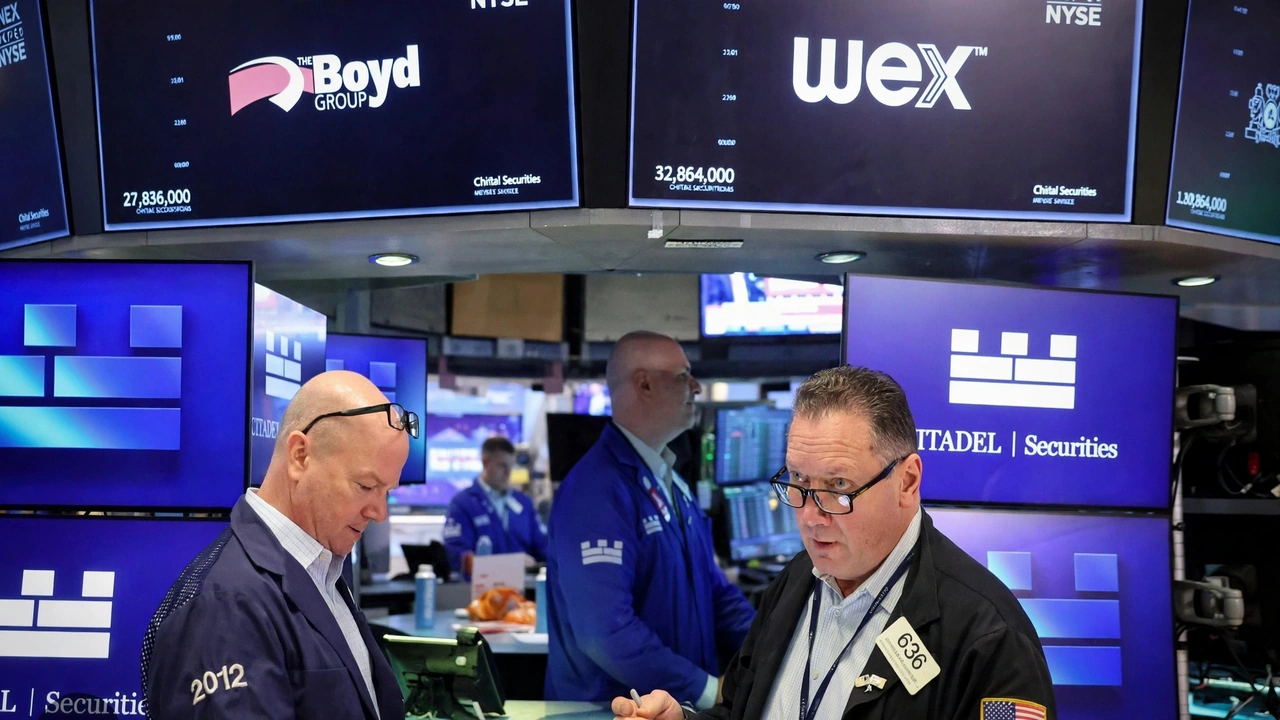


The Nasdaq Composite plunged 5.3% on Friday, November 20, closing at 22,617.73 as a broad selloff in technology and artificial intelligence stocks erased the index’s gains for 2026. The index lost 1,261.47 points from Thursday’s close of 23,879.20, according to Nasdaq’s index records and historical closing data. The decline left the technology-heavy benchmark approximately 2.7% below its level at the end of 2025.
The selling extended beyond technology shares. The S&P 500 fell roughly 3.7% to 6,910.39, while the Dow Jones Industrial Average dropped about 1.9% to 48,147, according to NYSE market figures and S&P index data. The simultaneous declines reflected selling across major U.S. equity benchmarks rather than a retreat confined to one technology company.
Technology Stocks Retreat
The latest decline intensified concerns about valuations in companies linked to artificial intelligence, semiconductor production and expanding computing infrastructure. Investors have been assessing whether spending on advanced technology can translate into earnings growth sufficient to justify elevated share prices. Those questions have also shaped the broader technology stock rotation and concerns about technology spending.
The November 20 losses followed several volatile trading sessions for technology shares. Earlier, a sharp Nasdaq correction highlighted the vulnerability of heavily traded growth stocks, while a separate technology rebound showed how quickly sentiment could reverse. Friday’s drop was considerably larger and pushed the Composite below its year-end 2025 closing level.
Treasury Yields Ease
Government bond yields provided a contrasting development during Friday’s equity selloff. The U.S. Treasury’s official yield data showed the 10-year constant-maturity yield falling to 4.92% on November 20 from 5.04% on November 19. That represented a decline of 12 basis points, based on the two published observations.
The move matters because Treasury yields serve as important benchmarks for financing conditions and the valuation of future corporate earnings. Higher discount rates can weigh on valuations for companies whose expected profits lie further in the future, although Friday’s simultaneous decline in yields and stocks does not establish a single cause for the selloff. The interaction between Treasury yields and the Federal Reserve outlook remains relevant to investors assessing growth-stock valuations.
What Investors Face
The decline has particular significance for investors with concentrated exposure to large technology companies, semiconductor businesses and Nasdaq-tracking investment funds. A market-capitalization-weighted index can experience substantial movements when its largest constituents fall together, although individual portfolios may perform differently.
Investors should distinguish the Nasdaq Composite from the narrower Nasdaq-100 when evaluating their holdings and the significance of earlier Nasdaq-100 losses. Friday’s closing level also provides an important historical reference for assessing the market’s next move.
The immediate questions are whether the selling continues across major equity sectors, whether technology shares stabilize and whether Treasury yields change alongside renewed trading. U.S. stock markets are closed for the weekend, making Monday, November 23, the next regular trading session for evaluating those developments.