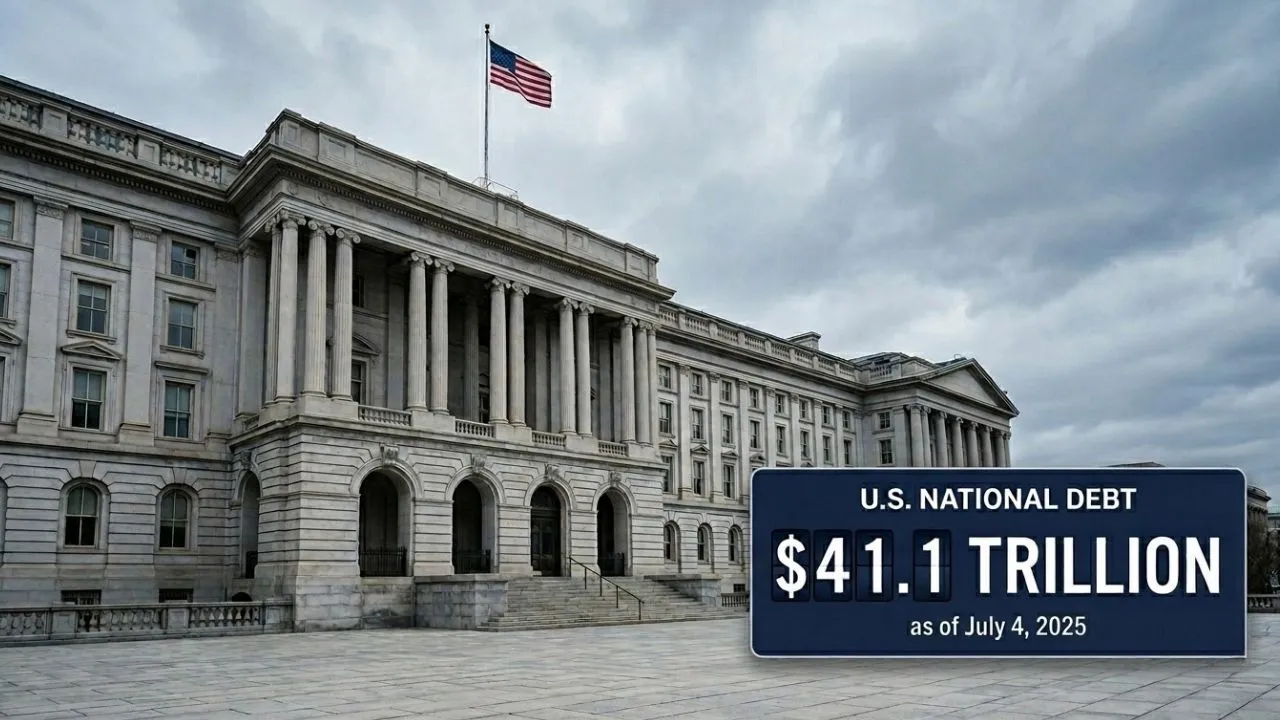
The United States debt ceiling currently stands at $41.1 trillion, raised by $5 trillion when President Trump signed the One Big Beautiful Bill Act into law on July 4, 2025.
The Congressional Budget Office projects the federal government will require another debt ceiling increase or suspension sometime in mid-to-late 2027. As of May 2026, total debt held by the public stands at approximately $31 trillion.
The One Big Beautiful Bill Act, signed July 4, 2025, raised the U.S. debt ceiling from $36.1 trillion to $41.1 trillion, the largest single debt limit increase in American history by dollar amount. The $5 trillion increase was necessary to avoid a federal default that Treasury Secretary Scott Bessent had warned could arrive as early as August 2025.
The Congressional Budget Office projects the OBBBA will add $4.1 trillion to the national debt over ten years, meaning the new ceiling will likely require another increase by mid-to-late 2027, directly affecting Social Security payments, IRS refunds, and all federal disbursements routed through the Treasury General Account.
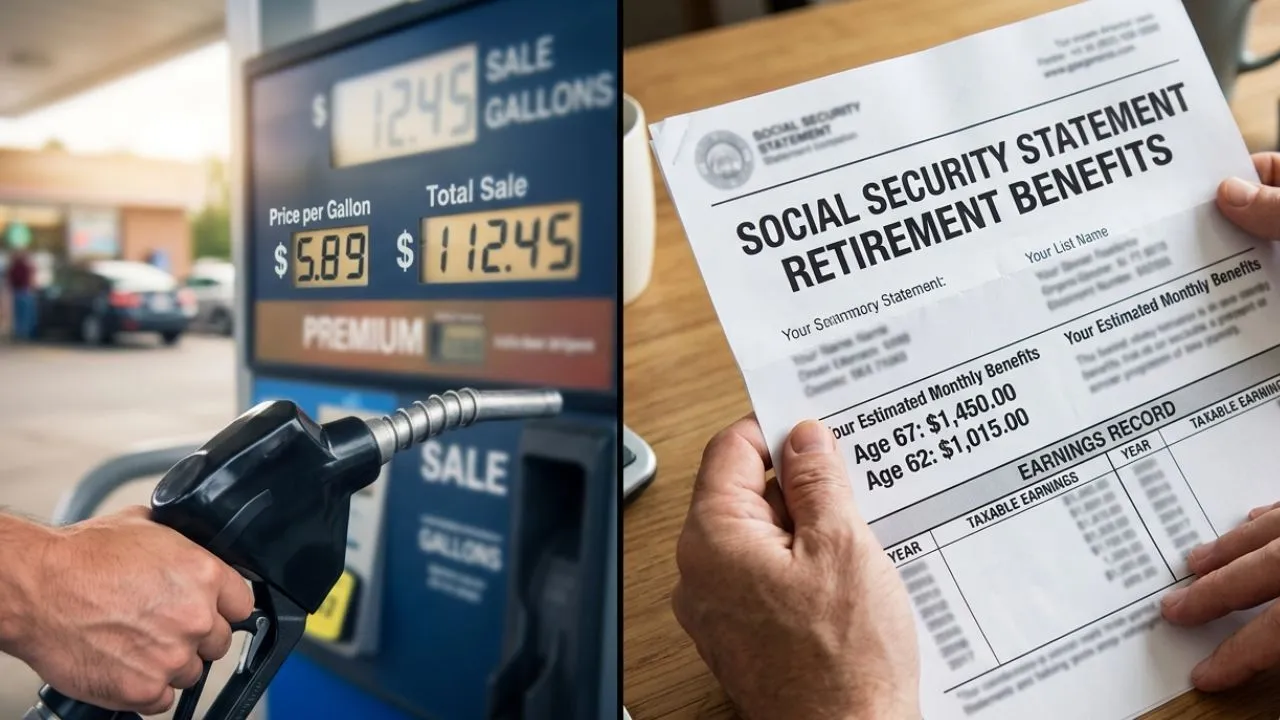
Most Americans have heard the phrase “debt ceiling” used as a political flashpoint, a bargaining chip, or a countdown clock. What receives far less coverage is the precise mechanical structure that sits beneath the headline, the system that determines whether your Social Security check, your IRS refund, and your federal contractor payment actually arrives when it is supposed to.
Understanding the debt ceiling in 2026 means understanding three specific things: where the ceiling now sits, how the Treasury manages cash between now and the next potential deadline, and what happens to the federal payments that millions of Americans depend on if that system ever genuinely runs out of room.
How the OBBBA Changed the Legal Limit on U.S. Borrowing
Before July 2025, the U.S. debt ceiling was $36.1 trillion. The Treasury had hit that ceiling on January 1, 2025, when a prior suspension period expired. From January 2025 forward, Treasury Secretary Scott Bessent deployed a series of legally authorized maneuvers, collectively called extraordinary measures, to keep the government operating without breaching the legal limit.
Extraordinary measures are not theoretical. They include real operational actions: prematurely redeeming Treasury securities held in federal employee retirement savings accounts, halting contributions to certain government pension funds, suspending the State and Local Government Series securities program, and drawing down the Treasury General Account balance held at the Federal Reserve.


In May 2025, Bessent formally warned Congress that extraordinary measures would be exhausted by August. That warning created the urgent legislative pressure that ultimately produced the OBBBA.
When President Trump signed the One Big Beautiful Bill Act on July 4, 2025, it contained a provision raising the debt ceiling by exactly $5 trillion, to $41.1 trillion. That increase was not a suspension (which sets no dollar ceiling during a specified period) but a hard dollar increase, meaning the government now has a specific new ceiling it cannot legally exceed without further congressional action.
The Treasury General Account, the federal government’s primary checking account held at the Federal Reserve Bank of New York, is the operational mechanism through which all federal outlays flow.
Social Security benefits, IRS refunds, VA payments, and federal payroll all transit through the TGA before reaching the Bureau of the Fiscal Service’s payment rails and ultimately the Federal Reserve’s ACH network for delivery to your bank.
The Cash Reserve Strategy and What the Next X-Date Means
With $41.1 trillion as the new ceiling, the Treasury currently has room to operate — but not unlimited room. The Congressional Budget Office projects the debt will reach the new ceiling sometime in mid-to-late 2027 at current borrowing rates.
The OBBBA’s own fiscal expansion, approximately $1.7 trillion in new borrowing over the past year alone according to CBO data, means the $5 trillion headroom is being consumed faster than in prior low-deficit environments.
The Treasury’s standard cash management practice is to maintain a balance in the TGA sufficient to cover approximately five days of federal outlays, a buffer estimated at roughly $700 billion. When that balance shrinks, as it did during the extraordinary measures period of early 2025, the timing of federal payments can become operationally sensitive.
This is not a theoretical risk for Social Security recipients, IRS refund recipients, or other beneficiaries. When the TGA balance becomes constrained, the Treasury payment system must prioritize which payment files the Bureau of the Fiscal Service processes on any given settlement window.
During acute debt limit stress periods, the Federal Reserve and Treasury coordinate daily on cash flow projections published in the Daily Treasury Statement, a public document updated each business day at fiscaldata.treasury.gov.
The current debt, per the CBO’s May 2026 analysis, includes approximately $31 trillion held by the public and nearly $8 trillion the government owes to itself through trust fund accounts, including the Social Security and Medicare trust funds. Both the Social Security trust funds and the federal budget framework are directly implicated in how the debt ceiling is set and managed.
What the $4.1 Trillion Debt Expansion Means for Federal Payment Security
The Congressional Budget Office estimates the OBBBA will add $4.1 trillion to the national debt over the decade ending 2034, with interest costs included. Some independent analysts project that figure rising to $5.5 trillion if temporary provisions are extended beyond their scheduled sunset dates.
That expanding debt load has a direct but often overlooked consequence for federal payment security. As the Treasury issues more debt to fund the OBBBA-driven deficit, it competes with the private sector for available capital in the bond market.
Increased Treasury issuance pushes yields higher and higher Treasury yields feed directly into mortgage rates, corporate borrowing costs, and the interest expense on the national debt itself, creating a compounding effect.
The CBO currently projects the debt-to-GDP ratio will reach approximately 124 percent by 2034 under the OBBBA’s baseline, up from approximately 100 percent before the law was enacted.
For households that receive federal payments, Social Security, IRS refunds, VA disability, federal civilian payroll, the practical risk is not default on any individual payment. The United States has never formally defaulted.
The risk is operational disruption: delays in payment processing when extraordinary measures are active, uncertainty in deposit timing during debt ceiling standoffs, and the broader economic consequences of prolonged uncertainty on financial markets that affect savings account rates, investment values, and borrowing costs simultaneously.
What This Means
The debt ceiling now stands at $41.1 trillion. The next potential deadline arrives in mid-to-late 2027. Here is what every American with a stake in federal payments should understand.
What You Should Do Now
- Monitor the Daily Treasury Statement at fiscaldata.treasury.gov. When the TGA balance begins declining sharply, it is an early indicator that extraordinary measures may be approaching. This data is published every business day.
- If you receive Social Security, IRS refunds, VA payments, or other federal disbursements, ensure your direct deposit information is current with the paying agency. Payment delays during debt ceiling stress affect paper checks more severely than electronic deposits.
- Understand that the debt ceiling is a cap on borrowing to pay spending Congress has already authorized — it does not prevent that spending from being legally obligated. The risk is in the cash management gap between authorization and payment.
- Savers should note that debt ceiling uncertainty historically drives Treasury yields upward temporarily, which can benefit holders of short-term Treasury bills. The Treasury bills guide explains how to access those yields directly.
- Follow the CBO’s official debt limit projections at cbo.gov for the most current X-date estimates as 2027 approaches.