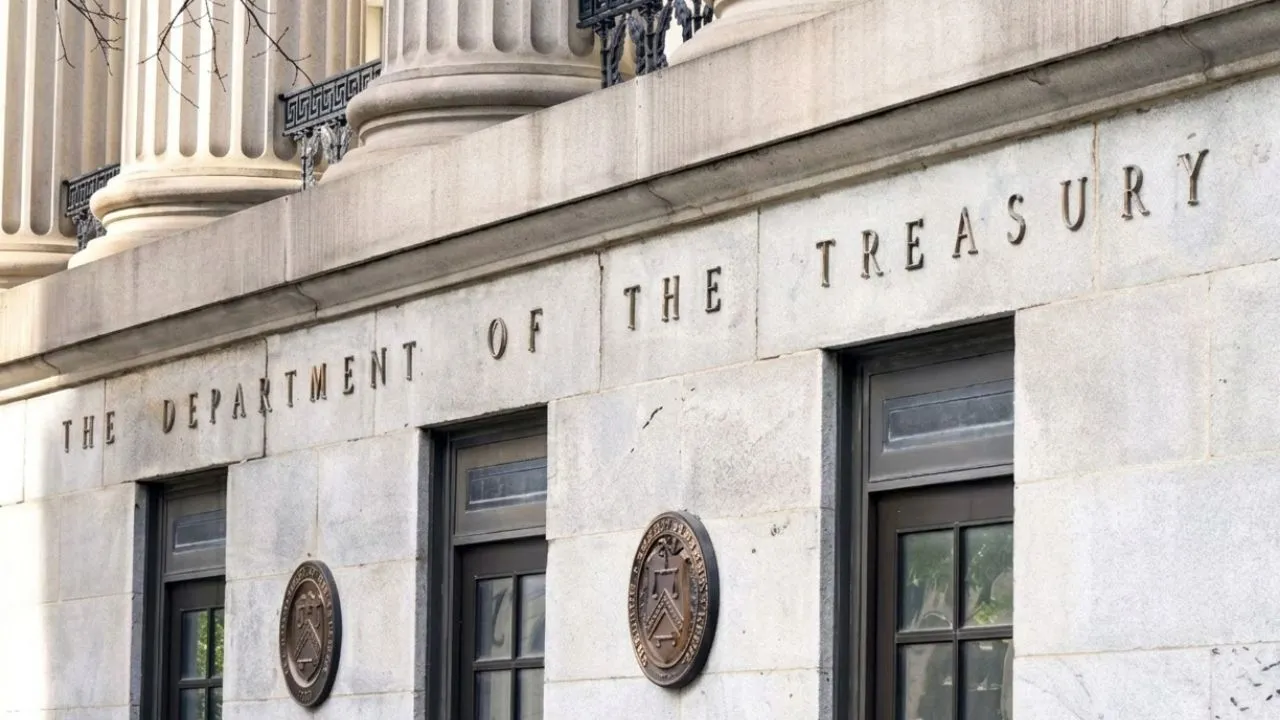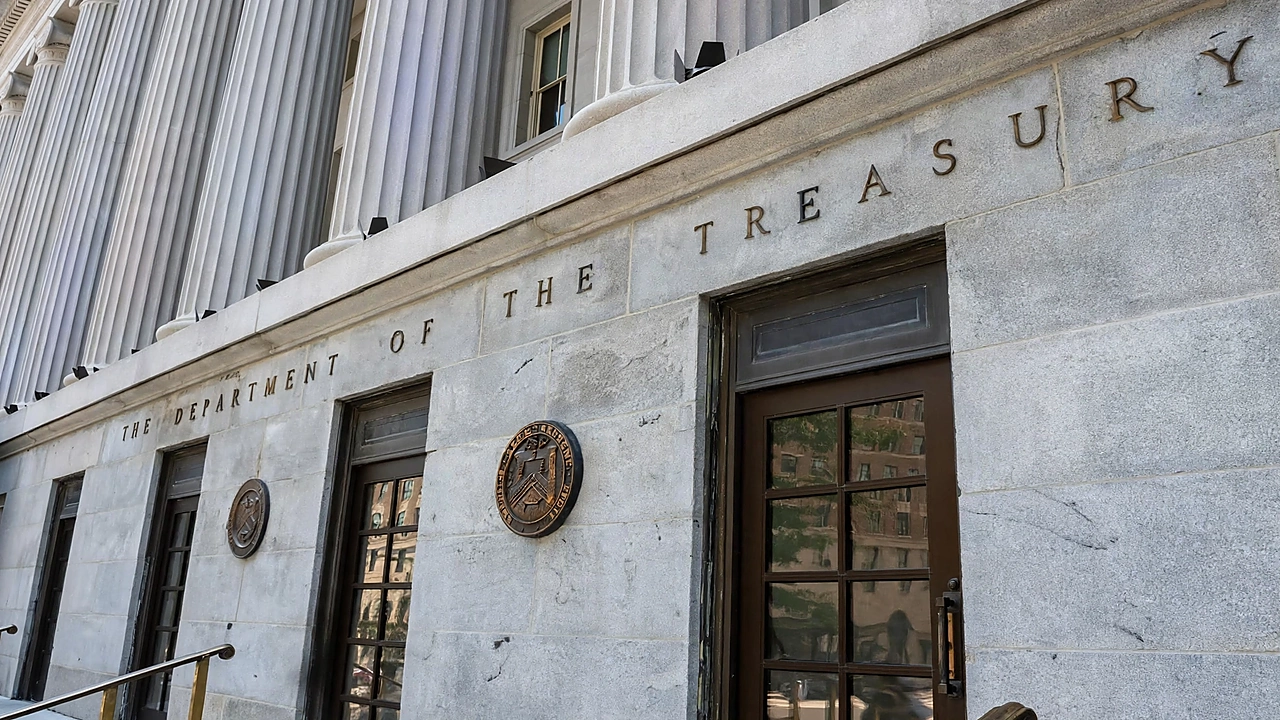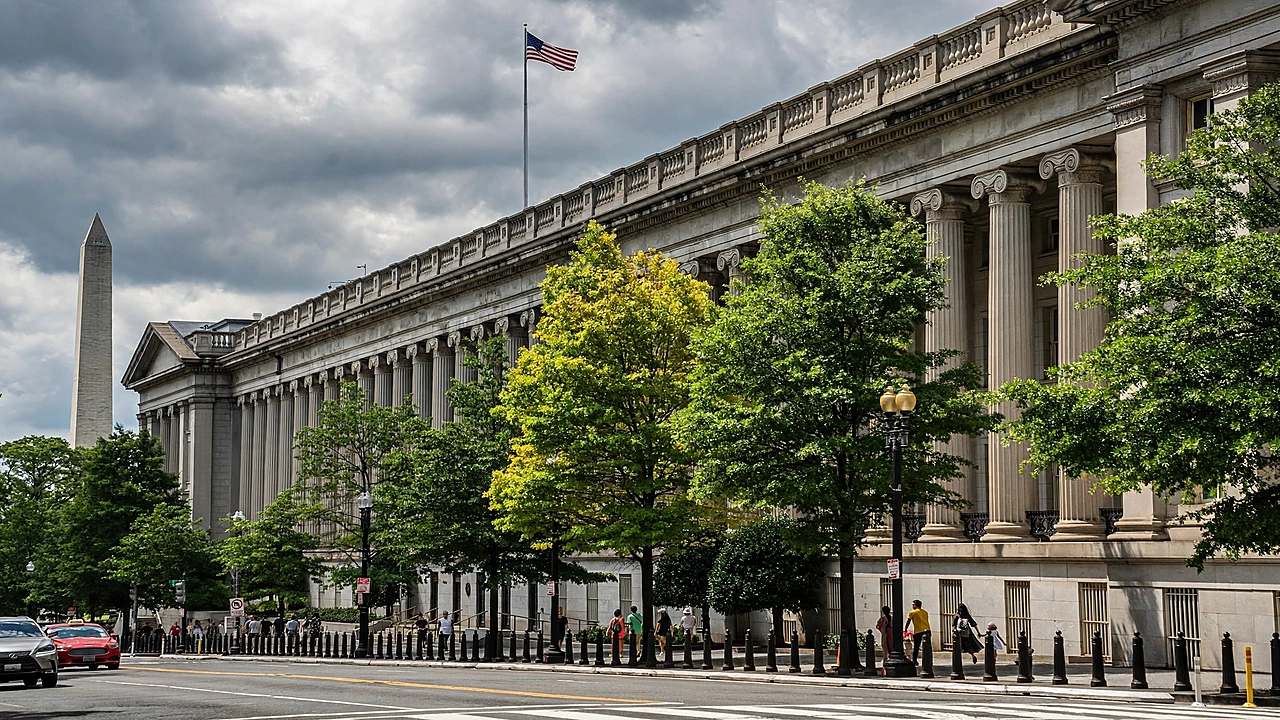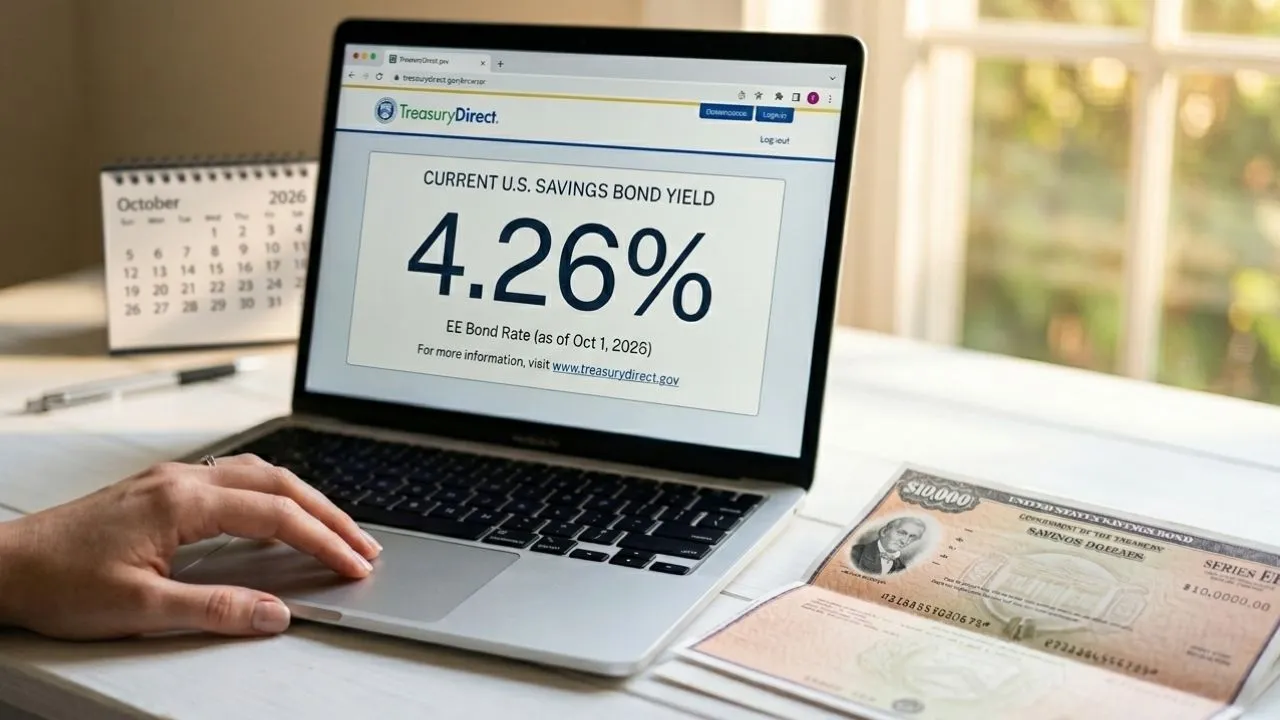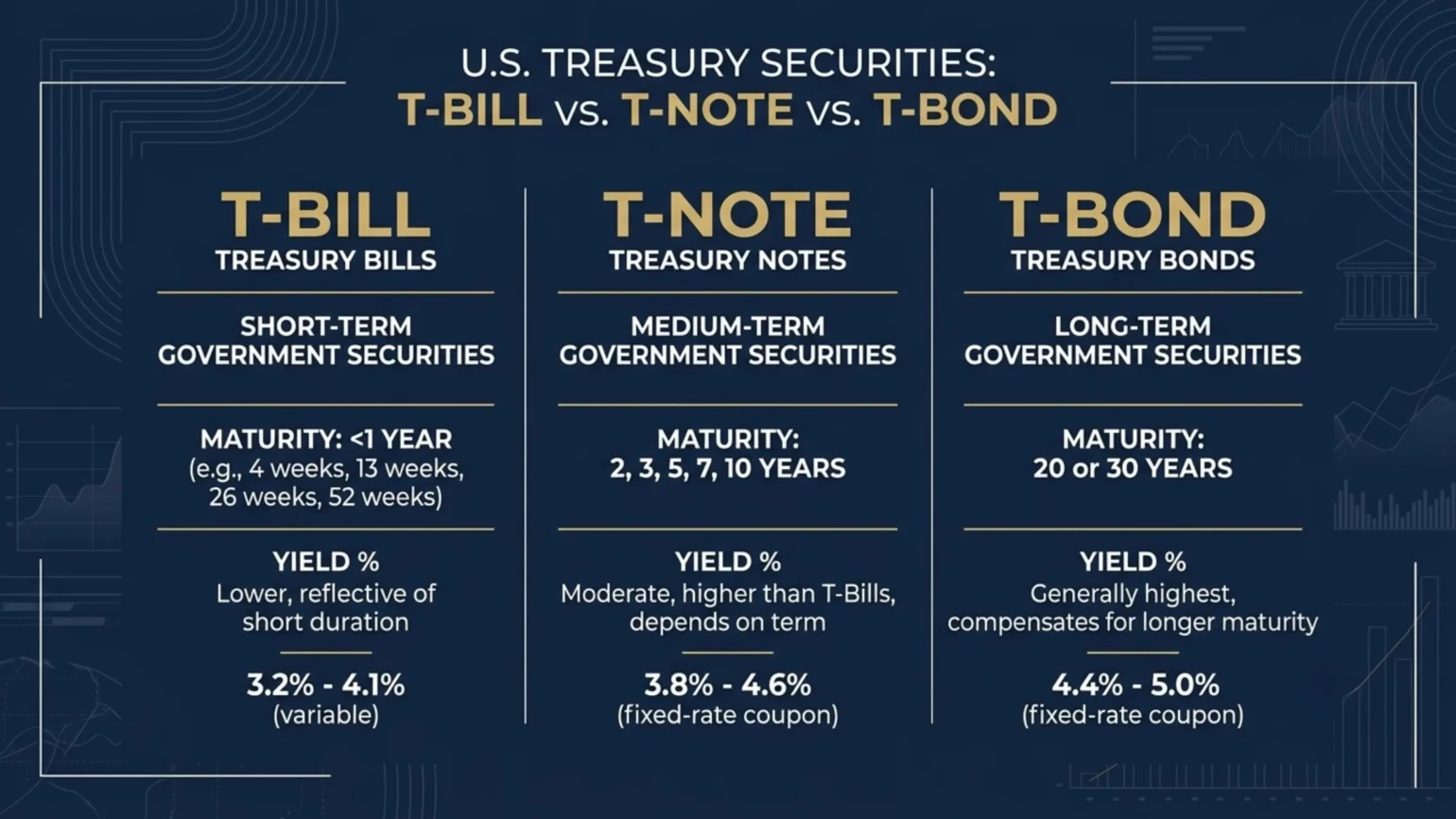


Every week, the U.S. government needs to borrow money. It does this by selling Treasury securities, bills, notes, bonds at public auctions. Anyone can buy them. Individual savers submit noncompetitive bids through TreasuryDirect.gov and automatically receive the market rate.
Banks and institutions submit competitive bids through a separate federal system. The auction determines the interest rate the government pays on its debt.
The U.S. Treasury runs one of the largest and most precisely engineered public debt auctions on earth. Every week, multiple auctions raise hundreds of billions of dollars from institutional investors, foreign central banks, primary dealers, and individual American savers.
Understanding how the Treasury auction works tells you not just where government borrowing rates come from, it tells you where mortgage rates, savings account yields, and corporate borrowing costs come from too. Treasury yields are the benchmark against which almost every other interest rate in the American economy is measured.
How the Treasury Auction Process Is Structured
Every Treasury auction moves through four operational phases: Announcement, Auction Submission, Bid Evaluation, and Issuance. Each phase runs on a strict timeline published by the Bureau of the Fiscal Service in advance, allowing market participants to prepare their bids with precision.
Announcement. Typically occurring several days before the auction date, the Treasury publishes an official offering circular specifying the security type, maturity, total offering amount, bidding deadlines, and settlement date. This document establishes the exact rules for that specific auction and cannot be modified after publication.
Auction Submission. Individual investors submit noncompetitive bids through TreasuryDirect. Institutional investors, primary dealers, banks, foreign central banks, and large fund managers, submit competitive bids through the Treasury Automated Auction Processing System, known as TAAPS. Both submission windows close at the auction’s published deadline, which for most bill auctions is 11:30 AM Eastern and for notes, bonds, and TIPS is 1:00 PM Eastern.


Bid Evaluation. This is where the uniform-price mechanism, often called the Dutch auction, operates. The Treasury ranks all competitive bids from the lowest yield offered upward, accepting bids sequentially until the total offering amount is fully subscribed. The single highest yield accepted across all competitive bids becomes the stop-out rate. Every winning competitive bidder, regardless of what yield they individually bid, receives exactly this stop-out rate. Every noncompetitive bidder also receives this same rate automatically.
Issuance. Settlement typically occurs on the next business day for bills and within two business days for notes and bonds. The Treasury debits each winning bidder’s account at the Federal Reserve or authorized financial institution and credits them with the corresponding securities.
Noncompetitive vs Competitive Bidding
The difference between these two bidding methods is fundamental to understanding who participates in the Treasury market and why.
Noncompetitive bidding is designed for individual investors and smaller institutions. Through TreasuryDirect, any U.S. person can submit a noncompetitive bid for up to $10 million in any single auction. The buyer does not specify a yield. They agree in advance to accept whatever rate the competitive auction determines.
This eliminates the need to analyze bid strategy or predict market clearing rates. In exchange for accepting the market price, noncompetitive bidders receive guaranteed allocation, their full bid amount is filled regardless of auction dynamics.
Competitive bidding through TAAPS requires institutional standing and direct access to the Federal Reserve’s automated processing infrastructure. Competitive bidders specify the exact yield or discount rate, at which they are willing to purchase the securities being offered. The precision requirements are strict.
Treasury bill bids must be submitted in discount rate increments of 0.005% carried to three decimal places. Treasury note, bond, and TIPS bids must be submitted as yields carried to three decimal places, and may be positive, zero, or negative depending on market conditions and security type. These formatting requirements are specified in the Official U.S. Treasury Uniform Offering Circular.
A single competitive entity, including all accounts and affiliates is prohibited from acquiring more than 35% of the total offering amount in any single auction through competitive bids.
This concentration limit exists to prevent any single institution from cornering a Treasury auction, which would distort price discovery and undermine the integrity of the yield signal that the auction generates.
The Uniform Price Mechanism and What It Means for Yield
The uniform-price auction format protects smaller competitive bidders from a strategic disadvantage that would otherwise exist in a discriminatory auction system. Under a discriminatory system, each winning bidder pays the price they individually bid.
This creates incentive to shade bids, to offer slightly less than you think the market will clear at, to avoid overpaying relative to competitors. Bid shading produces systematically higher yields for the government, increasing borrowing costs.
The uniform-price format eliminates this incentive. Because every winner pays the same stop-out rate regardless of individual bid, there is no penalty for bidding aggressively. Primary dealers are incentivized to submit bids reflecting their true demand rather than strategically understated prices.
Academic research and Treasury operational data consistently show that uniform-price auctions produce lower average yields and therefore lower government borrowing costs, than discriminatory alternatives over time.
This yield outcome matters directly to everyday savers. When Treasury auction yields rise, because demand is weak or inflation expectations are running high, savings account rates, money market yields, and CD rates follow within weeks. When Treasury yields compress, because demand is strong or the Fed is buying securities, deposit rates follow downward on a lag.
The Treasury auction is not a distant institutional event. It is the mechanism that sets the starting price for almost all interest-bearing savings products available to American consumers. For more on how Treasury yields transmit into deposit rates, see our analysis of Treasury yields and mortgage savings Social Security impacts and the Daily Treasury Statement explained.
Q&A: The Most Common Questions About Treasury Auctions
Can I participate in a Treasury auction without a brokerage account?
Yes. TreasuryDirect.gov is a direct account system operated by the Bureau of the Fiscal Service. You create an account, link a bank account, and submit noncompetitive bids directly at treasurydirect.gov. No broker, no commission, no intermediary.
How often do Treasury auctions occur?
The Treasury publishes a quarterly refunding calendar and supplemental issuance announcements. In practice, 4-week, 8-week, 13-week, and 26-week bills auction weekly. 2-year, 3-year, 5-year, and 7-year notes auction multiple times per month. 10-year notes and 30-year bonds auction monthly. TIPS auction on a separate schedule tied to their inflation-adjustment mechanics.
What happens if a Treasury auction fails to attract enough bids?
Primary dealers, the 24 financial institutions designated by the Federal Reserve Bank of New York to participate in Treasury auctions are contractually obligated to submit bids for a meaningful portion of every auction they participate in. This obligation backstops auction coverage ratios and prevents formal auction failures. The bid-to-cover ratio, published immediately after each auction, reflects total bids submitted relative to the offering size. A ratio below 2.0 is generally considered a signal of weak demand.
How does the debt ceiling affect auction operations?
When the federal debt ceiling binds, meaning the Treasury cannot legally issue new debt beyond the statutory limit, the Bureau of the Fiscal Service employs extraordinary measures to manage cash flow. These measures defer certain government investments and temporarily free borrowing headroom under the ceiling. Auction schedules may be adjusted, and the Treasury General Account balance can fall to levels that require operational decisions about payment prioritization. For the mechanics of how this affects federal payment timing, see the Treasury General Account explained and the full U.S. Money Movement System.
Technical Edge Cases and Escalation Pathways
TIPS-specific mechanics
Treasury Inflation-Protected Securities add a layer of complexity because their principal adjusts daily based on CPI-U changes. At auction, TIPS are sold at their inflation-adjusted principal value. The yield bid at auction is a real yield, the return above inflation, rather than a nominal rate. Negative real yield bids are permitted and have been accepted in past auctions when inflation expectations were elevated and demand for inflation protection was high.
Reopening auctions
The Treasury frequently reopens existing securities, issuing additional amounts of a previously auctioned note or bond under the same CUSIP number, rather than always issuing new securities. This consolidates outstanding supply into larger, more liquid pools. Reopenings use the same competitive and noncompetitive mechanics but bid in terms of price rather than yield, since the coupon rate is already fixed from the original auction.
Settlement failures
If a winning bidder fails to deliver payment on settlement date, the Treasury does not automatically cancel the award. Primary dealers carry a mandatory settlement obligation, and failures are resolved through the Federal Reserve’s securities account infrastructure. Individual TreasuryDirect accounts that fail settlement may have their bid privileges suspended.
For official auction schedules, results, and regulatory guidance, visit the Bureau of the Fiscal Service directly at treasurydirect.gov/auctions.
What You Should Do Now
- Visit TreasuryDirect and review the current auction calendar. Identify the next bill auction date and the current projected stop-out yield based on secondary market trading.
- If you hold savings accounts or CDs, compare your current interest rate against the most recent 13-week or 26-week bill auction yield. A persistent gap suggests your institution is not passing through Treasury rate increases fully.
- If you want to participate in a future Treasury auction, open a TreasuryDirect account before the next submission deadline. The account linking and verification process can take several business days for first-time users.
- For institutional-level access, the Treasury auction process and TAAPS access requirements are documented in the Official U.S. Treasury Uniform Offering Circular.
The Treasury auction is the most transparent interest rate discovery mechanism in American finance. It operates weekly, it is publicly observable, and its results determine the cost of borrowing for the federal government and the floor for interest income available to every American saver. Understanding the Treasury auction process puts you in position to read those results intelligently.