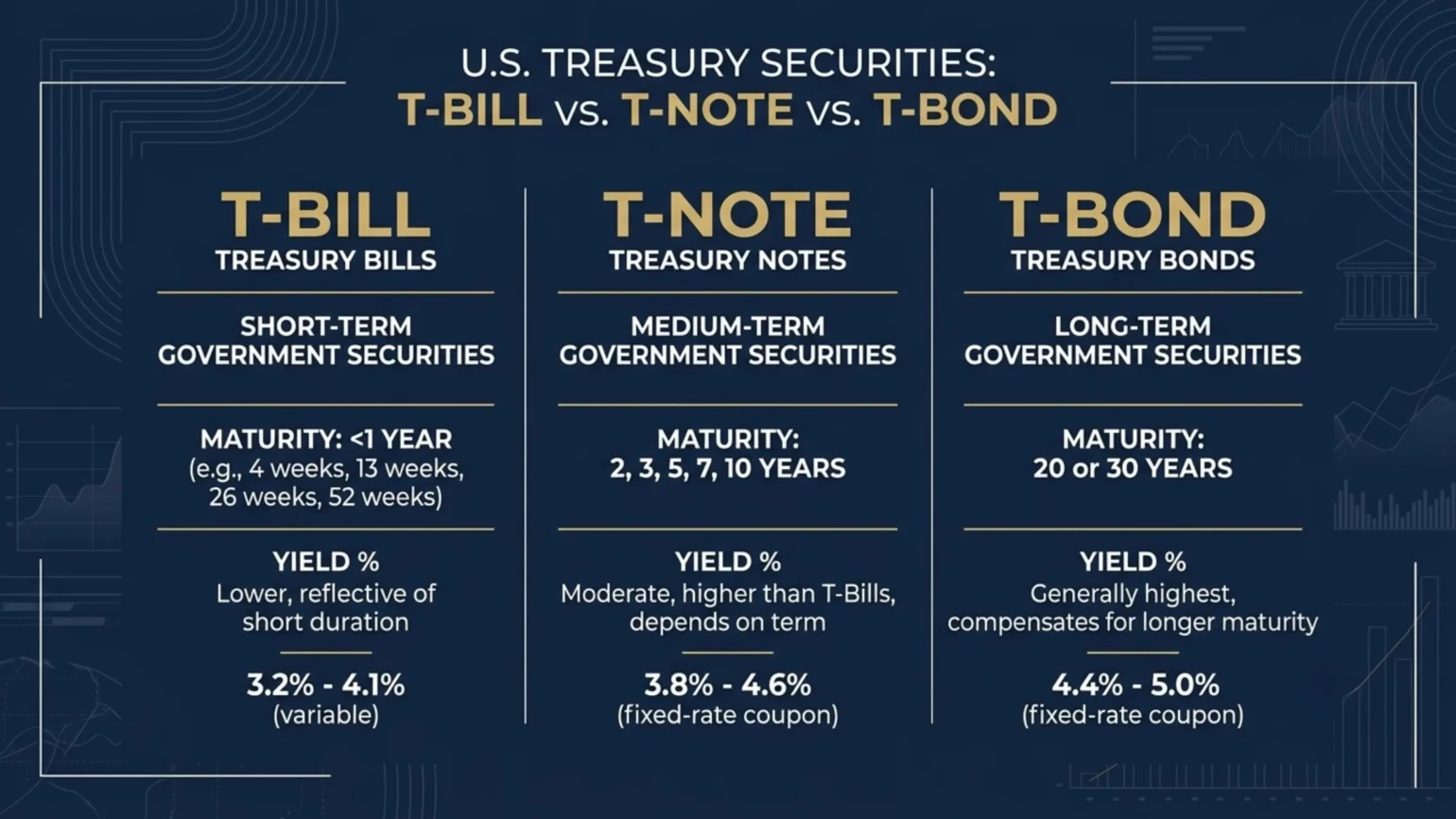


The U.S. Treasury sold $22 billion of 30-year debt at a high yield of 5.308% on September 10, but the unusually high borrowing cost did not stop investors from showing strong demand for the securities.
According to the Treasury’s official auction-results database for CUSIP 912810UW6, the reopening drew a bid-to-cover ratio of 2.61. That was up from 2.39 at the previous 30-year auction on August 13.
The bidder breakdown was even stronger. Indirect bidders received 79.48% of competitive awards, direct bidders took 18.31%, and primary dealers were left with only 2.21%.
Those figures matter because primary dealers generally absorb securities that other competitive bidders do not take. A very small dealer share therefore shows that investors outside the dealer community absorbed almost the entire competitive offering.
Investozora calculates that direct and indirect bidders together received 97.79% of competitive awards. That calculation is 79.48% plus 18.31%; it is not a figure separately published by Treasury. The auction delivered an unusual combination: stronger demand and a higher borrowing rate at the same time.
The 5.308% high yield was 9.2 basis points above the 5.216% high yield at the August 13 auction. The bid-to-cover ratio, meanwhile, increased by 0.22, from 2.39 to 2.61. Indirect participation rose from roughly 66.8% of competitive awards in August to 79.48% in September, while the dealer share fell sharply from about 11.5% to 2.21%.
That means the September result should not be interpreted as investors suddenly accepting cheap long-term Treasury debt. Investors showed up strongly, but they did so at a yield above 5.3%.
This distinction is important because the auction yield and the market’s daily 30-year Treasury yield are not the same number. The auction’s 5.308% figure is the highest accepted yield at that specific Treasury sale. Treasury’s separate daily par yield curve showed the 30-year market yield closing at 5.37% on September 10 and 5.35% on September 11.
The result therefore provides two pieces of information at once. First, Treasury was able to place the long-term debt with strong participation. Second, investors are still demanding historically high returns to commit money to U.S. government debt for decades.
The September auction was also a reopening rather than a completely new 30-year issue. Treasury offered $22 billion, compared with $25 billion at the August new-issue auction.
That difference matters when comparing demand because a smaller offering can be easier for the market to absorb. The stronger bid-to-cover ratio should therefore be considered alongside the reduction in supply rather than treated as proof that demand conditions alone changed.
Readers who want the mechanics behind these numbers can see Investozora’s explanation of how Treasury auctions and competitive bidding work. Indirect bidders are a broad category that includes customers submitting competitive bids through direct submitters, including foreign and international monetary authorities.
The category should not be treated as a precise measure of foreign central-bank buying. The strong auction also did not end the pressure on long-term rates. Treasury’s official yield curve showed the 10-year yield at 4.95% and the 30-year yield at 5.37% on September 10. A day later, they remained at 4.96% and 5.35%, respectively.
That helps explain why the September auction is more important than a simple “strong demand” headline suggests. Investors demonstrated that long-dated Treasury securities can still attract substantial demand, but the market did not require yields to fall dramatically to produce that demand.
The result fits the broader pressure examined in Investozora’s analysis of why Treasury yields have remained high. Long-term Treasury rates can reflect several forces at once, including expected Federal Reserve policy, inflation, economic growth, government borrowing needs and the extra compensation investors demand for holding long-duration securities.
New inflation data released after the auction added another reason for investors to watch long rates closely.
The Bureau of Labor Statistics said in its August 2026 Consumer Price Index report that consumer prices increased 0.4% in August after rising 0.1% in July. The all-items CPI was 3.4% higher than a year earlier, while gasoline rose 3.9% during the month and accounted for more than one-third of the overall monthly increase.
Those figures were not known when Treasury completed the 30-year auction on September 10. They therefore should not be described as a cause of the auction result. They are new information that investors received afterward and could influence how the market prices inflation and Federal Reserve policy from here.
The next major test comes almost immediately. The Federal Reserve’s official 2026 meeting calendar shows that the Federal Open Market Committee meets September 15 and 16, with its policy statement scheduled for 2 p.m. Eastern on Wednesday and a press conference at 2:30 p.m.
The auction itself does not predict what the Fed will do. A 30-year Treasury auction is a government financing event, while the federal funds rate is set through a separate Federal Reserve policy process. For investors, borrowers and households, the practical message is narrower.
Strong demand for one Treasury auction does not mean long-term borrowing costs are falling. The government successfully attracted buyers, but those buyers required a 5.308% auction yield. Meanwhile, the Treasury’s 30-year market yield remained above 5.3% after the sale.
For existing long-duration bondholders, yields at these levels can continue to create price volatility. For prospective Treasury buyers, higher yields provide more income on newly purchased securities, but longer maturities also carry greater sensitivity to changes in market rates.
For the federal government, the effect builds gradually. A single auction does not reprice the entire national debt, but higher yields raise financing costs as new securities are issued and older debt is refinanced.
The most important question now is whether September’s strong auction demand can persist if inflation and Federal Reserve expectations keep long-term yields elevated.
The September 10 sale answered one concern clearly: buyers were available for 30-year Treasury debt. It did not answer the harder question of how much yield those buyers will continue to demand.