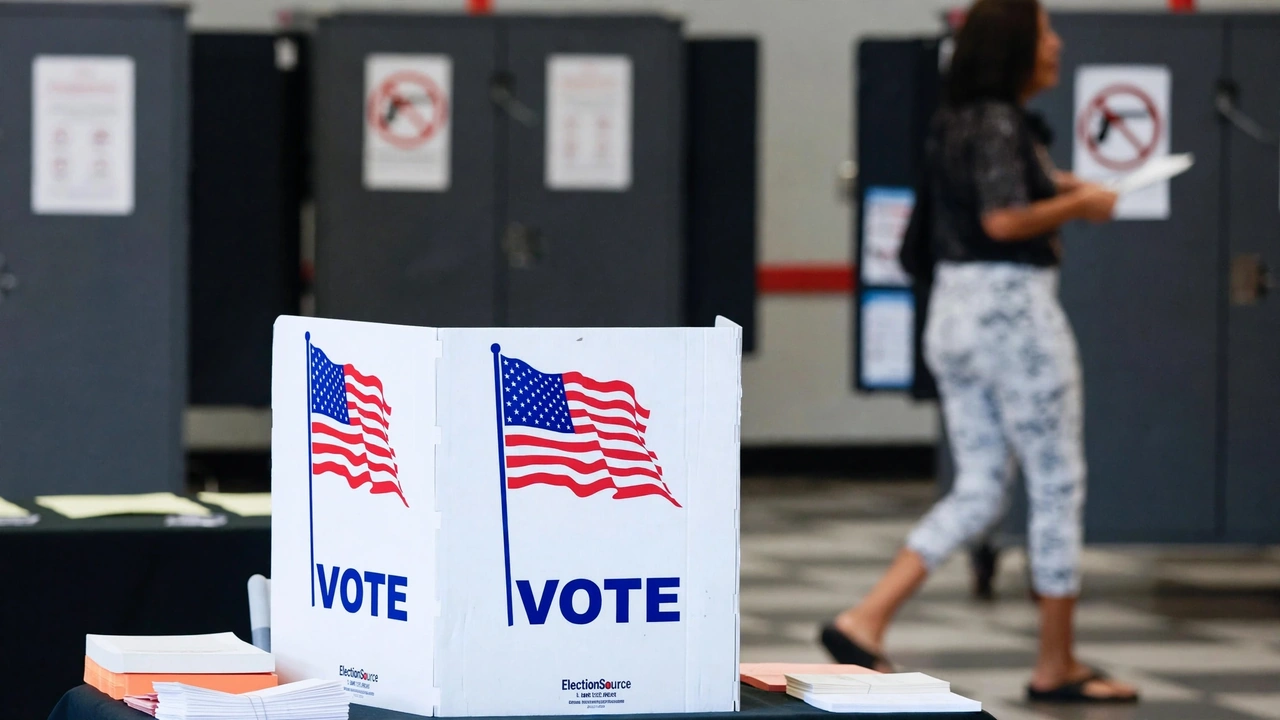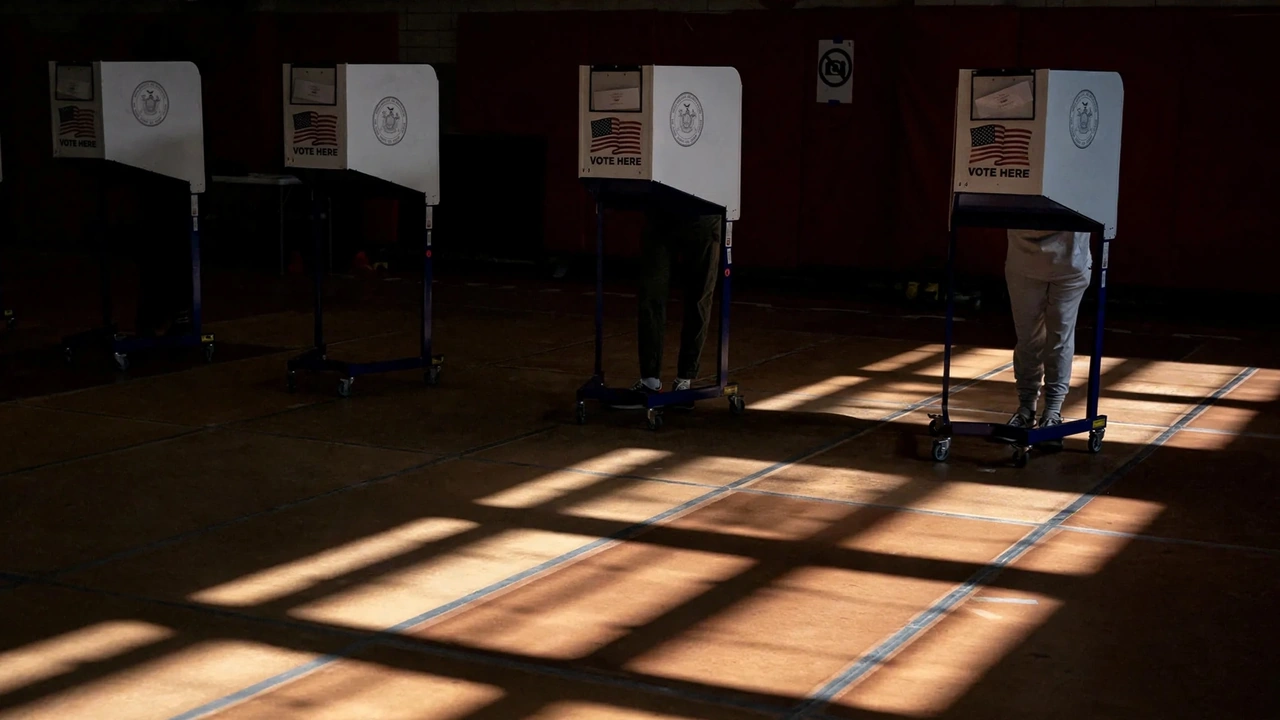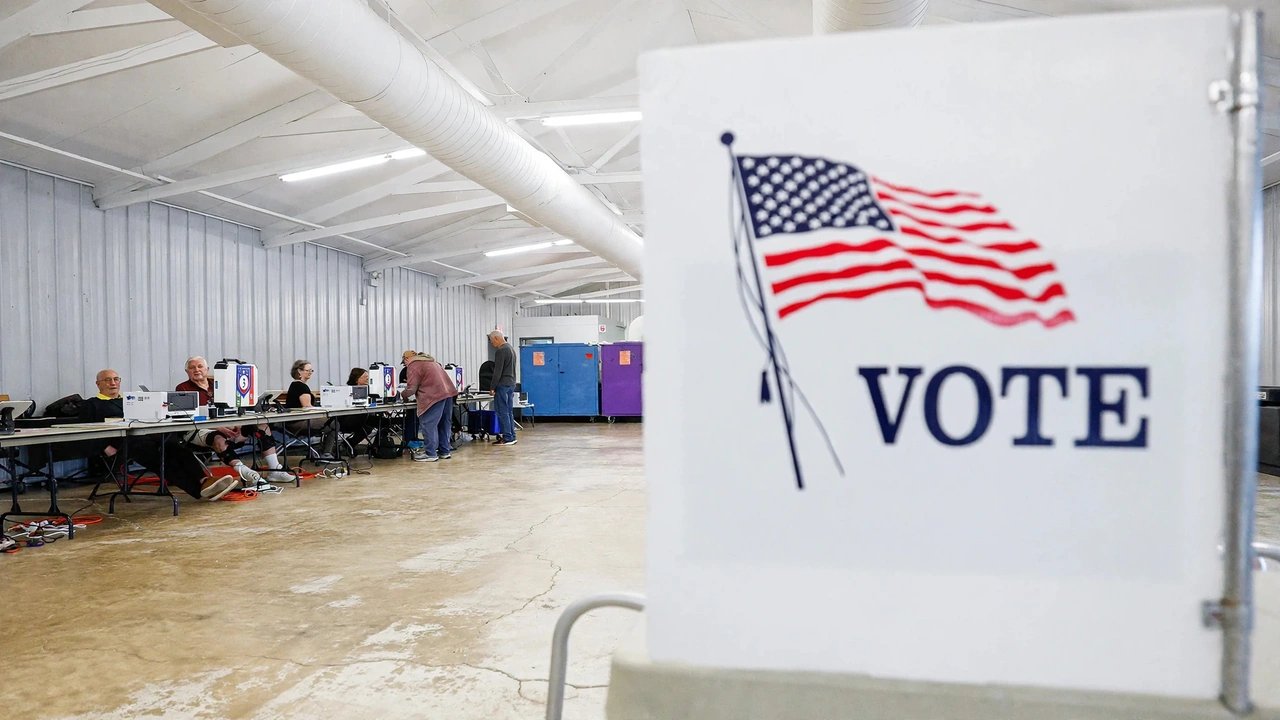
Economic concerns dominated the priorities of Americans voting in the November 3, 2026, midterm elections, but worries about the state of U.S. democracy emerged as a powerful competing concern, according to a nationwide Associated Press voter survey.
About four in 10 voters identified the economy as the country’s most important issue, while roughly three in 10 selected the state of democracy. Nearly half considered the cost of living and government corruption crucial to their congressional vote, according to the AP Voter Poll.
The findings reveal a significant tension in America’s economic and political outlook. The economy expanded at a solid pace during the third quarter, yet inflation continued to squeeze purchasing power, helping explain why stronger national growth figures did not necessarily translate into greater household confidence.
The survey, conducted by SSRS for the Associated Press and several major television news organizations, gathered responses from approximately 80,000 voters across all 50 states. Its findings offer a broad picture of what mattered to the electorate as Americans chose their congressional representatives.
The distinction between economic performance and voters’ lived experiences is central to understanding the results. National economic growth, the prices households pay and the purchasing power of wages measure different things. A growing economy can coexist with significant financial pressure for particular households.
The AP findings also challenge an overly simple interpretation of the midterms as an election decided exclusively by inflation or presidential approval. Economic frustration was widespread, but concerns about democracy, corruption and congressional accountability were important to many voters.
Those concerns were not necessarily mutually exclusive. A voter worried about grocery bills could also be dissatisfied with presidential leadership or the balance of power in Washington.
Earlier Voter Priorities
The election-period survey reinforces concerns identified before Election Day. An AP-NORC survey released October 15 found that 85% of registered voters considered the economy among the most important issues influencing their congressional vote. Another 84% identified the cost of living.
Healthcare followed at 69%, while 64% cited the war with Iran. Immigration and crime each registered 45%. An Investozora calculation using those published figures puts the economy 16 percentage points ahead of healthcare and 21 points ahead of the Iran conflict in that survey’s importance measure.
Those differences describe the shares of respondents selecting each issue as important. They do not establish how individual voters ranked the issues or which concern ultimately determined their choice.
The October findings were already examined in Investozora’s pre-election analysis. The November AP Voter Poll adds a different perspective by examining the electorate around Election Day rather than relying solely on earlier expressions of voting intentions.
That distinction matters because the surveys ask different questions and examine different populations. The October AP-NORC survey allowed respondents to identify multiple issues as especially important. The election-period poll separately examined the country’s single most important problem and issues voters considered crucial to their congressional decisions.
The figures therefore cannot be treated as measurements of the same question. A lower percentage identifying the economy as the country’s single biggest problem does not establish that economic concern declined between the surveys.
Politics Beyond Prices
It would also be misleading to assume that every voter concerned about affordability supported the same political party. The AP Voter Poll found that Democrats held an advantage in voters’ perceptions of which party would better handle the economy and government corruption. Yet neither major party enjoyed particularly strong public favorability.
The survey also showed that approximately four in 10 voters intended their congressional vote to express opposition to President Donald Trump, compared with fewer than two in 10 who wanted to express support for him.
About six in 10 disapproved of Trump’s performance as president, while roughly seven in 10 believed Congress was not doing enough to provide checks and balances on presidential power.
These findings place economic dissatisfaction within a wider political context. Voters were evaluating both their household circumstances and the institutions responsible for national policy. The economic background offers a useful explanation for why those attitudes could coexist with relatively strong growth.
Growth Versus Affordability
According to the Bureau of Economic Analysis, U.S. real gross domestic product grew at a seasonally adjusted annual rate of 3.4% during the third quarter of 2026, accelerating from 2.2% in the second quarter. Real final sales to private domestic purchasers, a measure combining consumer spending and private fixed investment, rose at a 4.9% annualized rate.
Those figures provide evidence of continued economic expansion. Investozora’s analysis of third-quarter GDP examined the stronger domestic-demand figures and the different components contributing to growth. But national output does not directly measure whether an individual worker’s income is keeping pace with everyday expenses.
The Bureau of Labor Statistics reported that consumer prices rose 3.7% over the 12 months ending in September 2026. Prices increased 0.6% during September alone, on a seasonally adjusted basis, with gasoline accounting for more than half of the monthly increase.
At the same time, official real earnings data showed that inflation-adjusted average hourly earnings for private-sector nonfarm employees declined 0.5% in September and 0.7% from a year earlier.
The contrast is important. Aggregate production increased during the quarter, while the purchasing power of average hourly earnings declined during the latest reported month and over the preceding year. These measurements cover different periods, populations and economic concepts. They should not be subtracted from one another to produce a supposed national household-income loss.
Instead, they demonstrate why economic growth and household affordability require separate assessments. Investozora previously examined the decline in September real earnings, while its coverage of core PCE inflation explored another measure of price pressure monitored by policymakers. Evidence supporting a more resilient economy should not be overlooked, however.
The Census Bureau reported that September retail and food-services sales increased 0.8% from the previous month and 6.3% from a year earlier. Those figures are adjusted for seasonal patterns but not for changes in prices, meaning they cannot independently establish equivalent growth in the quantity of goods and services purchased.
Investozora’s reporting on September retail sales provides further context for consumer spending. The broader record therefore does not support describing the entire economy as contracting simply because many voters were unhappy with living costs.
Instead, the available evidence points to an economy generating growth while households experienced uneven financial conditions. Separate research by SSRS strengthens that interpretation without proving what caused individual votes.
Its October economic tracker found that 64% of U.S. adults viewed the economy as bad or very bad, seven percentage points higher than in June. Four in five respondents were at least moderately worried about rising costs. The survey also documented changes in household behavior, including reduced discretionary spending and greater reluctance to make major purchases.
Those results offer independent evidence that economic anxiety extended beyond the election-period survey. Similar concerns appeared in Investozora’s earlier reporting on consumer sentiment, although sentiment readings and election polls measure different populations and attitudes.
Housing and Rates
Housing offers another example of how economic conditions can be experienced differently. Mortgage borrowing costs remained elevated during the campaign, with Freddie Mac reporting an average 30-year fixed rate of 7.32% in its October 22 survey. Investozora examined those mortgage rate pressures before the Federal Reserve’s October policy announcement.
Higher borrowing costs can affect affordability even when employment income or aggregate economic activity is improving. The Census Bureau also reported a 1.9% decline in total construction spending in September, including a 5.5% decrease in private residential construction spending. Investozora’s construction spending report examined that weakness.
Neither mortgage costs nor construction activity can be used to calculate how many voters changed their preferences because of housing conditions. They are relevant economic context, not direct evidence of electoral causation. Monetary policy presents a related limitation.
The Federal Reserve maintained its federal funds target range at 3.75% to 4% at its October 28 meeting, with two officials preferring an increase. Investozora covered the October Fed decision and the disagreement over inflation risks.
Interest-rate decisions can influence borrowing costs, savings returns and economic activity over time, but the election survey does not establish that any specific Federal Reserve decision determined an individual’s vote. The political implications are nevertheless substantial.
Election Implications
Following the November 3 election, the Associated Press reported Democratic victories sufficient to take control of both chambers of Congress. That result could alter the balance of power over federal spending, taxation, oversight and negotiations with the White House.
Investozora’s examination of midterm policy stakes explains why a change in congressional control does not automatically change existing tax laws or spending commitments. The AP Voter Poll helps explain the environment in which those results emerged, but it does not establish a single cause of the election outcome.
Poll Limitations
The AP Voter Poll’s methodology also requires careful interpretation. According to the SSRS survey design, the election research combines verified registered-voter interviews with Election Day interviews conducted through multiple methods.
The AP reports a national sampling-error margin of approximately 0.6 percentage points. That figure does not eliminate possible nonsampling errors, and uncertainty can be greater for smaller subgroups.
The survey’s national findings also do not reveal precisely how economic dissatisfaction affected individual House or Senate races. That would require additional geographic evidence and analysis accounting for candidate preferences, turnout and other competing explanations.
A stronger test of the relationship between household costs and electoral behavior would combine validated voting records, district-level economic conditions, consistently worded voter questions and evidence about how respondents weighed different issues.
Without those checks, the safest conclusion is that affordability concerns were widespread among voters and existed alongside major dissatisfaction with political leadership. The distinction matters beyond the election itself.
Inflation reports can establish how quickly prices are changing, while wage statistics help measure changes in workers’ purchasing power. GDP data show the economy’s overall production. None of these indicators alone establishes how households assess their financial circumstances or decide which political candidates to support.
What Comes Next
The next major evidence points include the October consumer price report, scheduled for November 10, and the revised third-quarter GDP estimate, scheduled for November 25. Those releases will help clarify economic conditions, although they cannot retroactively establish why voters cast their ballots.
For now, the central finding of the election-period survey remains clear: the economy was the most frequently identified national problem, but concerns about democracy and government accountability were also central to the 2026 midterm electorate.
America’s voters were not simply judging whether the economy was growing. They were also weighing the affordability of everyday life and the direction of the country’s political institutions.