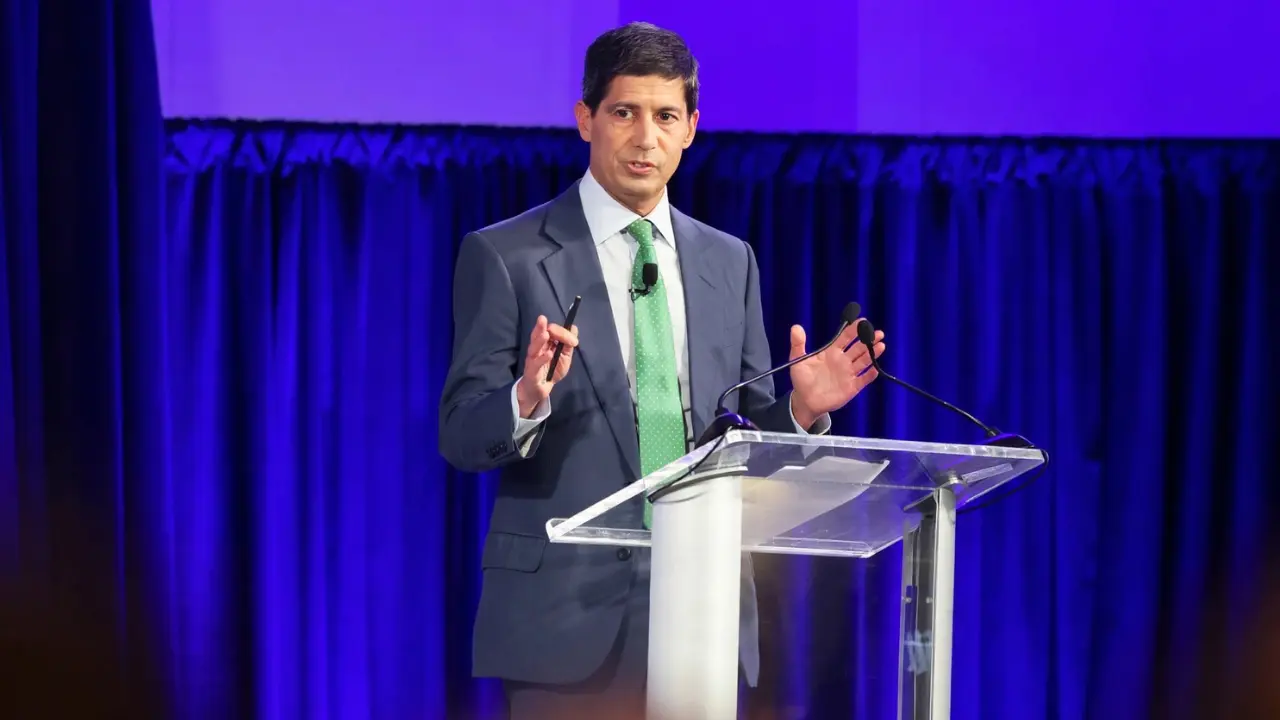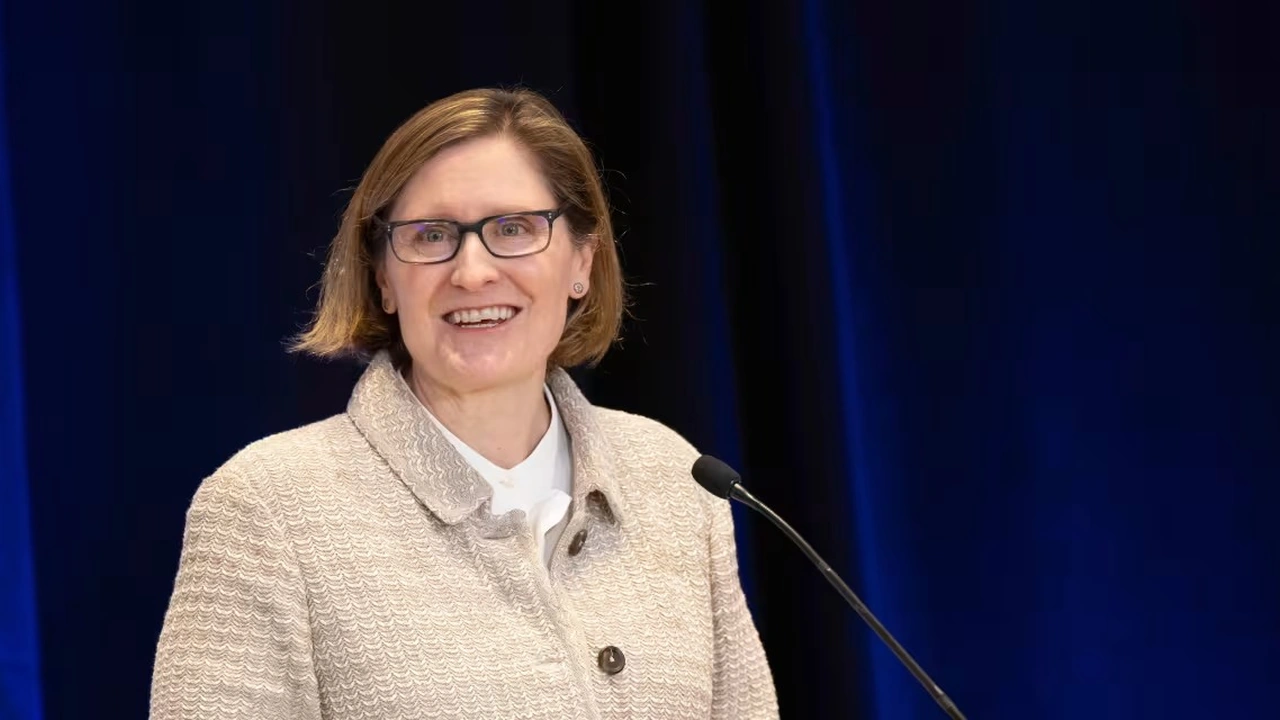
Philadelphia Federal Reserve President Anna Paulson said September 24 that further monetary-policy tightening may be warranted if inflation and economic conditions develop as she expects, adding a fresh warning about persistent price pressures. Her remarks were her own views, not a statement adopted by the Federal Reserve or the Federal Open Market Committee.
Speaking at the Philadelphia Fed’s 10th Annual Fintech Conference, Paulson said underlying inflation was running at roughly 2.5% to 3%, above the Fed’s 2% goal, and that the gap had shown little sign of closing. She said inflation risks had increased by September as tariff-related price pressures eased while pressures linked to the conflict in the Middle East and artificial-intelligence investment grew.
Her position is more restrictive than the one she outlined in early August. In an August 4 essay, Paulson said she supported keeping the federal funds rate unchanged and was maintaining an “open mind” while waiting for more evidence on underlying inflation, energy prices and tariffs. By September 24, she said the balance of risks had shifted and explained why she supported the latest rate increase.
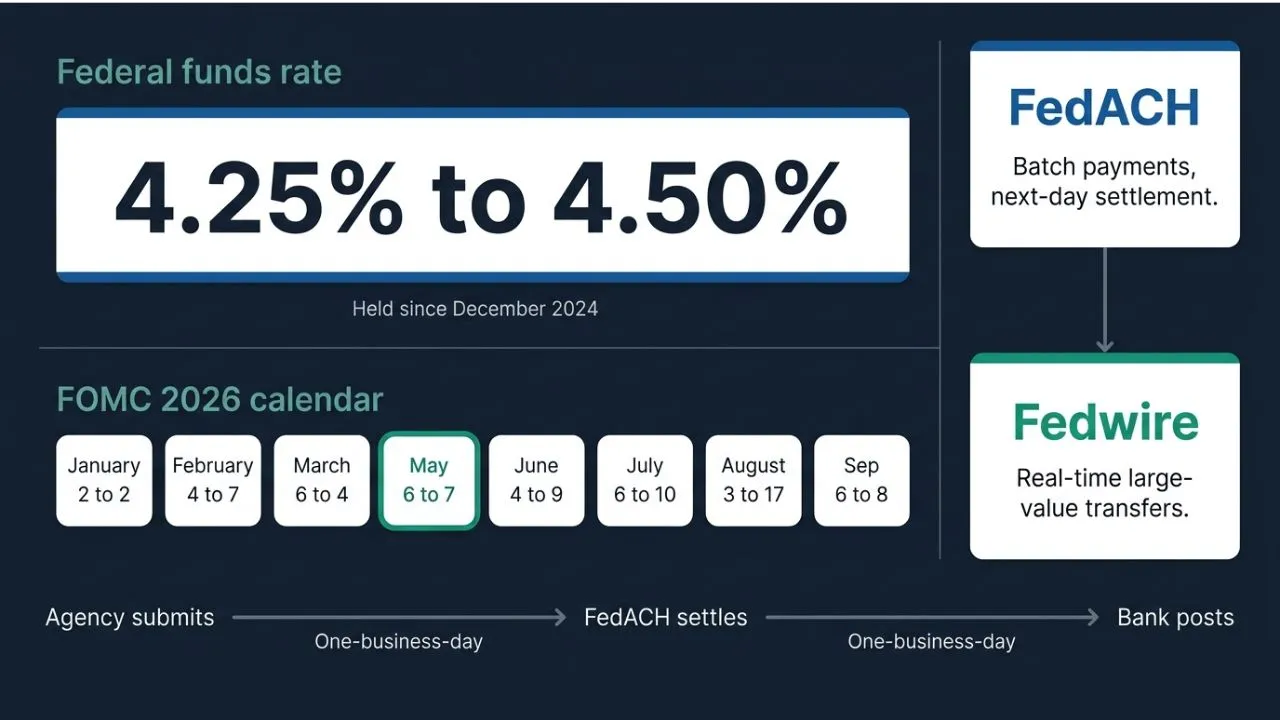
The FOMC raised its federal funds target range by 25 basis points on September 16 to 3.75% to 4% in a unanimous 12–0 decision. The committee said economic activity was expanding at a solid pace and that inflation remained elevated. Paulson said the move brought policy closer to what she believes is needed to return inflation to 2% while balancing price risks against labor-market risks.
The distinction matters because Paulson’s comments do not commit the Fed to another increase. She said only that, “if conditions evolve as I expect, some modest further tightening may be warranted.” That means the next policy step remains conditional on incoming evidence rather than predetermined.
The September projections put the median year-end 2026 federal funds rate at 4.1%, but those projections represent individual participants’ assessments of appropriate policy rather than a guaranteed future path.
The inflation backdrop remains significant. The Bureau of Labor Statistics reported that the Consumer Price Index increased 3.4% over the 12 months through August, while prices excluding food and energy rose 2.4%. Energy prices were up 16.3% over the year. Those measures are different from Paulson’s underlying-inflation estimate, but they confirm that consumer price pressures remained elevated when she spoke.
Paulson also described the economy as resilient. She said real consumer spending accelerated to a 3.4% annualized pace in the second quarter, the labor market remained stable, and AI-related investment was supporting growth while adding demand pressure in parts of the supply chain.
For households and businesses, the immediate message is that another Fed rate hike has not been decided. Borrowing costs could remain sensitive to the policy outlook, but the next change depends on a future FOMC decision. Investozora’s Federal Reserve policy coverage and recent report on the September Fed rate decision provide additional context on how policy changes transmit through the economy.
The next regularly scheduled FOMC meeting is October 27–28, 2026. Until then, inflation, labor-market and economic-activity data will help determine whether the conditions Paulson identified persist. Readers can also follow Investozora’s September Fed dot-plot analysis and its explanation of how higher interest rates affect borrowing costs.