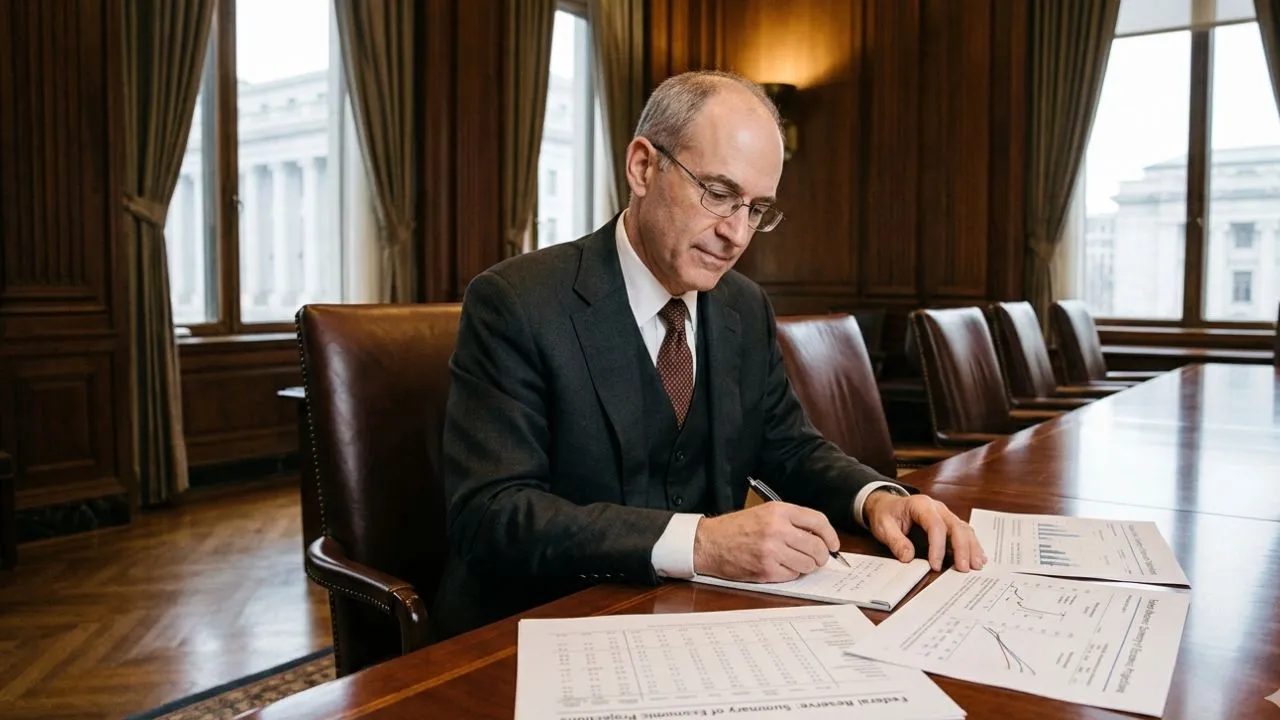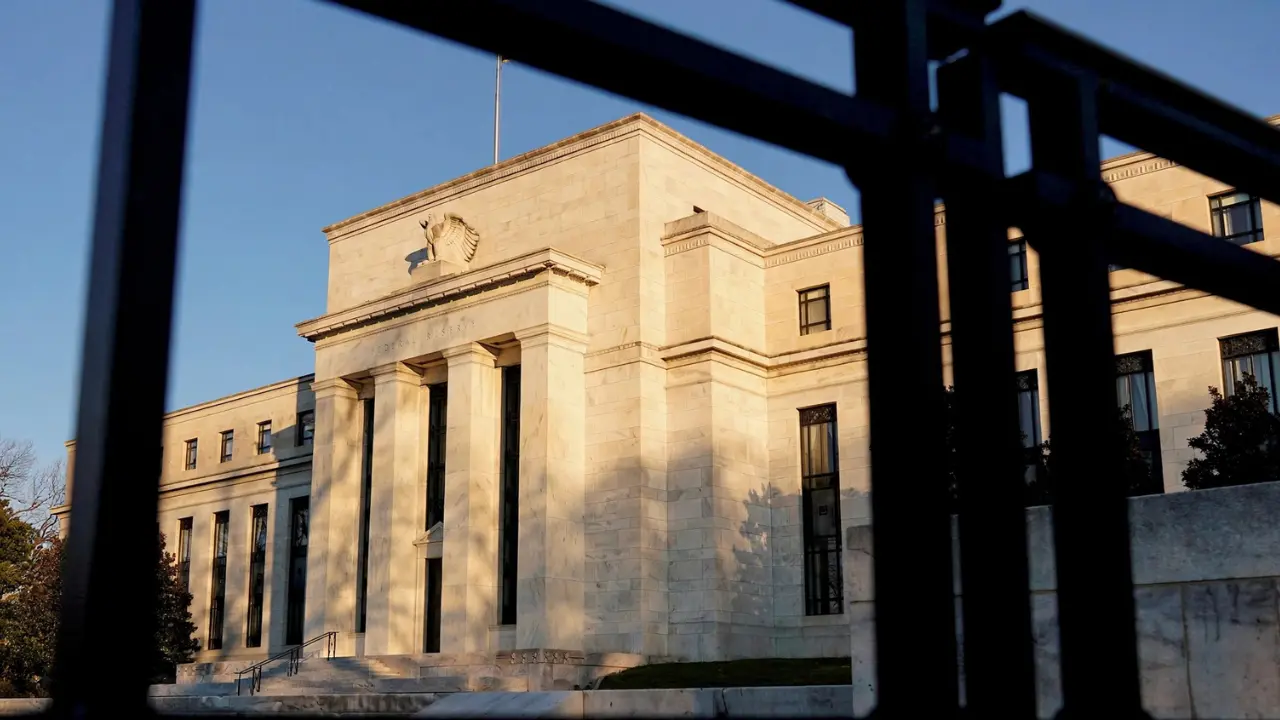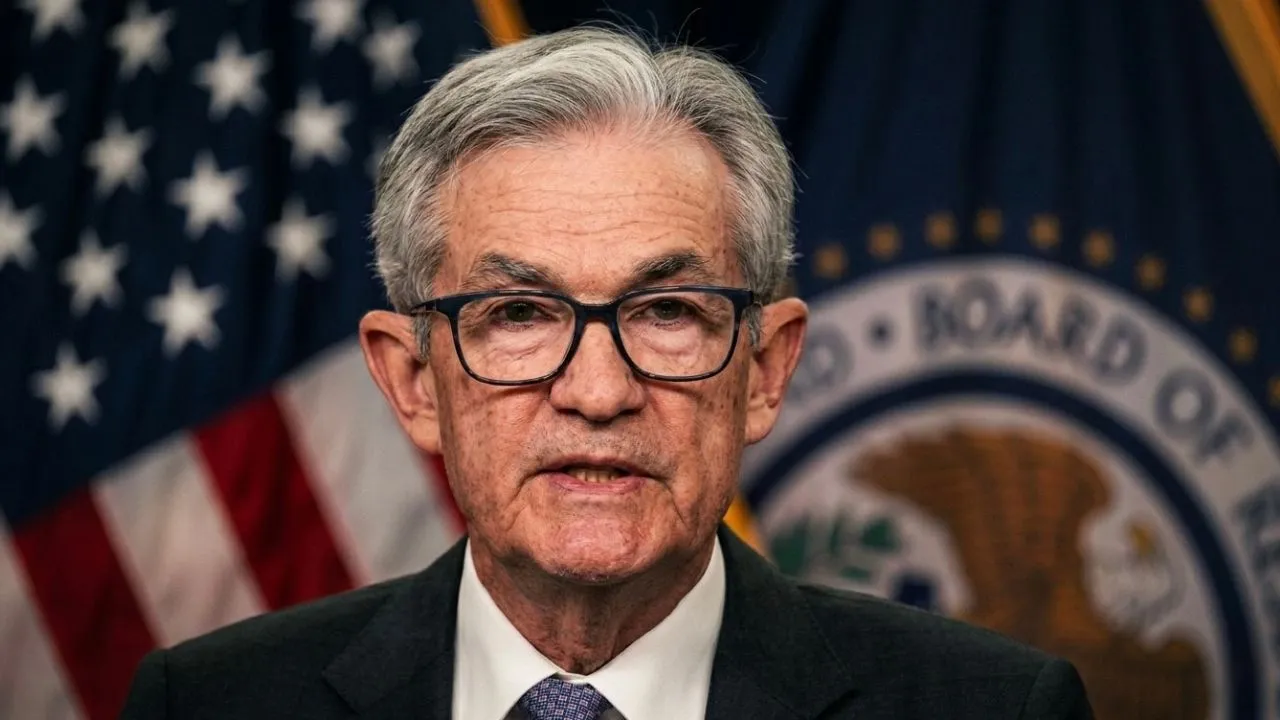
The Federal Reserve faces an important test on December 4, when the United States releases its November employment report just five days before the central bank’s final interest rate decision of 2026. With inflation still above the Fed’s 2% target and employers showing renewed strength in hiring, the report could influence whether policymakers raise borrowing costs again or give the economy more time to adjust.
But there is an important complication. In examining the government’s December economic release schedules, I found that the Fed will receive November’s employment figures before its December meeting, while two major measures of November inflation will not be published until after its decision. That leaves policymakers assessing the latest national employment conditions without equivalent monthly inflation readings for the same period.
The Federal Reserve is scheduled to meet on December 8–9, with its benchmark interest rate currently standing at 3.75%–4.00%. For millions of Americans managing credit card debt, looking for work, saving money or considering buying a home, the decision could help shape financial conditions heading into 2027.
Why December 4 matters
The Bureau of Labor Statistics will publish its November employment report at 8:30 a.m. Eastern Time on Friday, December 4. The report will provide updated figures on employment, unemployment, wages and working hours across the American economy. It will also offer policymakers an opportunity to determine whether October’s improvement in hiring continued into November.
The latest October jobs report, published on November 6, showed that employers added 165,000 jobs while unemployment stood at 4.1%. September’s payroll increase was also revised upward from 29,000 to 60,000, while August’s gain was revised from 133,000 to 186,000.
Using the revised government figures, I calculate that employers added a combined 411,000 jobs between August and October, equivalent to an average of 137,000 per month. That provides a stronger recent employment baseline against which November’s figures can be assessed.
| Employment indicator | Latest available figure |
|---|---|
| August payroll growth | +186,000 |
| September payroll growth | +60,000 |
| October payroll growth | +165,000 |
| Three-month average | +137,000 |
| October unemployment rate | 4.1% |
| Federal funds target range | 3.75%–4.00% |
Source: Bureau of Labor Statistics, November 6, 2026, employment release; Federal Reserve, October 28, 2026, policy statement. Three-month average calculated by Investozora using revised seasonally adjusted payroll figures.
The improvement from September’s initially reported 29,000 jobs is particularly important because monetary policy decisions depend partly on how quickly the labor market is changing. However, the December release could revise earlier estimates again, meaning policymakers must consider the direction of employment over several months rather than rely too heavily on a single figure.
The Fed’s timing problem
The most interesting finding in my comparison of the official release calendars is the order in which the Federal Reserve will receive new economic information. November’s employment report will arrive before the December policy meeting, but the corresponding Consumer Price Index and Personal Consumption Expenditures price index will arrive afterward.
The distinction matters because employment and inflation are the two central responsibilities of American monetary policy. The Fed must pursue maximum employment and stable prices, even when economic developments create competing reasons to adjust interest rates.
| Economic event | Scheduled date | Relative to Fed decision |
|---|---|---|
| October job openings report | December 1 | 8 days before |
| November employment report | December 4 | 5 days before |
| Federal Reserve rate decision | December 9 | Decision day |
| November CPI inflation | December 10 | 1 day after |
| November PCE inflation | December 23 | 14 days after |
Sources: BLS release calendar, FOMC meeting calendar and BEA release announcement. Calendar-day differences calculated by Investozora.
This does not mean that the Fed will make its decision without inflation information. Officials already have October inflation figures and can examine other economic indicators, business conditions, commodity prices and financial developments before the meeting. Nevertheless, the latest published monthly employment and inflation reports will cover different reference periods.
Readers following the December releases through the economic calendar should pay particular attention to this sequence. Even if the Fed changes interest rates on December 9, the inflation report published the following morning could alter expectations about the central bank’s subsequent policy decisions.
Inflation remains a problem
The latest inflation figures offer some evidence of improving monthly price conditions, although inflation remains elevated. According to the Bureau of Economic Analysis’ October PCE report, published on November 25, the PCE price index increased 0.3% in October after rising 0.5% in September.
Core PCE inflation, which excludes food and energy prices, increased 0.3% in both months. Overall annual PCE inflation stood at 3.8% in October, substantially above the Fed’s longer-term objective of 2%.
The difference between the current annual inflation rate and the Fed’s target is 1.8 percentage points. Meanwhile, inflation-adjusted consumer spending was essentially unchanged in October, suggesting that stronger employment growth does not necessarily translate immediately into stronger household consumption.
In my assessment, these figures explain why December’s policy decision is more complicated than simply deciding whether the labor market is strong or weak. The latest employment figures indicate renewed hiring strength, but the inflation and spending data show that other parts of the economy are presenting different signals.
Officials are already divided
The Federal Reserve’s October policy statement showed that policymakers voted to maintain the existing interest rate range. However, Fed Governor Lisa Cook and Cleveland Fed President Beth Hammack favored increasing the benchmark rate by 25 basis points.
The October meeting minutes, released on November 18, revealed broader support for additional monetary tightening under participants’ economic outlooks. The discussion also included the possibility of considering a larger December increase if subsequent inflation information proved unfavorable.
That discussion should not be confused with a decision. As the latest Fed minutes demonstrate, there is a meaningful difference between officials believing that interest rates may eventually need to rise and voting to increase them at a particular meeting.
A strong November employment report could reduce concerns that tighter monetary policy would immediately damage an already weakening labor market. Conversely, a substantial deterioration in employment conditions could strengthen the argument for allowing more time before increasing borrowing costs again.
Look beyond job growth
When assessing the December 4 report, I would pay particular attention to wages, working hours and the quality of employment, rather than focus exclusively on the number of new jobs. October’s employment figures already demonstrated why those distinctions matter.
Despite stronger payroll growth, approximately 4.8 million Americans were working part time for economic reasons in October. These included people experiencing reduced working hours or struggling to find full-time positions, as detailed in the BLS employment release.
That increase in involuntary part-time work illustrates a weakness that can exist beneath otherwise encouraging national employment figures. November’s report will help determine whether the problem continued or whether October represented a temporary deterioration.
The December 1 Job Openings and Labor Turnover Survey will provide another useful perspective before the employment report arrives. Changes in hiring and resignations can help distinguish between businesses maintaining their existing workforce and businesses becoming more willing to recruit additional employees.
If payroll growth, wages and working hours strengthen together, that would support a more resilient interpretation of the economy. If employers continue adding jobs but workers experience declining hours or greater difficulty securing full-time employment, the evidence would be considerably more mixed.
What households could face
A quarter-percentage-point increase in December would take the federal funds target range to 4.00%–4.25%. A half-percentage-point increase would move it to 4.25%–4.50%, while another pause would leave the existing range unchanged.
These are hypothetical policy scenarios, not predictions. Their significance for individual households depends on the financial products they use and how lenders and financial institutions respond to changes in monetary policy.
Consider a household carrying a constant $10,000 balance on a variable-rate credit card. If its annual percentage rate increased by 0.25 percentage points, the additional annualized interest expense would be approximately $25, assuming the increase passed through fully and the outstanding balance remained unchanged.
A half-percentage-point increase under the same assumptions would add approximately $50 in annualized interest. Actual credit card costs would depend on the lender’s terms, daily balances, payments and the timing of any rate adjustment.
Mortgage borrowers face a different situation because longer-term borrowing costs also depend on Treasury yields, inflation expectations and financial market conditions. A Fed rate increase does not automatically produce an identical increase in mortgage rates, just as keeping the benchmark rate unchanged does not guarantee stable mortgage borrowing costs.
Looking ahead to 2027
The December meeting will be significant beyond the immediate interest rate decision because policymakers are also scheduled to publish updated economic projections. These will provide new assessments of economic growth, unemployment, inflation and the appropriate path of monetary policy.
The Fed’s interest rate projections could be particularly important for households and investors trying to understand financial conditions in 2027. However, these projections represent policymakers’ individual assessments under their economic outlooks rather than binding commitments about future decisions.
As I continue examining the incoming economic figures for Investozora, the central question is whether November’s employment report confirms a sustained recovery in hiring or reveals renewed weakness beneath the recent improvement. Stronger employment accompanied by persistent inflation would present a different policy challenge from weakening employment accompanied by cooling price pressures.
December 4 will not settle every question facing the Federal Reserve. But it will provide one of the most important pieces of national economic evidence available before the central bank makes its final interest rate decision of 2026 and help establish the conditions under which America enters 2027.