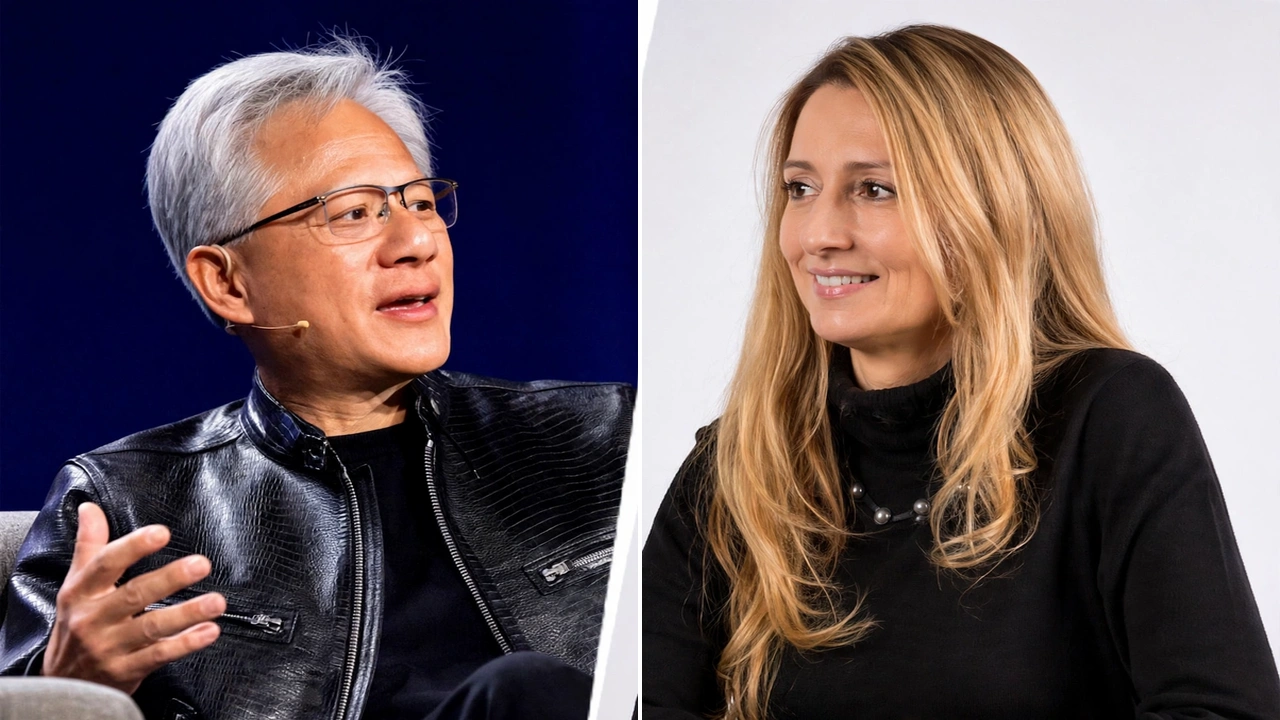

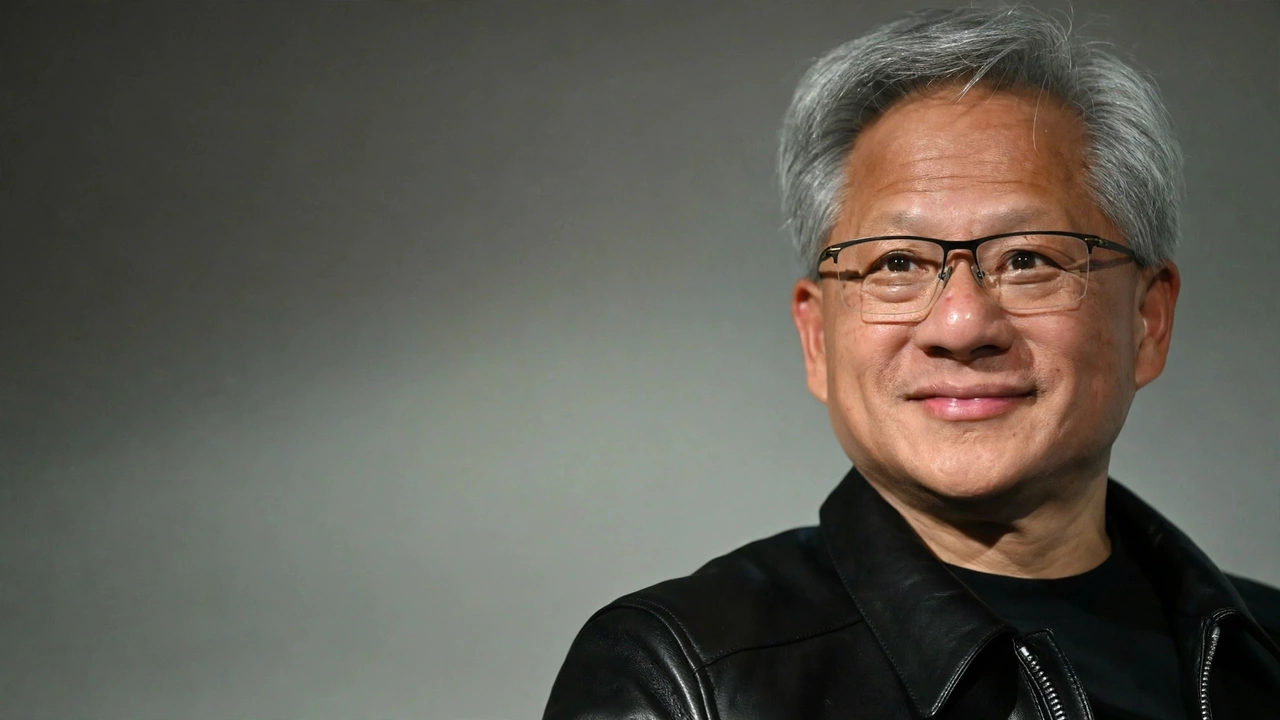
Nvidia has reinstated co-founder Jensen Huang as president, chief executive officer and a member of its board of directors following a unanimous vote, reversing a leadership decision made just 11 days earlier. The announcement sent Nvidia shares soaring 31.48% on Monday, November 23, although the stock remained below its closing price before the company publicly announced Huang’s departure.
A regulatory filing submitted to the U.S. Securities and Exchange Commission confirmed that the board reinstated Huang on Sunday, November 22, effective immediately. Colette Kress, who had served as interim chief executive following his resignation, will continue as executive vice president and chief financial officer.
The decision brings Huang back to the company he co-founded in 1993, restoring its longtime leadership during a period of exceptional financial growth and considerable uncertainty across the artificial intelligence industry. However, his return does not bring an end to the independent investigation that accompanied the leadership crisis.
In its official announcement, Nvidia said directors reached their decision after discussions with Huang and an assessment of his ability to lead the company. The board also received input from senior levels of the U.S. government and said it was confident that reinstating Huang posed no national security risk.
That assessment represents the board’s stated conclusion rather than the findings of a completed independent investigation. Nvidia confirmed that its investigation would continue and that Huang had committed to cooperating with it.
The reinstatement reverses the decision documented in Nvidia’s November 12 filing, which established that directors accepted Huang’s resignation on November 11. The board subsequently appointed Colette Kress as interim chief executive while beginning a search for a permanent successor.
Harvey C. Jones, who became board chair following Huang’s departure, will retain that position. The resulting leadership structure restores Huang’s executive responsibilities while preserving the separate board chairmanship established during his absence.
For shareholders, the most immediate consequence was a dramatic reversal in Nvidia’s stock price. Shares closed at $165.05 on November 23, compared with $125.53 on November 20, an increase of $39.52 per share in a single regular trading session.
The recovery followed seven consecutive declining sessions after Nvidia’s November 12 announcement. Shares had initially closed at $166.19 that day, while rival AMD advanced sharply, highlighting a divergence between semiconductor stocks during the leadership crisis.
Between November 11 and November 20, Nvidia’s closing price fell from $173.73 to $125.53, a decline of approximately 27.74%. Monday’s rebound recovered about 82% of that dollar-per-share loss, according to Investozora calculations based on historical closing prices.
Despite the exceptional rebound, Nvidia remained approximately 5% below its November 11 closing price. The comparison illustrates why a 31% gain does not necessarily reverse an earlier decline of nearly 28%, because the recovery begins from a substantially lower price.
An investor holding $10,000 worth of Nvidia shares at the November 11 closing price would have seen that position decline to approximately $7,226 by November 20. Following Monday’s recovery, the same holding would have been worth approximately $9,500, excluding dividends, taxes and transaction costs.
November 11–23, 2026 · Regular-session closing prices in USD
Nvidia recovered $39.52 of its earlier $48.20 per-share decline in the first trading session following Huang’s reinstatement, leaving shares approximately 5% below their November 11 close.
Sources: Stock Analysis historical prices (S&P Global Market Intelligence); SEC Form 8-K . Investozora calculations.
Note: Regular-session closing prices only. Huang was reinstated on November 22, with the announcement released November 23. Non-trading days contain no price observations. Direct exchange-level verification remains pending. Stock-price movements do not establish causation.

The decline cannot be attributed entirely to Huang’s departure. Nvidia’s leadership crisis coincided with a broader technology selloff that pushed the Nasdaq Composite down 5.3% on November 20, reflecting wider concerns about artificial intelligence valuations and technology investment.
What makes Nvidia’s recent performance particularly striking is that the leadership crisis unfolded alongside record business results. On November 17, while Kress was serving as interim chief executive, the company reported quarterly revenue of $115.8 billion, more than double the amount recorded a year earlier.
Its quarterly financial results showed data-center revenue reaching $107.6 billion, up 110% from a year earlier. Net income under generally accepted accounting principles reached $65.3 billion.
The results addressed several of the earnings questions confronting investors following Huang’s departure. However, the reporting period ended October 25, before the leadership transition, meaning the figures primarily reflected operations conducted while Huang was still chief executive.
Nvidia also forecast revenue of approximately $130 billion for its fiscal fourth quarter, with a possible variation of 3% in either direction. Notably, the company did not include Chinese data-center computing revenue in that forecast, leaving its outlook dependent on demand elsewhere.
The importance of Nvidia’s business extends beyond its own shareholders. Technology companies and computing infrastructure providers, including CoreWeave, operate within an expanding industry that depends heavily on advanced processors and the continued construction of data centers.
Huang’s return restores continuity at the top of Nvidia, but it does not establish that customers will increase spending or that the broader market’s concerns about technology valuations have disappeared. Recent technology rebounds have demonstrated how quickly investor sentiment can change.
Nvidia’s board has also established a National Security and Export Control Committee consisting of independent directors. The company is beginning a search for a chief compliance officer who will oversee compliance across the organization and report to its Nominating and Corporate Governance Committee.
These measures distinguish the company Huang returns to from the one he temporarily left. Although he has regained his executive positions and board membership, Nvidia has introduced additional oversight arrangements while its independent investigation remains active.
For employees, customers and shareholders, the central question is whether restored leadership can coexist with effective independent oversight and continued financial growth. Monday’s extraordinary stock-market recovery provides an early indication of renewed investor confidence, but the durability of that recovery will depend on developments that extend well beyond a single trading session.
Huang has returned after 11 days away from Nvidia’s leadership. The financial, regulatory and governance questions that emerged during those 11 days have not all been resolved.