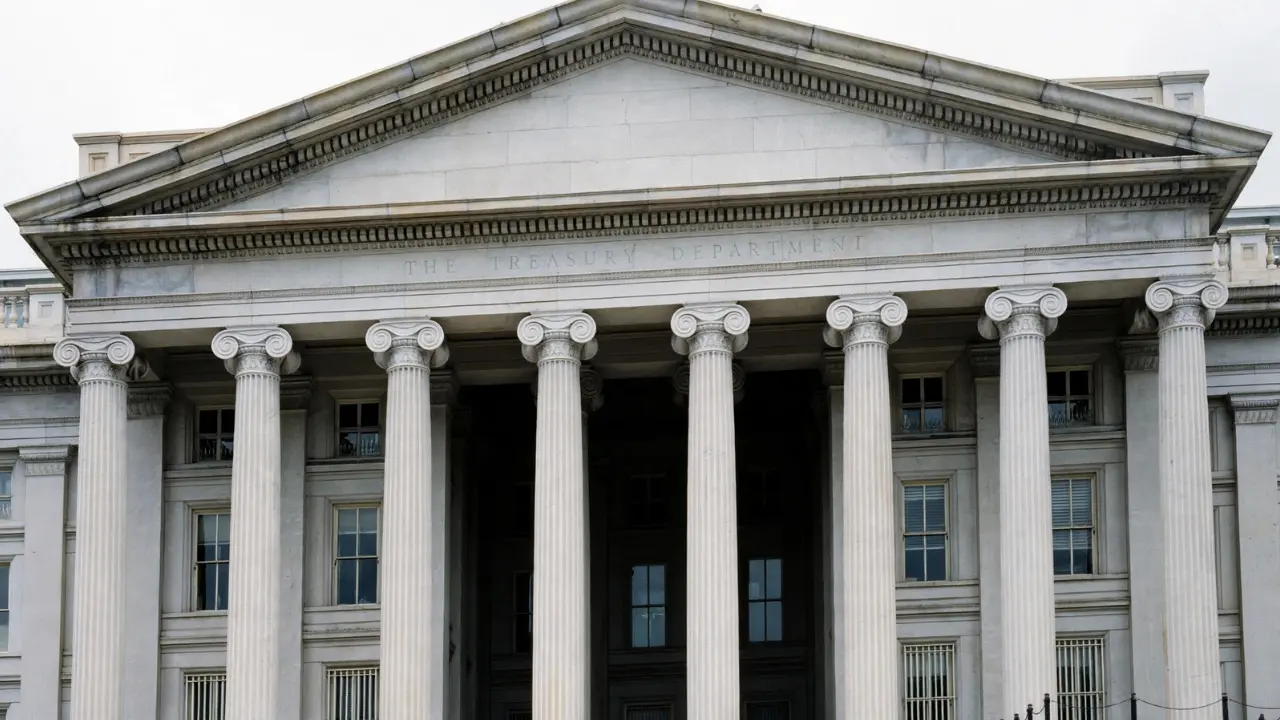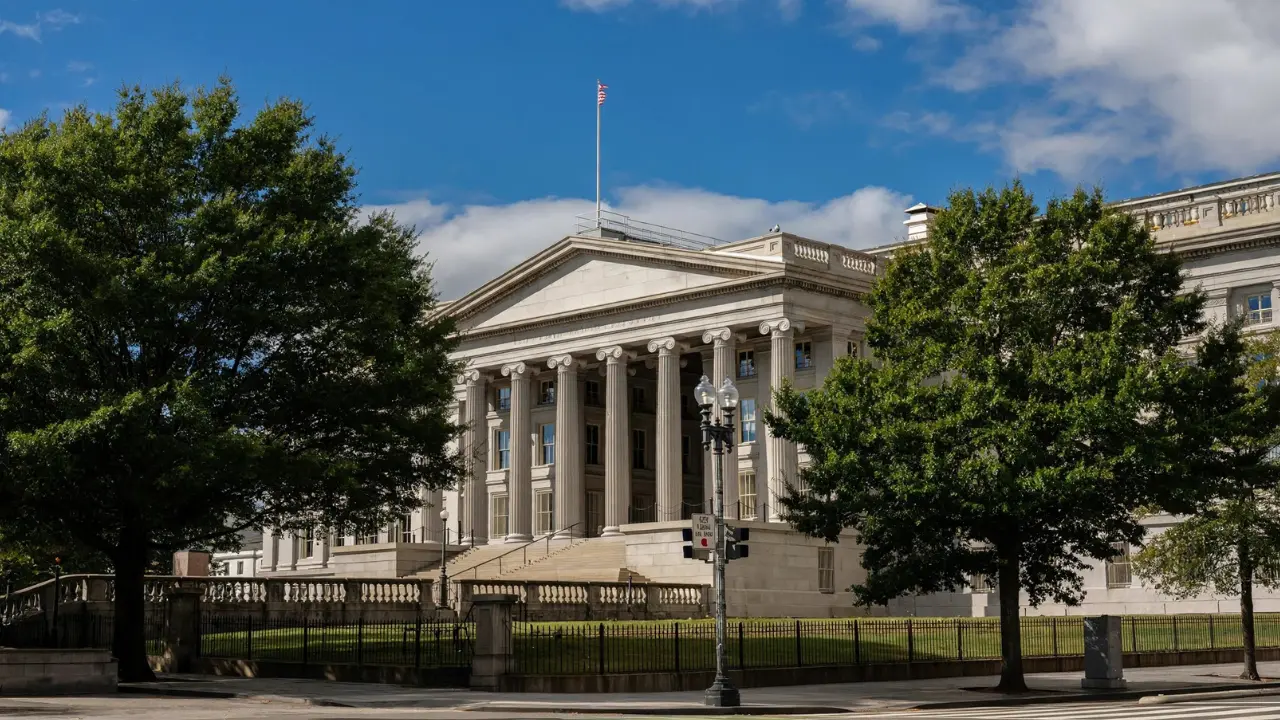
The U.S. Treasury Department has identified more than $8 billion in suspicious cross-border payments involving U.S.-based money services businesses and foreign agents over a five-year period, prompting a new federal alert to banks and other financial institutions.
The FinCEN alert, issued October 30, 2026, identifies potentially suspicious foreign-agent-directed payments between 2021 and 2025 based on Bank Secrecy Act reporting. It warns that certain international payment arrangements can conceal the actual recipients of funds and the commercial purposes behind transfers.
The $8 billion does not represent confirmed fraud, criminal proceeds or money recovered by the government. FinCEN explicitly cautions that suspicious activity reports are investigative leads rather than proof of wrongdoing.
The new development is FinCEN’s formal alert identifying specific transaction patterns and instructing financial institutions to strengthen their scrutiny of potentially suspicious arrangements. The payments themselves occurred during earlier years.
Treasury Secretary Scott Bessent announced the measures in Minnesota on Friday as part of a wider federal effort to combat fraud. The Treasury announcement also described separate initiatives involving financial crime investigations and nonprofit organizations.
How Payments Move
The transactions at issue involve money services businesses, commonly known as MSBs, that provide services such as domestic and international money transmission. These companies play an important role in moving funds across borders, particularly for people and businesses that rely on remittance services.
In a typical arrangement, a U.S.-based money transmitter works with a foreign agent to facilitate transfers. But FinCEN identified situations in which the foreign agent instructs the U.S. company to send money to an unrelated third party, sometimes in another country.
The U.S. company’s bank may execute the wire without having a complete picture of the foreign agent, the final recipient or the commercial reason for the payment. That lack of visibility is central to the federal warning.
FinCEN said its review identified potentially suspicious payments involving foreign exchange houses in the United Arab Emirates, Chinese banks and trading companies, and recipients in East Africa. These are examples from reported transaction patterns, not findings that all payments to those destinations were unlawful.
The alert also describes transfers sent abroad within hours or days after funds entered a money transmitter’s bank account. For banks, the difficulty is distinguishing ordinary commercial settlements from transactions that may disguise money laundering, terrorist financing or another financial crime. The distinction matters because international money transmission is a legitimate and essential financial service.
New Warning Signs
The October 30 alert identifies several indicators that financial institutions should consider when reviewing foreign-agent-directed transfers. They include payments to third parties without an apparent commercial relationship, incomplete invoices or contracts, unexplained transfers to newly established businesses, and repeated transactions involving rounded dollar amounts.
FinCEN also highlights payment activity that appears inconsistent with the normal business operations of a money transmitter or its foreign agent. A transfer described only as a payment for services or settlement may require closer examination when supporting records are missing or the recipient’s business does not match the explanation.
Importantly, none of these indicators independently establishes criminal activity. FinCEN instructs institutions to assess the full circumstances, including historical transaction behavior and legitimate business practices.
Under the new alert, financial institutions are asked to include the identifier FIN2026FOREIGNAGENT in relevant suspicious activity reports, both in field 2 and in the narrative. That gives the agency a specific reporting reference for the transaction risks described in the alert.
The instructions operate within existing Bank Secrecy Act reporting obligations. The alert does not announce a general prohibition on international remittances or a blanket restriction on money services businesses. The distinction is relevant to the broader U.S. money movement system, where legitimate transfers and regulatory monitoring operate alongside one another.
What $8 Billion Means
The most consequential limitation in the Treasury announcement concerns the interpretation of the $8 billion figure. FinCEN explains that Bank Secrecy Act reporting may include attempted transactions, completed transfers, inbound and outbound payments, and transfers between different accounts.
Reported activity can also contain both legitimate and potentially illegal transactions associated with a particular subject. Continuing reports, amended filings and expanded transaction networks can complicate the interpretation of aggregate amounts.
For that reason, the figure should not be treated as a confirmed financial loss or a precise estimate of criminal proceeds. The alert does not publish an annual breakdown showing how much of the suspicious activity occurred in each year from 2021 through 2025.
Nor does it establish how much of the reported total resulted in criminal charges, asset seizures or recoveries. This is particularly important when comparing the new alert with other Treasury investigations.
For example, Investozora previously covered suspicious student-aid activity identified through a separate federal financial-crime review. Those amounts concern different underlying activities and should not be combined or treated as comparable measures of confirmed losses.
What Changes for Banks
For banks and money transmitters, the practical consequence is heightened attention to third-party payment instructions, the documentation supporting those instructions, and whether international transfers match the expected business activity of the parties involved.
FinCEN’s alert reinforces existing anti-money-laundering obligations, including monitoring agents and counterparties and maintaining effective controls against illicit financial activity.
I consider the most significant point to be the gap between who instructs an international transfer and who ultimately receives the money. The alert identifies that gap as a potential vulnerability, particularly where the bank processing the payment has limited information about the underlying arrangement.
That is a narrower and more useful interpretation than treating every suspicious transfer as established fraud. It also matters for the banking system and for previous Treasury enforcement coverage, including bank enforcement actions, although those reports address different financial risks.
FinCEN emphasizes that financial institutions should not treat money services businesses as uniformly high-risk customers. Its approach calls for individualized assessment rather than blanket exclusion.
The October 30 announcement also included a separate nonprofit notice concerning potential exploitation of charities for illicit activity. That is a distinct regulatory warning and does not establish that the $8 billion in foreign-agent-directed payments was connected to nonprofit fraud.
What remains unresolved is the extent to which the suspicious transactions identified in the five-year review represent actual criminal activity. No public timetable for a further breakdown of the $8 billion was established in the alert.
Any subsequent enforcement findings, detailed transaction analysis or updated reporting guidance would need to be assessed separately from the October 30 announcement.