

Updated: June 22, 2026 – When the U.S. government hits its legal borrowing limit, the Treasury does not simply stop paying bills. It activates a set of accounting maneuvers called extraordinary measures.
These tools temporarily free up borrowing capacity without congressional action. They have been used dozens of times in recent decades to prevent a default on Social Security payments, Medicare reimbursements, military salaries, and debt interest during periods of political gridlock over the debt ceiling.
Extraordinary measures are the Treasury Department’s legally authorized toolkit for managing federal cash flow when Congress has not yet raised the statutory debt ceiling. They are not emergency powers, loopholes, or accounting fraud.
They are explicitly anticipated mechanisms under existing federal law, used to extend the period during which the government can meet its obligations while Congress negotiates the next debt limit adjustment.
Understanding how they work matters for every American who receives a federal payment, because the extraordinary measures phase is the last administrative barrier before an actual default would begin. For the complete picture of how the U.S. government moves money between agencies, accounts, and the public, the guide to the US money movement system provides the institutional foundation.
The OBBBA and the $41.1 Trillion Ceiling
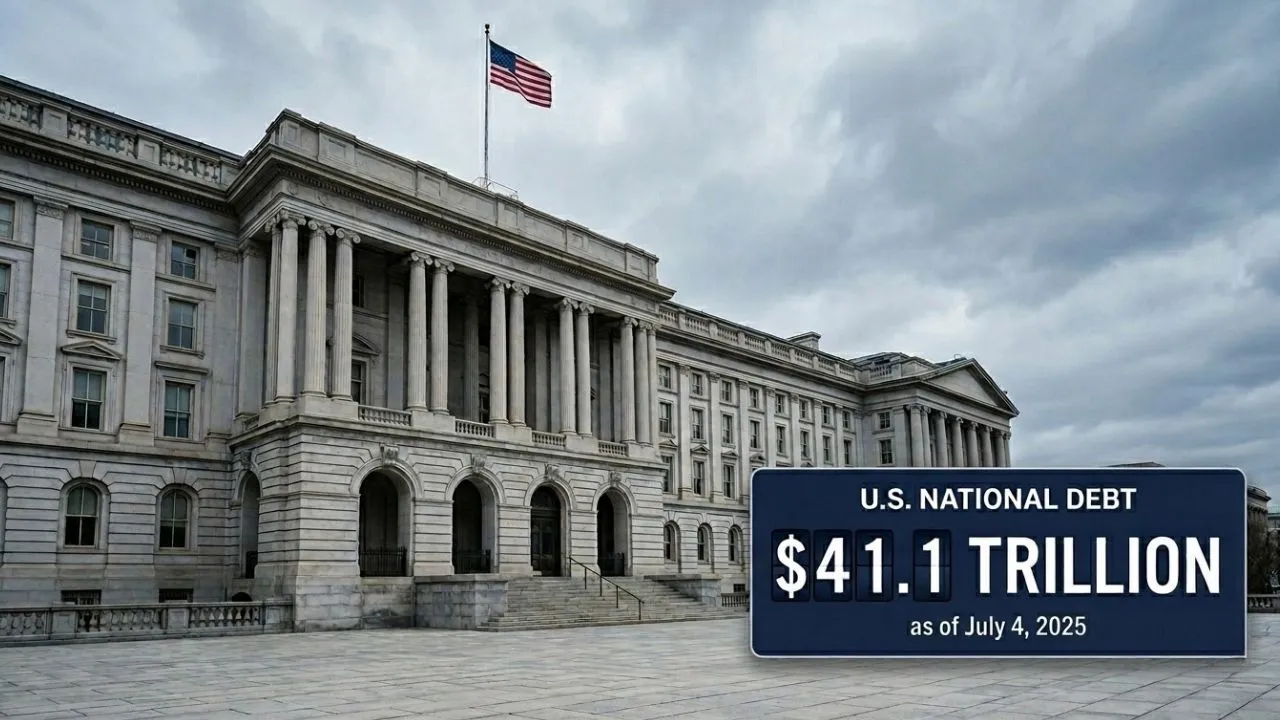
The immediate backdrop for extraordinary measures in 2026 changed significantly in July 2025. President Trump signed the One Big Beautiful Bill Act into law, legislation that included a direct $5 trillion increase to the federal debt limit, raising the statutory ceiling to a fixed $41.1 trillion.
This increase was the largest single statutory debt limit adjustment in U.S. history by dollar amount. The new ceiling provided a substantial fiscal buffer projected to keep the Treasury operational and able to borrow normally well into 2027 without requiring additional extraordinary measures.
Before the OBBBA, the Treasury had been operating under an earlier limit with active extraordinary measures in place. The $41.1 trillion ceiling resolved those immediately. The debt ceiling $41 trillion strategy article covers how the OBBBA’s fiscal architecture interacts with Treasury cash management on a day-to-day basis.
Real-time Treasury cash position data is available through the U.S. Treasury Fiscal Data Portal, which publishes the Daily Treasury Statement showing the Treasury General Account balance, debt subject to limit, and daily borrowing activity.
How the G-Fund Suspension Works
The most frequently deployed extraordinary measure is the G-Fund suspension. The G-Fund is the Government Securities Investment Fund within the Thrift Savings Plan, the federal retirement savings program for government employees and military personnel.
The G-Fund holds special-issue Treasury securities that are reinvested daily as they mature. When the Treasury hits the debt ceiling, it is legally authorized to suspend that daily reinvestment.
By halting G-Fund reinvestment, the Treasury temporarily avoids issuing new debt to replace maturing securities. This frees up borrowing headroom under the statutory cap equal to the value of securities that would otherwise have been reissued.
The G-Fund participants, federal employees and retirees, do not lose money. Federal law requires that the Treasury make the G-Fund whole, with interest, as soon as the debt ceiling is raised.
The suspension is financially harmless to G-Fund participants but provides the Treasury with billions in temporary headroom. For context on how this intersects with federal employee retirement fund protections, the ERISA analysis covers the legal framework governing these federal retirement accounts.
ESF and Civil Service Fund Measures
The Exchange Stabilization Fund, managed by the Treasury Secretary, holds assets used to stabilize currency markets and support international monetary agreements.
When the Treasury declares a debt issuance suspension period, it can halt the daily reinvestment of ESF holdings in Treasury securities, freeing additional borrowing capacity. Like the G-Fund measure, this is a deferral, not a cancellation. ESF assets are restored at market value when the debt ceiling is subsequently raised.
The Civil Service Retirement and Disability Fund, which holds assets backing the pension obligations of federal civilian employees under the older Civil Service Retirement System, provides a third pool of extraordinary measure capacity.
The Treasury can suspend investments into this fund during a debt issuance suspension period and can redeem existing investments in part or in full to generate cash. Again, the law requires full restoration with interest once the ceiling is lifted.
These three pools together, the G-Fund, the ESF, and the Civil Service fund, historically provided between $500 billion and $800 billion in combined extraordinary measure capacity depending on their balance levels at the time of deployment.
The Committee for a Responsible Federal Budget’s debt ceiling analysis provides an authoritative tracking resource for the historical timeline, legal framework, and fiscal impact of extraordinary measures across all prior episodes.
For how Treasury cash management intersects with the Treasury General Account balance that funds all federal payments, that explainer covers the TGA’s operational mechanics.
Who Gets Paid Last in a Real Default Scenario
Extraordinary measures exist precisely to prevent a scenario where Treasury must prioritize payments. No statutory authority or established legal mechanism tells the Treasury which obligations to pay first if cash is insufficient and the debt ceiling prevents new borrowing.
The Treasury has historically maintained that it lacks the authority to selectively default on any legal obligation, treating a failure to pay Social Security benefits as equivalent to a failure to pay Treasury bond interest.
In practice, the Treasury’s payment system processes millions of transactions daily through automated pipelines. The systems are not designed to filter or delay specific payment categories. A genuine default, if extraordinary measures were exhausted and Congress had not acted, would likely result in across-the-board payment delays as the Treasury General Account depleted.
Social Security payments, Medicare reimbursements, military salaries, and Treasury bond interest would all be affected simultaneously.
This is why extraordinary measures and the subsequent debt ceiling negotiations are followed closely by bond markets, credit rating agencies, and every federal payment recipient. The US debt ceiling explainer covers the statutory history and constitutional dimensions of the debt limit in detail.
Common Questions About Extraordinary Measures
How long can extraordinary measures last?
The duration depends on the Treasury’s daily cash flow, the size of the G-Fund and other pools available, and the time of year. Tax receipt seasons in April and September temporarily boost Treasury cash even without new borrowing. Historically, extraordinary measure periods have lasted from a few weeks to several months before congressional action was required.
Do extraordinary measures affect my Social Security payment?
During an active extraordinary measures period, Social Security, Medicare, and all other federal payments continue normally. Extraordinary measures buy time precisely to prevent any disruption to those payments. Only if measures were fully exhausted and Congress failed to act would payments be at risk.
Did the OBBBA permanently resolve the debt ceiling issue?
No. The OBBBA raised the ceiling by $5 trillion to $41.1 trillion, which provides substantial runway, but the statutory ceiling is a fixed dollar limit. As federal spending continues, the debt will eventually approach $41.1 trillion and the extraordinary measures process will become relevant again, projected at some point after 2027 based on current trajectory. The Treasury federal budget explainer covers the structural deficit dynamics that drive debt growth.
What is the Daily Treasury Statement?
The Daily Treasury Statement, published each business day by the Treasury, shows the current balance of the Treasury General Account, the amount of debt outstanding relative to the statutory ceiling, and the day’s inflows and outflows. It is the most granular public window into the federal government’s real-time fiscal position. The Daily Treasury Statement explained article walks through how to read it and what the key line items mean.
The Institutional Architecture Behind Federal Solvency
Extraordinary measures are a feature, not a flaw, of the U.S. fiscal system. They exist because Congress often requires time to negotiate debt ceiling adjustments, and the Treasury needs legally authorized tools to maintain operations during that gap.
The G-Fund suspension, ESF halt, and Civil Service fund redemptions are the primary instruments, each backed by explicit statutory authority and protected by legal requirements to make affected funds whole.
The $41.1 trillion ceiling established by the OBBBA in July 2025 means that extraordinary measures are not an active concern as of June 2026. But understanding their mechanics matters for every person whose financial security depends on uninterrupted federal payments.
Social Security beneficiaries, federal employees, Medicare recipients, and Treasury bond holders all have a direct stake in the Treasury’s ability to manage the debt ceiling process. For data on current Treasury cash position and debt subject to limit, the fiscal tracking portal provides daily updates.
For how the OBBBA tax cuts interact with Fed policy and long-term borrowing costs, that analysis connects the legislative and monetary dimensions of the 2025 fiscal package.
And for the parallel impact on how the Fed manages its own balance sheet during periods of Treasury stress, the quantitative tightening overview provides the institutional counterpart to the Treasury extraordinary measures framework.