The Federal Reserve is heading toward its September 15–16 meeting with inflation still too high, the labor market still surprisingly firm, and a growing split inside the central bank over whether interest rates need to rise again.
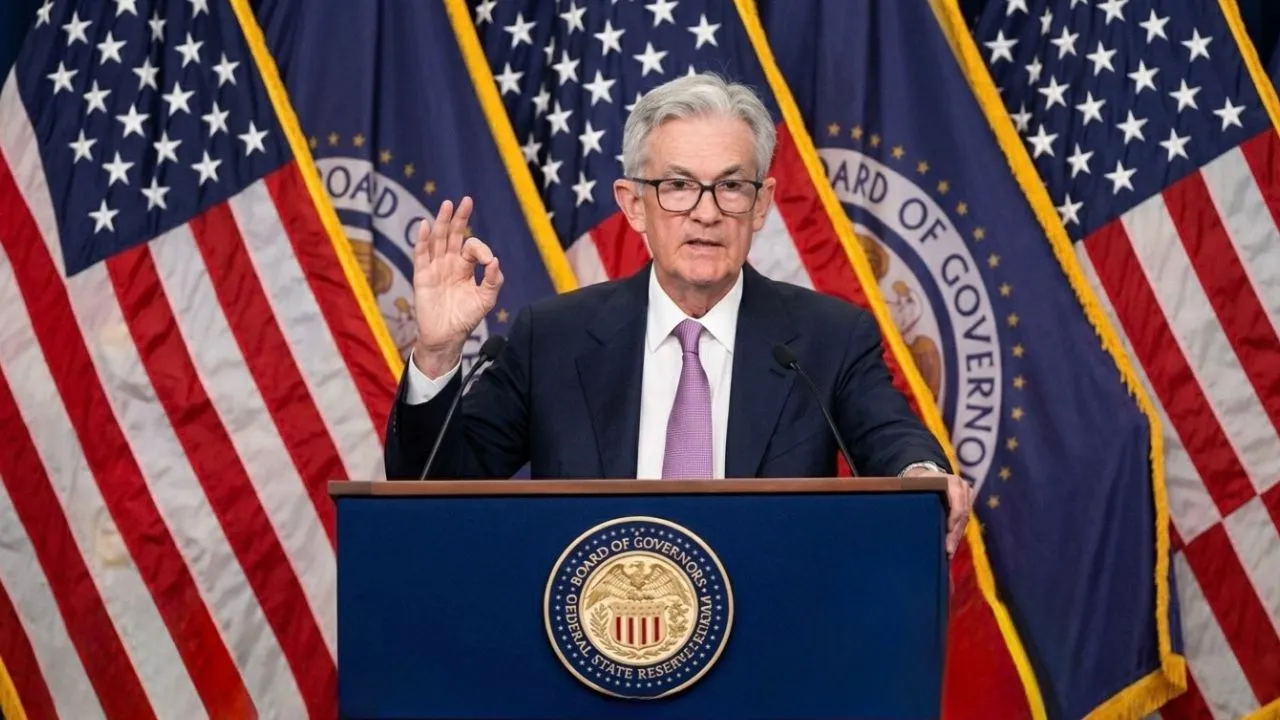
Fed Chair Kevin Warsh made clear at Jackson Hole that he does not want to make that decision from one inflation report or one jobs number. His focus is broader: Is inflation spreading through the economy? Is employment actually weakening? Are financial markets restraining demand? Is credit becoming harder to obtain? And is money growth consistent with inflation returning to 2%?
That matters because the Fed held its benchmark rate at 3.50% to 3.75% in July by a 9–3 vote. Beth Hammack, Neel Kashkari and Lorie Logan instead wanted a quarter-point increase. The next meeting on September 15–16 will also include new economic projections.
There is another important wrinkle. The Fed will not receive another PCE inflation report before that meeting. July PCE is the latest available, while BEA has scheduled August PCE for September 30. Instead, policymakers will get the August jobs report on September 4, producer prices on September 10 and CPI inflation on September 11.
So what should investors, savers and borrowers actually watch?
Investozora built a seven-signal framework from the measures Warsh emphasized in his August 28 Jackson Hole speech, combined with the latest Federal Reserve, BEA, BLS, Treasury and banking data. It is an analytical framework, not an official Fed checklist or prediction of how Warsh will vote.
| Signal | Latest Reading | Investozora Read |
|---|---|---|
| Core PCE | 3.3% YoY in July | Still elevated |
| PCE breadth | 54% above 3% | Still broad |
| Unemployment/claims | 4.1%; 205,500 four-week claims | Labor still firm |
| Wage growth | 3.2% hourly earnings | Moderate |
| Treasury yields | 2Y 4.34%; 10Y 4.75% | Market rates higher |
| Credit conditions | C&I standards relatively easy | Not broadly restrictive |
| Money/credit | M2 +5.4%; C&I loans +8.7% YoY | Still expanding |
Inflation Trend
The first signal is not simply whether inflation rises or falls for one month. It is whether the underlying trend is finally moving convincingly toward the Fed’s 2% goal.
BEA reported that the PCE price index rose 3.7% from a year earlier in July, while core PCE, which removes food and energy, rose 3.3%. Both headline and core prices increased 0.2% from June. Warsh’s concern is persistence. In his Jackson Hole speech, he said policymakers need to identify the generalized trend underneath short-lived price moves.
He noted that headline PCE was running at 3.7% over 12 months and 4.1% at a six-month annualized rate, and said the summer’s better readings had not yet convinced him that underlying inflation had meaningfully improved. Core PCE at 3.3% is still 1.3 percentage points above the Fed’s 2% inflation goal, an Investozora calculation. That gap is what makes the September decision difficult.
One softer CPI reading could help, but Warsh’s framework suggests that a broader run of improvement matters more than a single surprise. For background on why 2% matters, Investozora’s guide to the Fed inflation target explains how that goal fits into monetary policy.
Price Breadth
The second signal may be the most useful and the least watched.
Warsh said the PCE index contains 199 individual components. Over the latest 12 months, 54% of those goods and services recorded price increases above 3%. That is down sharply from the post-pandemic peak of about 77%, but still far above the 32% average during the two decades before the pandemic.
That difference is large. The current 54% share is 22 percentage points above the pre-pandemic benchmark. Put another way, the share of PCE components running above 3% is roughly 69% higher than that earlier 32% norm. Those are Investozora calculations using Warsh’s figures.
The six-month picture is only somewhat better. Warsh said 49% of PCE components had risen at an annualized rate above 3% during that period. That remains 17 percentage points above the pre-pandemic comparison.
This is why headline inflation alone can mislead. A big move in gasoline can pull the overall index around. Breadth tells policymakers whether excessive price growth is concentrated in a few categories or spread across much of the economy. A meaningful narrowing of that 54% figure would therefore strengthen the case that inflation pressure is truly becoming less widespread.
Labor Stress
The third signal is whether the labor market is actually breaking—not simply whether monthly payroll growth looks weak.
July delivered an unusual combination. Nonfarm payroll employment fell by 23,000, while the unemployment rate remained 4.1%. BLS also revised May and June payroll growth down by a combined 103,000 jobs. Yet weekly unemployment claims still tell a different story. Initial claims were only 203,000 in the week ended August 22, while the four-week moving average was 205,500.
Warsh specifically highlighted the four-week claims average as a useful real-time measure and said it remained near its lowest levels in decades. In his assessment, a 4.1% unemployment rate and low claims remain consistent with a labor market close to full employment.
That makes the September 4 jobs report unusually important. A clear rise in unemployment, claims and other signs of layoffs together would tell a different story from simply another small payroll number.
If unemployment remains near 4.1% and claims stay around current lows, the employment side of the Fed’s mandate gives Warsh less reason to tolerate above-target inflation. Investozora’s broader September Fed outlook tracks how incoming data could alter that balance.
Wage Pressure
Wages are signal four, but Warsh gave them a different role than many investors assume.
Average hourly earnings for private-sector workers were $37.62 in July, up 3.2% from a year earlier, according to BLS. The Employment Cost Index tells a similar story: wages and salaries for civilian workers increased 3.2% over the 12 months ending in June, while total compensation rose 3.4%.
Those figures are much cooler than the wage increases seen during the earlier post-pandemic inflation surge. But Warsh explicitly warned against treating wage growth as a mechanical predictor of future inflation. His point is important: wages can reflect productivity, labor shortages and other forces, not simply an inflation spiral.
That makes wages a confirmation signal rather than a stand-alone trigger in the Investozora framework. If wage measures accelerate while inflation breadth remains high and unemployment stays low, the combination would strengthen the case that demand is still running too strongly.
Moderate wage growth alongside falling inflation breadth would send a much less worrying message. The September decision therefore is unlikely to turn on whether wages move a tenth of a percentage point in either direction. The direction matters most when it agrees with the other six signals.
Treasury Yields
The fifth signal comes directly from financial markets.
Warsh said policymakers should pay attention to information embedded in Treasury prices, trading volumes, the dollar, commodities and the cost and availability of credit. Those markets can show whether financial conditions are already doing some of the Fed’s work.
Treasury’s official curve shows that on August 31, the 2-year Treasury yield was 4.34% and the 10-year yield was 4.75%. On August 27, immediately before Warsh’s Jackson Hole address, those yields were 4.20% and 4.67%, respectively.
That is an increase of 14 basis points in the 2-year yield and 8 basis points in the 10-year yield, an Investozora calculation. Those moves should not be attributed to Warsh alone. Treasury yields react to inflation expectations, economic data, oil, fiscal developments, global risks and expected Fed policy.
But the direction matters. Higher market yields raise borrowing costs even when the Fed itself has not moved. Investors trying to understand the connection can see Investozora’s guide to Fed rates and Treasury yields. If Treasury yields keep rising while credit remains easy, Warsh may see markets pricing persistent inflation risk rather than an economy being squeezed into recession.
Credit Conditions
Signal six asks a simple question: Does today’s interest-rate level actually feel restrictive in the financial system?
The Fed’s July Senior Loan Officer Opinion Survey gives a surprisingly mixed answer.
Banks said standards for commercial and industrial loans were basically unchanged during the second quarter, while demand strengthened among large and middle-market companies. More importantly, banks reported that current C&I lending standards were generally easier than the midpoint of their historical ranges, and standards had eased across C&I loan types compared with July 2025.
The July FOMC minutes reached a similar conclusion. Lending standards had eased on net for a fourth straight quarter, demand had strengthened for a fifth straight quarter, and overall standards were slightly below their historical median.
That matters because a nominal policy rate of 3.50% to 3.75% does not tell the entire story. Monetary policy works through the rates and terms households and companies actually face.
If businesses can still borrow easily, spreads remain contained and demand for credit is growing, financial conditions may be doing less to slow inflation than the headline Fed rate suggests. That transmission process is explained in Investozora’s guide to how the Fed controls rates.
Money Growth
The seventh signal is the most distinctly Warsh-like part of the framework: money and credit creation.
Warsh said at Jackson Hole that “money matters.” His argument was broader than simply looking at the Fed’s own balance sheet. Policymakers also need to understand money created through banks and the wider financial system, then judge what that money is doing to financial conditions and prices.
The latest numbers do not look contractionary. Seasonally adjusted M2 reached $23.218 trillion in July and was 5.4% higher than a year earlier. Commercial and industrial loans at U.S. commercial banks were about $2.90 trillion in July. On the latest Federal Reserve H.8 data available through FRED, they were 8.7% above a year earlier, up from 8.4% year-over-year growth in June.
Neither number proves that inflation must rise. The relationship between money, credit and consumer prices is neither immediate nor one-for-one. But together with easier C&I standards, firm credit demand and still-broad inflation, the data give Warsh another reason to question whether policy is restraining nominal demand enough.
That brings the seven signals together. As of September 1, the dashboard does not show an economy with every indicator pointing toward another rate increase. Payroll growth has weakened, wage growth is moderate and inflation is below its post-pandemic peak.
But neither does it show a clean return to price stability. Core PCE remains 3.3%. More than half of PCE components are still rising faster than 3%. Unemployment is only 4.1%. Claims remain low. Business credit conditions are relatively easy. M2 and C&I loans are expanding. The most important change before September 16 would therefore not be one spectacular data point. It would be several signals moving together.
A weaker August jobs report accompanied by rising claims, cooler CPI inflation, narrower price breadth and tighter financial conditions would materially change the picture. Stable employment combined with another firm inflation report and easy credit would point in the opposite direction.
That is also why this framework remains useful after September. Whatever the Fed decides, the same seven measures can be used to judge whether the next move becomes more or less necessary.
Warsh’s central message was not that one number has already decided the outcome. It was that the Fed needs to find the underlying economic signal beneath noisy monthly data. Right now, that signal still says inflation has more work to do.