

The Internal Revenue Service has begun issuing automatic refunds to more than 50,000 taxpayers who previously claimed adoption tax credits, following a revised Treasury Department interpretation that allows certain unused credits from earlier years to qualify for refunds on 2025 tax returns.
In an October 16 announcement, the IRS confirmed that adjustments and refunds started in late September 2026 and said it expects to complete the process for most eligible taxpayers by the end of the year.
The change applies specifically to adoption tax credit carryforwards originating in tax years 2020 through 2024 that remained available for use in 2025. Under the revised interpretation, those unused credits can increase the refundable portion of the 2025 adoption credit, subject to a $5,000 limit per qualifying child. Affected taxpayers generally do not need to file amended returns or submit separate refund requests.
What Changed Under IRS Rules
The Working Families Tax Cuts legislation made up to $5,000 of the adoption tax credit refundable per eligible child beginning with the 2025 tax year. Previously, the treatment of adoption credit carryforwards meant that unused credits from earlier years were not included in calculating the refundable portion under the original 2025 filing instructions.
Following Treasury’s clarification, the IRS will now allow qualifying carryforwards from 2020 through 2024 to increase the refundable credit for 2025 only. The agency explained in its official guidance that certain taxpayers may have received less refundable adoption credit than permitted under the revised interpretation.
Rather than requiring those taxpayers to correct their returns individually, the IRS is using existing tax return and account information to recalculate qualifying credits. The distinction matters because the change concerns unused adoption credits from previous years, not a newly authorized payment available to every household.
For 2025, the total adoption credit remains capped at $17,280 per eligible child, including both refundable and nonrefundable amounts. The credit begins phasing out for taxpayers with modified adjusted gross income above $259,190 and is eliminated at $299,190 or more, according to the IRS credit instructions.
Who Qualifies for Refunds
The automatic adjustment generally concerns taxpayers who filed a 2025 federal income tax return and whose IRS records establish that they had unused adoption credits available from eligible earlier years.
Under the IRS eligibility criteria, taxpayers must have qualifying adoption credit information, carryforwards available for use in 2025, and an account calculation showing that the refundable portion should increase. The IRS has also identified several limitations:
- Taxpayers who already received the correct refundable credit may receive no additional adjustment.
- Carryforwards originating before 2020 have expired and cannot be included.
- Accounts involving identity theft indicators, processing freezes, dependency conflicts or other unresolved issues may require additional review.
- Taxpayers who omitted relevant carryforward information may need to amend their returns if the IRS cannot determine the correct amount automatically.
Taxpayers who filed their 2025 returns before April 15, 2026, will generally receive any applicable adjustments automatically. Returns filed under extensions or affected by unresolved account issues will be reviewed later in 2026.
Refund Amounts May Vary
Although the refundable adoption credit can reach $5,000 per qualifying child for 2025, the IRS has not announced that every affected taxpayer will receive that amount. The actual result depends on the available carryforward, qualifying children, income restrictions, previously claimed credits and other account adjustments.
Some taxpayers may receive additional refunds, while others may see existing tax balances reduced without receiving a payment. Any resulting overpayment can also be applied to outstanding tax liabilities or certain other debts, as explained in Investozora’s refund offset guide. The IRS has not provided a total dollar value for the refunds associated with the newly announced adjustment process.
When Taxpayers Receive Notices
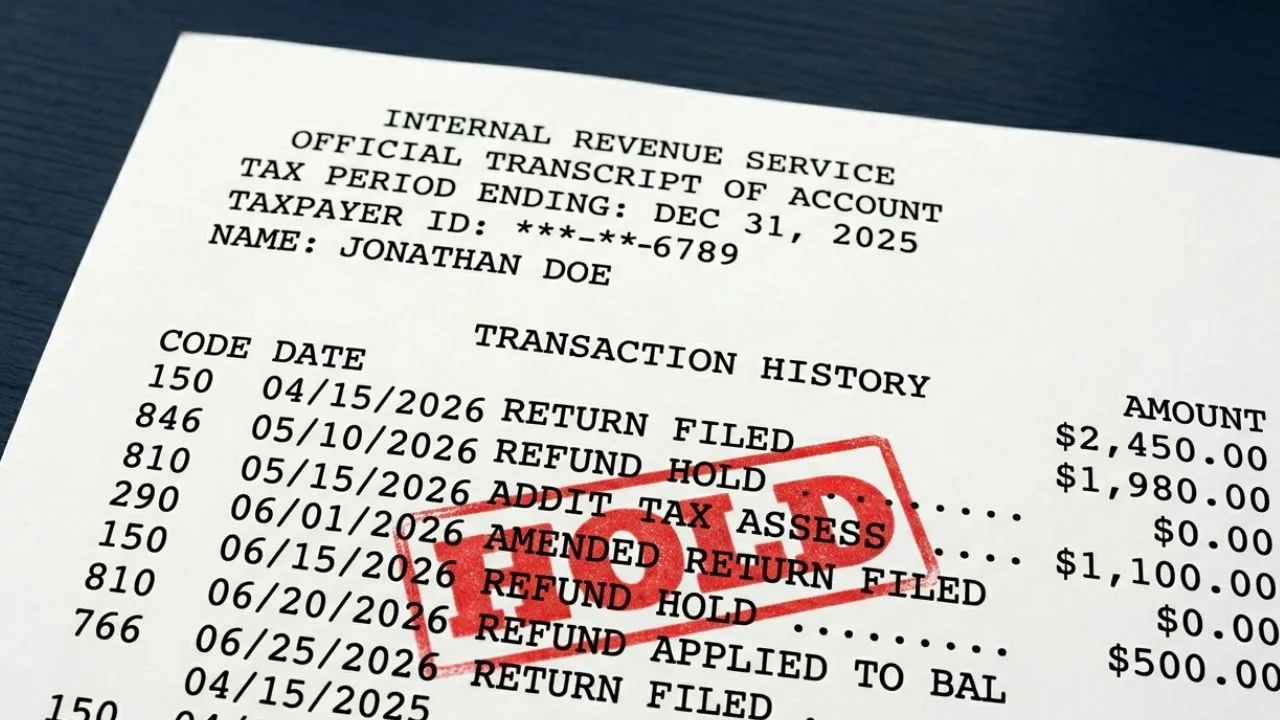
The IRS said affected taxpayers will generally receive an official notice within 30 days after their account adjustment. The notice will explain the correction and identify whether the resulting amount was refunded or applied against an outstanding obligation. Taxpayers can review updated account information through their IRS Individual Online Account or request an account transcript.
Investozora’s IRS account guide explains the differences between the agency’s digital account services. Importantly, the IRS says its standard Where’s My Refund? tool will not display information about this particular adjustment. Taxpayers should instead rely on their adjustment notice, online account or tax transcript. The agency also advises taxpayers not to call solely for information about the program unless instructed by an IRS notice.
What Happens After 2025
The revised carryforward treatment is limited to tax year 2025 and does not make older adoption credit carryforwards refundable in 2026 or later years. An increase in the refundable credit for 2025 may also reduce the remaining nonrefundable adoption credit available to carry into future tax years.
Affected taxpayers should retain their IRS adjustment notices, Form 8839 records and updated carryforward worksheets when preparing subsequent returns. The IRS expects most qualifying adjustments and refunds to be completed by December 31, 2026, although some accounts may require additional processing.
For taxpayers whose records already support the adjustment, the agency’s guidance is straightforward: no amended return is required solely to obtain the corrected refundable adoption credit.