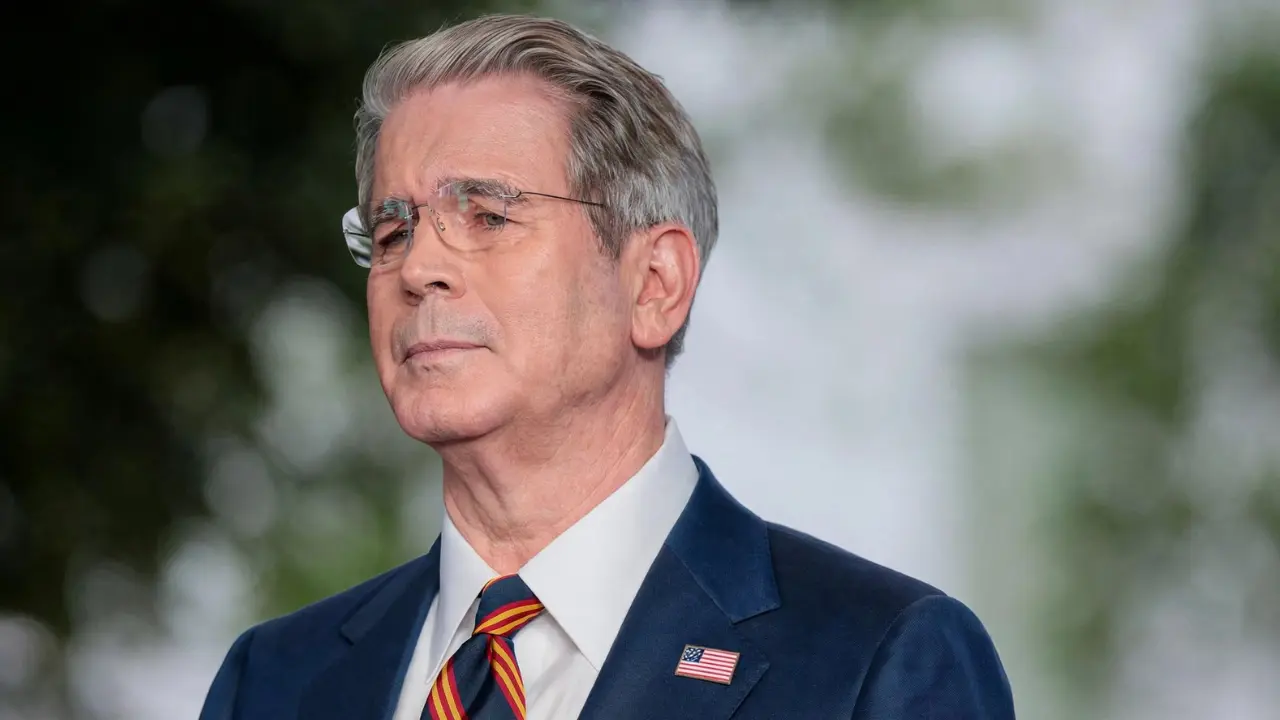


Federal Reserve Chair Kevin Warsh said on Friday, October 16, that the artificial intelligence investment boom is driving demand before its longer-term productivity benefits emerge, highlighting a new challenge for monetary policymakers while offering no indication of whether the Fed will raise interest rates later this month.
Speaking with International Monetary Fund Managing Director Kristalina Georgieva at the IMF annual meetings in Bangkok, Thailand, Warsh described AI as a major economic transformation that could eventually increase productivity and wealth.
But he acknowledged that the transition is initially affecting demand more than supply, creating pressures policymakers must consider as they pursue stable prices and maximum employment. The comments came ahead of the Federal Reserve’s October 27–28 policy meeting, following its September decision to raise the federal funds target range to 3.75%–4.00%.
AI Investment Raises Demand Pressures
Warsh described AI as potentially the most consequential economic transformation of his lifetime, emphasizing the distinction between its immediate investment requirements and eventual productivity benefits. “It’s obviously hitting the demand side of the economy before it’s going to hit the supply side of the economy,” Warsh said.
He explained that AI-related investment represents a near-term increase in aggregate demand, while improvements in productive capacity may take longer to materialize. That distinction matters for inflation.
Spending on computing infrastructure, electricity, equipment and construction can increase demand for resources before new technology allows businesses to produce goods and services more efficiently. The resulting pressure is not necessarily permanent. Warsh argued that AI could ultimately support stronger productivity and greater economic wealth, although the transition could be uneven.
He also described a broader American investment surge extending beyond AI, suggesting that business investment is providing additional strength to the economy. The comments add another dimension to the inflation outlook: technological advances may eventually expand economic supply even as their initial development adds to demand.
Warsh Avoids October Rate Guidance
Despite acknowledging price pressures, Warsh declined to indicate how he would approach the upcoming monetary policy decision. “I don’t prejudge meetings,” he said during the discussion. He also said he did not believe in announcing ahead of time what he might do at the remaining policy meetings this year.
That restraint leaves the October decision unresolved rather than establishing support for either another rate increase or a pause. The Fed raised its benchmark target range by 25 basis points at the September decision, responding to persistent inflation concerns. Warsh characterized that move as removing some monetary accommodation and reiterated the central bank’s commitment to price stability.
His refusal to offer an October signal is therefore not evidence that the Fed has abandoned further tightening. It indicates that he is keeping the next decision open. The September FOMC minutes provide the broader committee’s policy deliberations, but Warsh’s latest comments did not announce any new committee decision.
Productivity Benefits Remain Uncertain
Warsh expressed confidence that AI could make economies more productive over time, while acknowledging uncertainty surrounding its employment effects. He also suggested that the technology could improve how central banks interpret economic information, potentially allowing policymakers to analyze complex economic signals more effectively.
The Federal Reserve is examining those questions through a task force focused on productivity and jobs. Warsh said its first public field hearing is planned for November 16 in the San Francisco Bay Area. The initiative could help clarify how AI investment, employment changes and productivity growth affect the economic conditions policymakers monitor.
For now, the distinction remains important: an investment-driven demand expansion and a productivity-driven supply expansion can have different implications for inflation and interest rates. Warsh’s remarks identify that challenge but do not quantify AI’s contribution to current consumer-price increases.
The next formal monetary policy decision is scheduled for October 28, according to the FOMC calendar. Until then, investors and borrowers face uncertainty over whether persistent inflation will justify another rate increase or whether policymakers will wait for additional evidence.