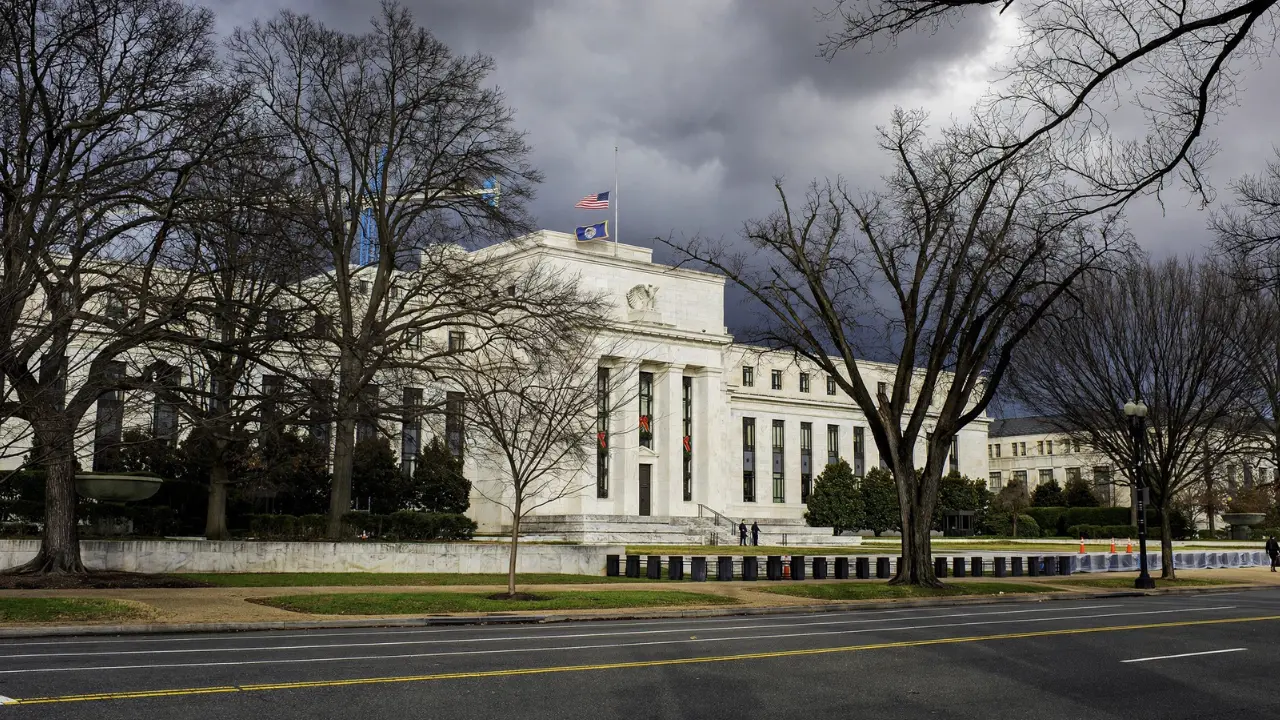


WASHINGTON — The Federal Reserve raised interest rates by a quarter percentage point Wednesday, lifting its federal funds target range to 3.75% to 4.00% in its first rate increase since July 2023 as policymakers responded to inflation that remains above the central bank’s goal.
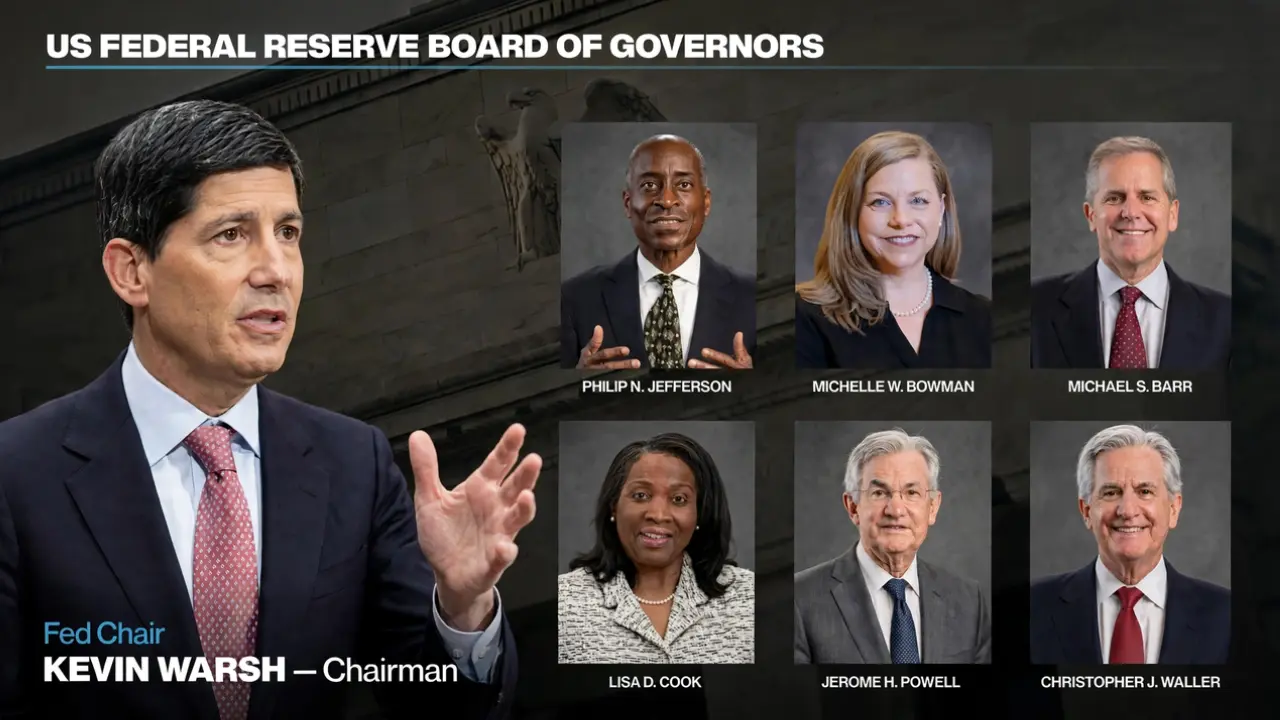
The Federal Open Market Committee approved the increase unanimously, 12–0, according to the Federal Reserve’s September 16 FOMC statement September 16 FOMC statement. The decision reverses the position taken at the July meeting, when officials voted 9–3 to keep the target range at 3.50% to 3.75%.
The Fed said economic activity is expanding at a solid pace, domestic spending has remained resilient, productivity growth is strong and capital investment is robust. It also said inflation remains elevated and that Wednesday’s increase would support a “timelier return” to its 2% inflation goal.
The change is important because the July meeting had already revealed a clear divide inside the committee. Beth Hammack, Neel Kashkari and Lorie Logan opposed the July hold because they wanted a quarter-point increase then. In September, that disagreement disappeared: every voting member backed the higher rate.
It is also the Fed’s first increase in more than three years. At its July 26, 2023 meeting, the FOMC raised the target range to 5.25% to 5.50%. The Federal Reserve’s official July 2023 decision July 26, 2023 FOMC statement confirms that increase. Subsequent policy moves eventually brought rates down to the 3.50%–3.75% range that remained in place through the July 2026 meeting.
Wednesday’s decision therefore marks more than a routine quarter-point adjustment. It represents a renewed tightening of monetary policy after a long period without an increase.
The Federal Reserve also changed the rates it uses to implement the decision. Under its September 16 implementation note Fed monetary-policy implementation note, the interest rate paid on reserve balances rises to 3.90% beginning September 17.
The standing overnight repurchase-agreement rate rises to 4.00%, while the overnight reverse-repurchase offering rate rises to 3.75%. The Fed also approved a quarter-point increase in the primary credit rate to 4.00%.
Those operational changes are how the central bank works to keep the effective federal funds rate inside the new 3.75%–4.00% target range. The decision does not mean every consumer interest rate automatically rises by 0.25 percentage point.
The Federal Reserve explains that changes in the federal funds rate influence other short-term interest rates and broader financial conditions, which can then affect borrowing and spending by households and businesses.
Floating-rate loans and other short-term borrowing costs can respond relatively quickly, while the Fed’s explanation of monetary-policy transmission shows why mortgage rates and other longer-term rates are also influenced by market expectations and other factors. The bigger new signal came from the economic projections released alongside the decision.
The Fed’s September Summary of Economic Projections September 2026 economic projections shows that the median participant now projects the federal funds rate at 4.1% at the end of 2026. In June, the median projection was 3.8%. The 2027 median was also raised sharply, from 3.6% in June to 4.1% in September.
That 4.1% figure is not a promise that the Fed will raise rates again. Each projection represents an individual FOMC participant’s assessment of appropriate monetary policy, and the Fed explicitly warns that the future rate path is uncertain.
But the arithmetic is significant. The midpoint of the new 3.75%–4.00% target range is 3.875%. Another standard quarter-point increase would move the range to 4.00%–4.25%, with a midpoint of 4.125%, which rounds to 4.1%.
That means the September median projection is consistent with one additional quarter-point increase by the end of 2026 if policy changes occur in standard 25-basis-point increments. This is an Investozora calculation based on the official target range and the Fed’s published median projection, not an announced Federal Reserve decision.
That is a materially different outlook from June. Investozora’s pre-meeting analysis of the September dot plot, Sept. 16 dot-plot outlook focused on whether the new projections would move away from the June path. They did: the median year-end rate projection rose by 0.3 percentage point for both 2026 and 2027. The economic assumptions behind that rate path also changed.
The median projection for 2026 PCE inflation increased to 3.7% from 3.6% in June, while the core PCE inflation projection increased to 3.4% from 3.3%. At the same time, officials lowered their median 2026 unemployment-rate projection to 4.1% from 4.3% and raised projected real GDP growth to 2.3% from 2.2%.
Taken together, those projections show a Fed expecting slightly stronger growth and lower unemployment than it expected in June while also seeing somewhat more inflation and a higher appropriate interest-rate path. That interpretation is Investozora analysis based on the changes in the Fed’s own June and September projections.
The rate increase also follows economic data that continued to show resilient household demand. Earlier Wednesday, Investozora reported that August retail sales rose 1.2% ahead of the Fed decision, adding another piece of evidence that consumer spending had not weakened sharply before policymakers met.
For households, Wednesday’s decision matters most through the financial conditions that follow it. Higher short-term rates can put upward pressure on borrowing costs, particularly products linked closely to short-term benchmarks. Savers may also see banks adjust deposit yields. But those changes are determined by financial institutions and markets and should not be described as automatic one-for-one consequences of the Fed’s quarter-point move.
The next scheduled FOMC meeting is October 27–28, followed by the final scheduled meeting of the year on December 8–9, according to the Federal Reserve’s current meeting calendar 2026 FOMC meeting calendar.
What happens at those meetings is not decided by Wednesday’s projections. Incoming inflation, employment, spending and financial-market data can change policymakers’ assessments.
For now, the confirmed change is clear: the Fed has ended a more than three-year period without a rate increase, moved the federal funds target to 3.75%–4.00%, secured a unanimous vote after July’s 9–3 split, and published a new rate path that points to meaningfully tighter policy than officials projected only three months ago.