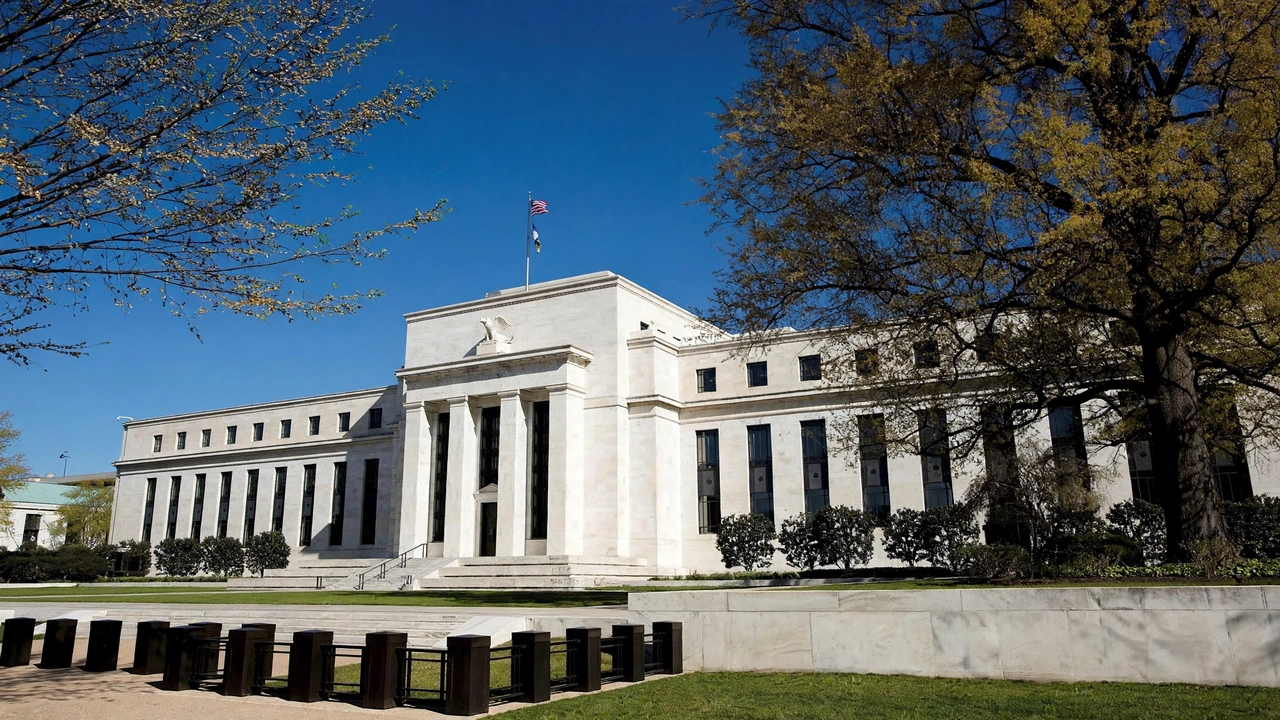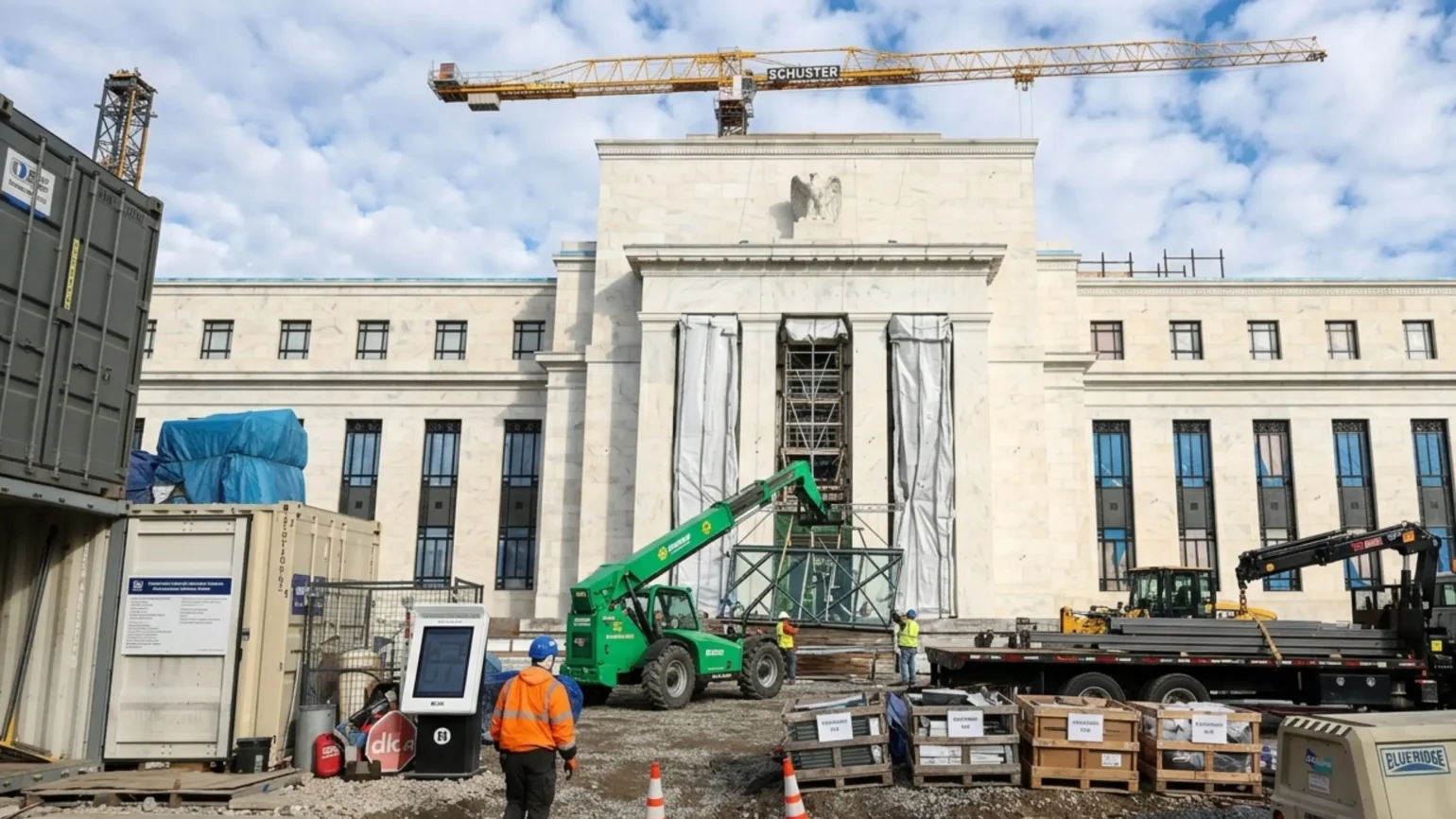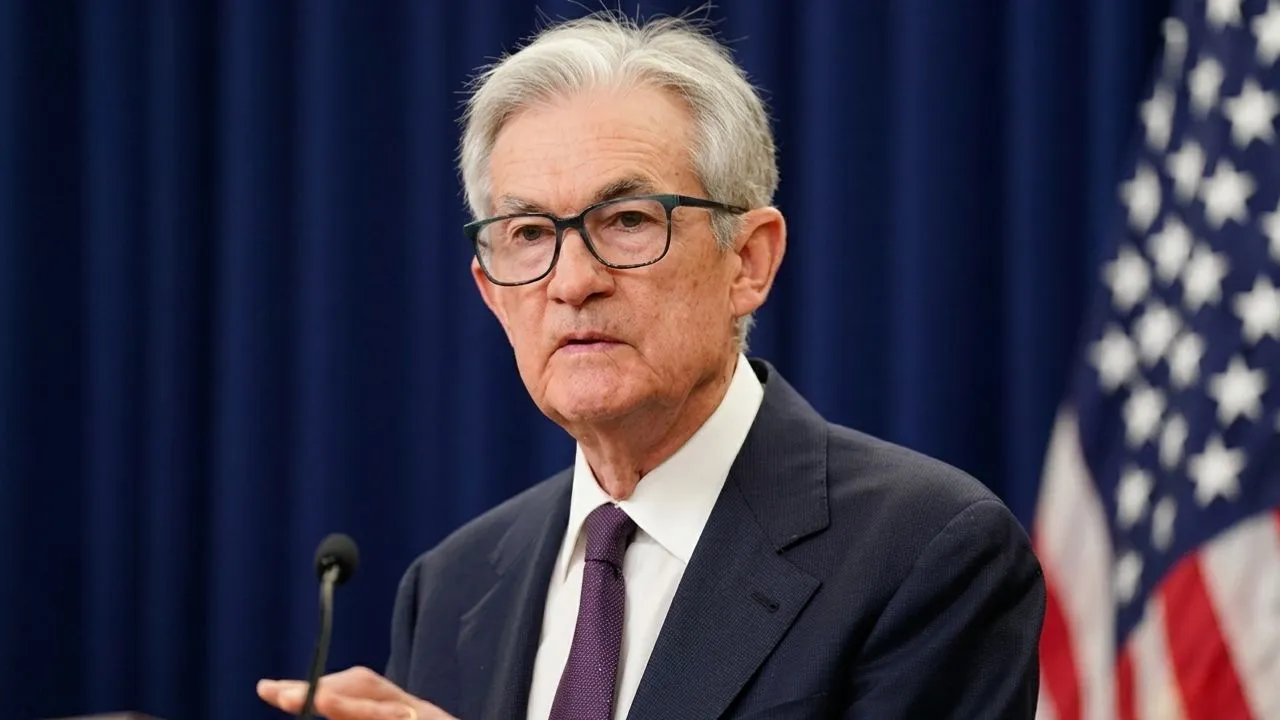

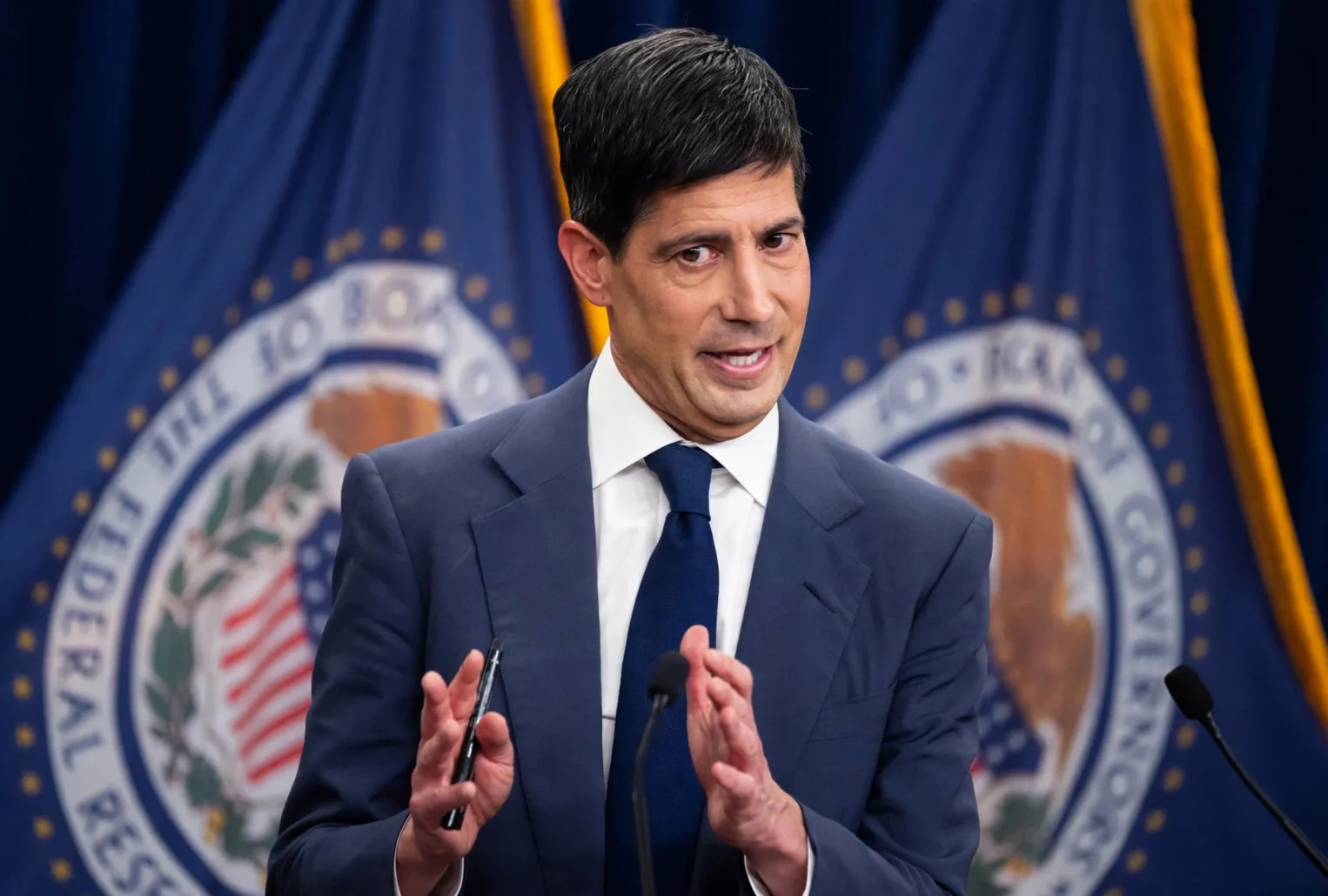
The Federal Reserve faces another consequential interest rate decision on October 28 as accelerating U.S. inflation, weakening payroll growth and renewed energy-price pressures complicate the case for further monetary tightening.
The Federal Open Market Committee (FOMC) raised its benchmark interest rate by 25 basis points on September 16, bringing the federal funds target range to 3.75%–4.00%. Since then, September consumer inflation has accelerated to 3.7%, while the latest employment report showed only 29,000 new payroll jobs.
Those developments create a difficult question: Does inflation now justify another immediate rate increase, or can the Fed afford to wait without undermining its commitment to price stability?
My reading of the latest official evidence is that the case for another rate increase during 2026 remains substantial. However, the case for raising rates specifically on October 28 is less decisive because the labor market and underlying inflation indicators do not all point toward the same policy response.
The distinction matters. The Fed can hold interest rates unchanged in October without necessarily abandoning the possibility of another increase in December.
Inflation Strengthens Case
The strongest argument for another rate increase comes from the September Consumer Price Index report, released by the Bureau of Labor Statistics on October 14. The September CPI report showed headline consumer prices rising 0.6% from August, following a 0.4% increase in the previous month.
Annual inflation accelerated from 3.4% to 3.7%, moving further above the Federal Reserve’s 2% longer-run inflation objective. Gasoline prices increased 9.1% during September and accounted for more than half of the monthly headline CPI increase. Energy prices overall rose 5.2%.
This composition is important because a sharp energy-price increase does not necessarily indicate that underlying domestic demand is overheating. The distinction becomes clearer when examining inflation excluding food and energy.
Core CPI increased 0.3% during September, matching August’s monthly increase. Its annual rate rose from 2.4% to 2.6%. That means underlying inflation also accelerated on a 12-month basis, although the monthly core reading did not show the same acceleration as headline prices.
In my assessment, the report supports continued concern about inflation but does not independently establish that the Fed must raise rates at its next meeting.
A temporary oil-related price increase and a persistent rise in underlying inflation require different interpretations. The monetary-policy concern becomes stronger if higher energy and transportation costs begin spreading into services, wages and broader consumer prices.
That risk was already evident in the Fed’s September meeting minutes, released October 7, where policymakers discussed the possibility of energy-related cost pressures becoming more widespread.
Labor Market Complication
Inflation is only one side of the Federal Reserve’s dual mandate. Maximum employment remains equally relevant to the decision. The Bureau of Labor Statistics reported that nonfarm payroll employment increased by just 29,000 in September, while the unemployment rate remained at 4.2%.
The September jobs report also revised July and August payroll figures downward by a combined 60,000 jobs. Together, those figures suggest considerably weaker employment growth than a simple reading of the unemployment rate might indicate. The revisions are particularly significant because they change the historical basis on which policymakers assess labor-market momentum.
For example, July payroll employment was revised from a previously reported gain of 21,000 to a decline of 10,000. August’s increase was reduced from 162,000 to 133,000.
Weak hiring does not automatically mean the economy is entering a recession. A stable unemployment rate can coexist with slow employment growth, especially when workforce growth itself is limited.
Nevertheless, another rate increase would place additional pressure on interest-sensitive areas of the economy at a time when employers are adding relatively few jobs. I consider this the strongest counterargument to an immediate October hike.
The Fed needs to determine whether the slowdown reflects a relatively stable labor market operating with limited hiring or a broader deterioration in labor demand. That difference could determine whether policymakers favor acting immediately or preserving flexibility.
Fed Projections Matter
The Federal Reserve’s September economic projections provide an unusually useful comparison between current interest rates and policymakers’ previously anticipated policy path. The September Fed projections show a median federal funds rate forecast of 4.1% for the end of 2026.
That compares with a current target range of 3.75%–4.00%, whose midpoint is 3.875%. The important detail is that the published 4.1% projection is rounded to one decimal place.
The underlying distribution of individual projections shows 12 participants anticipating a year-end midpoint of 4.125%, four projecting 4.375%, and two projecting 3.875%. I compared those figures against the current policy range.
The result is that the median September projection corresponds to one additional 25-basis-point increase by the end of 2026, assuming the target range moves in conventional quarter-point increments.
A further 25-basis-point increase would produce a target range of 4.00%–4.25%, with a midpoint of 4.125%. However, this is not evidence that an October hike has already been decided.
The projection covers the end of the calendar year, not the October meeting individually. The Fed has another scheduled policy meeting on December 8–9. Policymakers therefore have the option of leaving rates unchanged in October while considering an increase later.
How the Fed’s Rate Outlook Shifted
Median year-end federal funds rate projections, June vs. September 2026 · Percent
The Federal Reserve’s median projected policy rate moved higher for all three years between June and September 2026. The largest revisions occurred in 2027 and 2028, when projected rates increased by 0.5 percentage points.
Source: Federal Reserve June projections and September projections , Table 1.
Methodology: Investozora compared the Federal Reserve’s published median year-end projections and subtracted each June value from its September counterpart. Differences are in percentage points and use publicly rounded values. Projections are not actual rates, binding decisions, or meeting-specific probabilities.
View underlying chart data
| Year | June | September | Change |
|---|---|---|---|
| 2026 | 3.8% | 4.1% | +0.3 pp |
| 2027 | 3.6% | 4.1% | +0.5 pp |
| 2028 | 3.4% | 3.9% | +0.5 pp |

The September projections also preceded several important economic releases, including the latest inflation and employment reports. Consequently, they describe policymakers' assessments at that time rather than binding commitments about future decisions.
What the Historical Comparison Reveals
My comparison of the Federal Reserve's June and September 2026 economic projections reveals a significant upward revision in policymakers' expected interest rate path, extending beyond the October decision.
In June, the median projected federal funds rate stood at 3.8% for the end of 2026, 3.6% for 2027 and 3.4% for 2028. By September, those projections had increased to 4.1%, 4.1% and 3.9%, respectively. Using the published figures, I calculated upward revisions of 0.3 percentage points for 2026 and 0.5 percentage points for both 2027 and 2028.
The larger revisions in the later years are particularly important. They indicate that policymakers' September assessments favored maintaining higher interest rates over a longer period than they had anticipated in June.
However, the comparison requires an important qualification. These figures represent medians of individual policymakers' assessments of appropriate monetary policy, not collectively agreed interest rate decisions or forecasts of the most likely market outcome. The September projections also predate the latest employment and inflation reports. Consequently, they cannot establish how the Committee will vote on October 28.
In my assessment, the historical comparison strengthens the case that another increase remains under consideration, but it does not establish that the increase must occur at the October meeting. The timing continues to depend on incoming evidence about inflation persistence and labor-market conditions.
Economic Signals Diverge
Additional evidence highlights why the policy decision is not straightforward. The Federal Reserve's October Beige Book, released October 14, described economic activity as growing at different speeds across the country.
Two Federal Reserve districts reported moderate growth, three reported modest growth, four reported slight growth, and three reported no significant change. Manufacturing activity showed comparatively stronger momentum, while consumer spending was little changed across most districts.
The report also described strong price growth and modest employment increases. This combination is relevant because it suggests inflationary pressure has not disappeared, even though broader economic activity is uneven.
At the same time, the Fed's preferred inflation framework provides a somewhat different perspective from headline CPI. According to the Bureau of Economic Analysis, the August PCE report showed annual headline personal consumption expenditures inflation of 3.4%, while core PCE inflation stood at 3.0%.
Core PCE prices rose 0.2% in August, compared with a 0.1% increase in July. These figures show that underlying inflation remained above the Fed's objective, but they represent an earlier reference month than the September CPI report.
The CPI and PCE indexes also differ in coverage, expenditure weights and methodology. They should not be compared as though they were identical inflation measures. The September PCE report is scheduled for October 29, one day after the Fed's policy announcement.
That means this additional official inflation reading will not be available before the October decision under the currently published release schedule.
October Decision Scenarios
The October meeting presents two principal policy outcomes, each with a distinct interpretation. Scenario one: The Fed holds rates at 3.75%–4.00%. A hold would allow policymakers to evaluate whether September's inflation surge reflects persistent underlying pressure or a relatively concentrated energy shock.
This option would also reduce the immediate risk of adding monetary restraint while payroll growth is weak. But a hold should not automatically be interpreted as a dovish policy reversal.
The Fed could maintain its current target range while emphasizing that further tightening remains possible if inflation fails to moderate. Scenario two: The Fed raises rates to 4.00%–4.25%.
An additional quarter-point increase would align the target-range midpoint with the September median year-end projection. It would also demonstrate the Committee's willingness to respond to persistent inflation before broader price pressures become entrenched.
The cost would be additional restraint on borrowing, investment and interest-sensitive consumption. The policy trade-off is therefore not simply between fighting inflation and supporting economic growth.
It is between acting early against a potential inflation persistence problem and risking excessive restraint before the effect of previous tightening is fully reflected in economic activity.
In my assessment, holding rates in October while preserving the option of tightening in December is a defensible response to the mixed evidence. That is an analytical judgment, not a forecast issued by the Federal Reserve or a measured market probability.
What Changes Next
An additional interest rate increase would affect the economy through several channels, although not every borrowing or savings rate would adjust immediately or by the same amount.
Short-term lending benchmarks, floating-rate borrowing costs and some deposit products are more directly exposed to changes in the Fed's target range.
Longer-term Treasury yields and mortgage rates also reflect expectations about inflation, future interest rates, economic growth and risk premiums. They can therefore rise or fall even when the Fed leaves its overnight policy rate unchanged.
Understanding that distinction is essential when evaluating the relationship between Fed policy rates and longer-term financing conditions. The October decision itself is scheduled for 2:00 p.m. Eastern Time on October 28, followed by the Fed chair's press conference at 2:30 p.m.
I will be watching three elements in particular: the interest rate decision, the statement's description of inflation and employment risks, and whether the chair provides any indication that the Committee's assessment has changed since September.
The clearest evidence of a policy shift would not necessarily be the rate decision alone. It could emerge from how policymakers explain the balance between persistent inflation, slowing employment growth and the timing of any additional tightening.
The November 6 employment report and October 29 PCE release will then offer important new information ahead of the December meeting. For now, the verified evidence supports a narrower conclusion than either an imminent rate hike or an extended pause: the Federal Reserve has a documented basis for considering another increase this year, but the timing remains unresolved.
Editorial note: This analysis is based on Federal Reserve, Bureau of Labor Statistics and Bureau of Economic Analysis records available as of October 20, 2026. Interpretations and scenario assessments are my own and should not be confused with an official Federal Reserve decision or investment recommendation.
Primary sources independently checked: Federal Reserve September policy statement and minutes, September economic projections, October Beige Book, BLS September CPI and employment reports, and BEA August PCE data.