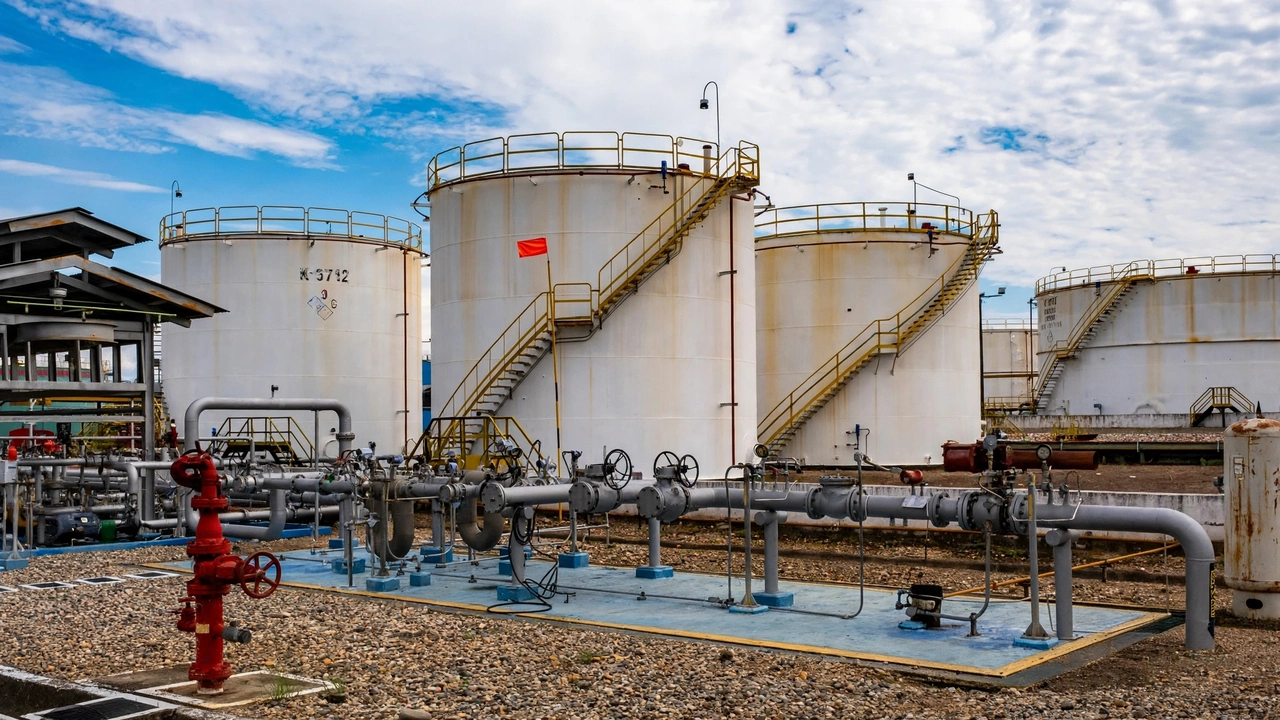


U.S. oil prices climbed back above $101 a barrel on Wednesday, October 28, as renewed concerns over Middle East energy supplies followed a Houthi claim of a missile strike on Saudi Arabia’s largest refinery. The alleged strike remained unconfirmed by Saudi authorities in the initial reporting.
West Texas Intermediate (WTI) crude futures rose $1.43, or approximately 1.4%, to $101.33 per barrel as of 4:35 a.m. GMT, according to Reuters market reporting. Brent crude futures advanced $1.59, also about 1.4%, to $115.47 per barrel. The advance followed a decline of nearly $2 in both benchmarks on Tuesday, illustrating how quickly oil prices have responded to changing assessments of regional supply risks.
The difference between Brent and WTI stood at $14.14 per barrel at the reported observation time. That substantial premium highlights the importance of distinguishing international crude pricing from the U.S. benchmark rather than treating the two markets as interchangeable.
Saudi refinery claim adds fresh uncertainty to oil supplies
Yemen’s Iran-aligned Houthi movement said Tuesday that it had launched a ballistic missile against Saudi Arabia’s Ras Tanura refinery. Its military spokesperson, Yahya Saree, claimed the attack caused a fire at the facility.
Saudi authorities had not independently confirmed the refinery strike in the initial reports. The claim therefore does not establish whether the refinery suffered damage, halted processing or experienced a measurable production loss.
Ras Tanura has a processing capacity of approximately 550,000 barrels per day and forms part of a major Saudi oil infrastructure complex that also includes export facilities.
That distinction matters because refinery capacity is not equivalent to disrupted crude production. A refinery outage, if established, can affect fuel processing without necessarily removing the same quantity of crude oil from global supply.
The latest uncertainty follows months of disruptions affecting regional oil infrastructure and shipping. Investozora previously examined Saudi supply disruptions and the risks associated with Hormuz shipping restrictions.
Oil rebounds after Tuesday’s decline
Wednesday’s recovery contrasted with the previous session, when crude benchmarks fell by nearly $2 as diplomatic developments provided some relief from supply concerns.
Investozora’s earlier analysis of Saudi export recovery examined how improving shipments and diplomatic expectations could reduce the geopolitical premium embedded in oil prices.
The latest reversal illustrates a different concern: even when physical shipments recover, uncertainty surrounding major refineries, terminals and transportation routes can keep markets sensitive to new military claims.
ING commodity strategists, quoted by Reuters on Wednesday, indicated that markets continued to account for the possibility of renewed regional escalation. Their assessment also suggested that avoiding additional strikes on Iran could eventually reduce oil’s geopolitical risk premium. That remains an assessment rather than a forecast of a particular price.
U.S. inventory data presents another test
Oil traders are also awaiting official U.S. petroleum inventory figures. According to Reuters, market sources citing American Petroleum Institute data reported a 2.03 million-barrel decline in U.S. crude inventories for the week ending October 23. That preliminary industry estimate had not yet been confirmed by the federal government’s corresponding weekly release.
The U.S. Energy Information Administration’s weekly petroleum report provides the official government inventory measurements. Its regular Wednesday release is scheduled for 10:30 a.m. Eastern Time.
The inventory report may help establish whether U.S. stock movements reinforce or offset concerns about international supply disruptions. The broader issue also intersects with the United States’ petroleum reserve position and the inflation pressures associated with energy price increases.
What oil markets will watch next
Three developments could help clarify Wednesday’s move: an authoritative Saudi assessment of Ras Tanura’s operating status, the official EIA inventory figures and further information on regional crude shipments. An OPEC+ meeting expected on Sunday provides another potential source of information about producer output plans.
The Federal Reserve’s October policy decision adds a separate macroeconomic consideration, particularly because persistent energy inflation can complicate the interest-rate outlook. Investozora’s October Fed preview examines the broader policy setting.
For now, the verified market development is a rebound in crude futures alongside an unconfirmed attack claim—not confirmation of a new physical supply loss. Whether the advance persists will depend on subsequent market pricing and evidence about actual oil operations.