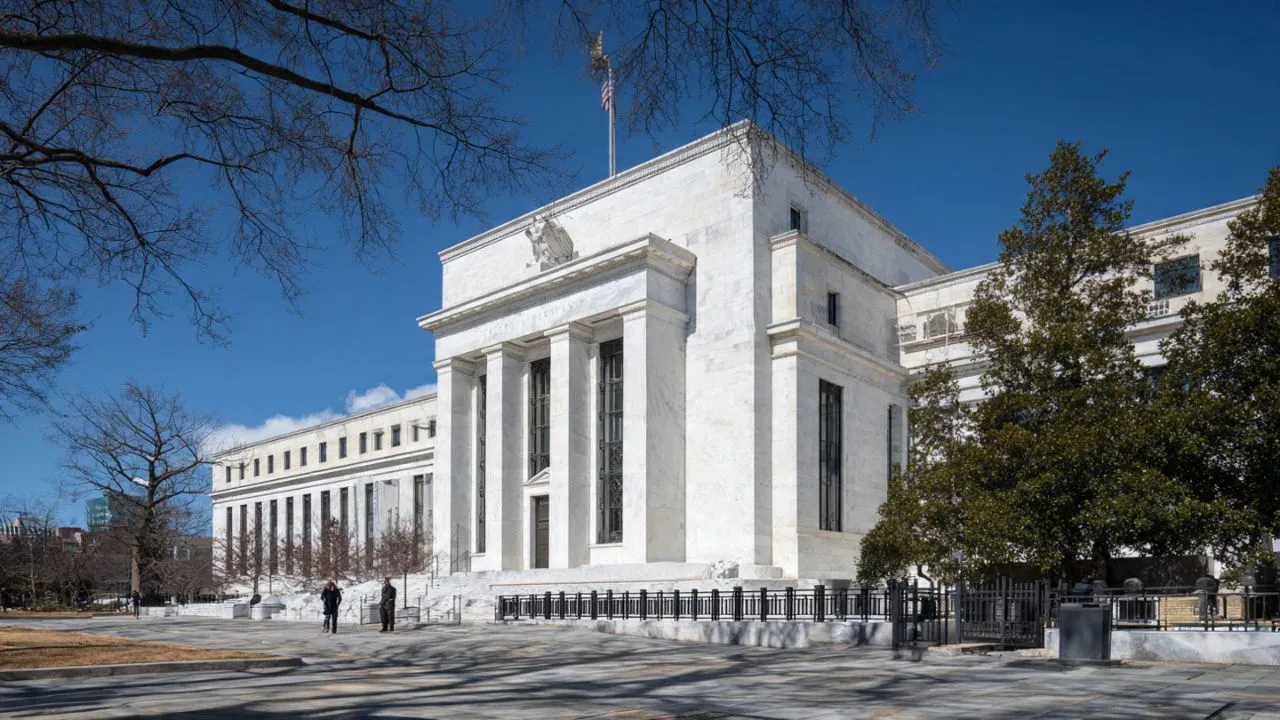


WASHINGTON — The Federal Reserve will announce its October interest-rate decision on Wednesday, October 28, just 18 hours and 30 minutes before the government publishes a fresh reading of the central bank’s preferred inflation measure.
The unusually consequential sequence puts a question at the center of this week’s policy decision: how much can the Fed establish about persistent inflation before receiving another major month of official data?
The Federal Reserve’s October calendar schedules its policy announcement for 2 p.m. Eastern on Wednesday, followed by a 2:30 p.m. press conference. The Bureau of Economic Analysis has scheduled its September PCE release for 8:30 a.m. Eastern on Thursday, October 29.
That Thursday release will coincide with the government’s advance estimate of third-quarter gross domestic product. The central bank therefore faces a decision before the public release of both a new monthly inflation reading and a comprehensive initial estimate of economic growth.
The distinction matters because the timing is certain, but the policy consequences are not. Thursday’s figures may reinforce Wednesday’s decision, challenge the assumptions behind it, or produce little meaningful change in the economic outlook.
Inflation Before Decision
The Fed enters its October meeting after raising the federal funds target range by 25 basis points in September, bringing it to 3.75%–4.00%. In its September policy statement, the Federal Open Market Committee described economic activity as expanding at a solid pace and inflation as elevated. The increase was approved unanimously.
Wednesday’s announcement will reveal whether policymakers believe the evidence now supports another adjustment or keeping the existing target range unchanged.
The latest published PCE figures provide an important baseline. According to BEA’s August inflation release, headline PCE prices rose 3.4% over the preceding 12 months. Core PCE, which excludes food and energy, increased 3.0%. The respective monthly increases were 0.3% and 0.2%.
Those figures place both annual inflation measures above the Fed’s 2% longer-run objective. However, they do not establish what the unpublished September figures will show or how the Committee will evaluate the full set of economic information available at its meeting.
The Fed’s September meeting minutes provide additional context for the previous decision, including the Committee’s assessment of economic conditions and its commitment to returning inflation to target.
That policy background is especially relevant because a single additional inflation report does not automatically settle the appropriate interest-rate setting. Policymakers also assess employment conditions, spending, financial conditions and the risks to their economic outlook.
The Timing Gap
An Investozora calculation using the two agencies’ published schedules establishes the interval between the announcements. The Fed’s policy release is scheduled for October 28 at 2:00 p.m. Eastern. BEA’s PCE release follows on October 29 at 8:30 a.m. Eastern.
The interval is 18 hours and 30 minutes, or 1,110 minutes. That gap establishes an information-timing difference rather than a measurable policy error. The scheduled September PCE report will not be publicly available when Wednesday’s decision is announced.
It would go further than the evidence permits, however, to conclude that policymakers have no information about September inflation. The Committee can consider other already available economic releases, financial conditions and staff analysis. Some of those inputs may provide partial indications of inflation before BEA publishes the complete monthly estimates.
Nor does the schedule establish that an earlier PCE publication would necessarily have changed the vote. Demonstrating that would require evidence of how the Committee evaluated the unavailable report relative to other information. The distinction between what is known and what is inferred is central to understanding the October decision.
An Unsettled Baseline
The PCE comparison also requires attention to the underlying data vintage. BEA’s August release incorporated its 2026 annual update of the national economic accounts, with revisions to monthly personal income and outlays estimates extending back to January 2021.
This matters for comparisons with older inflation reports. Figures published in different months can reflect different underlying data vintages, making an apparent change difficult to interpret without checking the revised historical series.
For example, BEA’s original July PCE report, issued August 26, reported headline inflation of 3.7% and core inflation of 3.3% over 12 months. The later August release reported 3.4% and 3.0%, respectively, for August.
A simple comparison of those published figures produces a 0.3-percentage-point decline in each measure. But it is not a clean same-vintage estimate of the underlying July-to-August change, because the August publication incorporated an annual statistical update.
The more defensible pre-meeting baseline is the current August release, rather than a comparison that silently mixes older and revised data. The September figures could also include revisions to prior monthly estimates. Such changes would need to be evaluated separately from the newly reported inflation reading.
This is one reason the October 29 report may matter beyond its headline annual percentage. A change in monthly core inflation, the composition of price increases or historical revisions could alter how persistent inflation appears, even if the year-over-year figure moves relatively little.
Growth Arrives Together
The second important feature of Thursday’s calendar is that BEA will release the advance estimate of third-quarter GDP at exactly the same scheduled time as September PCE. That creates two simultaneous tests of the economic outlook immediately after the Fed’s announcement.
PCE inflation measures changes in consumer prices, while GDP measures economic output. The GDP advance estimate typically expresses real quarterly growth at an annualized rate, which is not directly comparable to a monthly PCE inflation change or a 12-month inflation rate.
The figures therefore answer different questions. A stronger-than-anticipated GDP reading alongside persistent inflation might support concerns that demand remains resilient enough to sustain price pressure. Weaker economic growth coupled with elevated inflation would present a different policy tradeoff.
Those are conditional interpretations, not forecasts of Thursday’s outcomes. The Fed’s September economic projections already illustrate the challenge. Participants’ median projection for 2026 PCE inflation was 3.7%, compared with the central bank’s 2% objective, while participants also identified substantial inflation uncertainty.
That projection is a full-year outlook, not a prediction of September’s monthly figure. It cannot be compared directly with a single monthly inflation reading without accounting for the different measurement periods. The October 29 releases will provide new evidence for evaluating that outlook. They cannot retroactively become information contained in the October 28 public decision.
The Next Test
For readers following the Fed’s October meeting outlook, the first question Wednesday is whether the Committee changes the target range from its existing 3.75%–4.00% level. The accompanying statement and press conference will provide evidence about how policymakers weigh the risks of inflation against the condition of the broader economy.
That distinction is important in light of Investozora’s earlier reporting on the September rate increase and the Committee’s inflation outlook. The next test arrives Thursday, when BEA’s report will show whether September brought further progress toward lower inflation or another indication of stubborn price pressures.
Readers should examine both monthly and annual changes in headline and core PCE, along with revised historical figures. Core inflation can help identify underlying pressures that may be obscured by volatile food and energy prices, although headline PCE remains essential to evaluating the Fed’s inflation goal.
Investozora’s previous analysis of August core inflation, the July data revisions and the broader rate-inflation relationship provides context for interpreting the release. Financial markets may respond to Wednesday’s decision and Thursday’s economic reports separately.
But a change in Treasury yields, equities or interest-rate expectations cannot automatically be attributed to one release without accounting for other simultaneous information and the expectations already reflected in prices.
For households, the relationship is similarly indirect. The Fed controls a target for overnight interbank rates, not individual mortgage offers, savings account yields or credit-card contracts. Those borrowing and deposit rates respond through different financial channels and with different timing.
The distinction is explained in Investozora’s guides to the federal funds rate and mortgage rate transmission. The sequence also creates a clear standard for evaluating the decision afterward. If Thursday’s PCE figures differ materially from the inflation picture described Wednesday, the relevant question will not simply be whether the Fed’s decision was right or wrong.
It will be whether the new information changes the economic assumptions supporting the Committee’s policy outlook. The next scheduled Federal Reserve decision remains Wednesday, October 28. The next major official test of its inflation assessment is due the following morning.