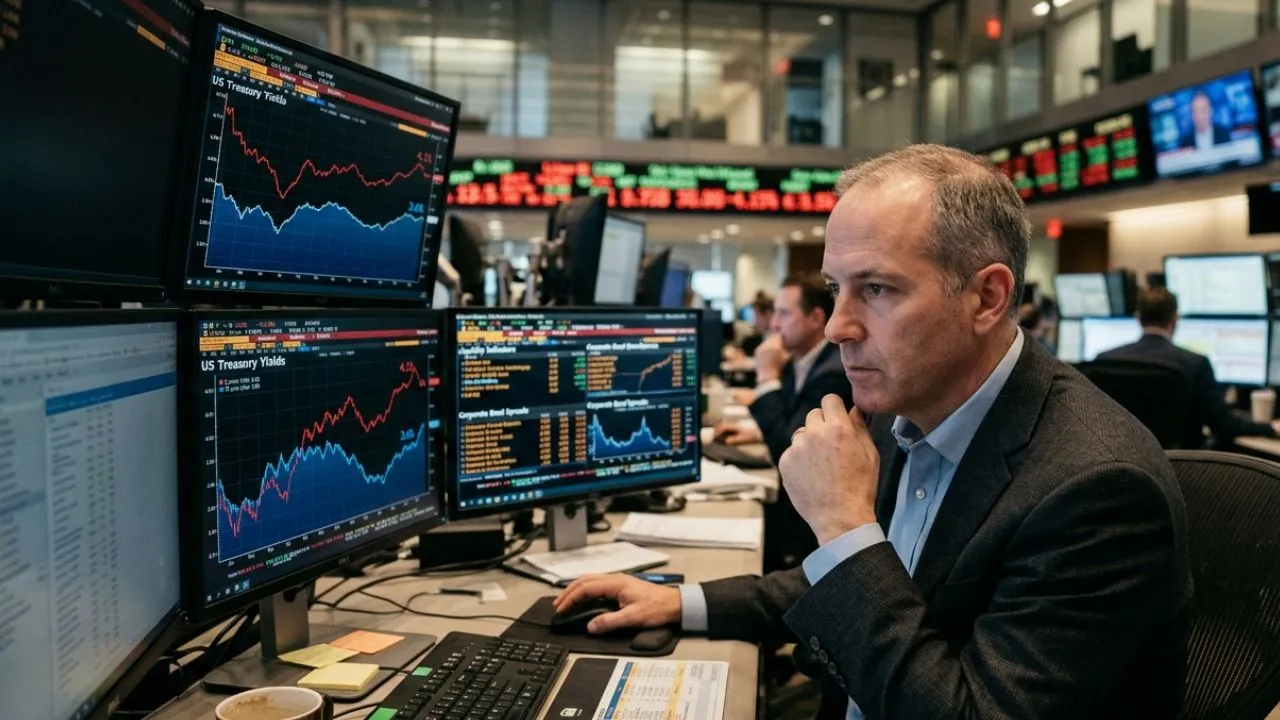

The benchmark 10-year U.S. Treasury yield fell back below 5% on Monday as oil prices dropped sharply and technology stocks rallied, reversing part of the market pressure that pushed long-term borrowing costs above the closely watched threshold last week.
The 10-year yield was around 4.96% on September 21, down roughly 4 basis points from Friday’s market level near 5.00%, according to market data cited during Monday trading.
The retreat came after the yield climbed above 5% last week, when higher energy prices and inflation concerns put renewed pressure on government bonds. The U.S. Treasury’s daily yield-curve data showed the 10-year par yield at 5.01% on September 18, following 4.94% on September 17.
The move matters because 5% has become an important market threshold after the recent rise in Treasury yields. Investozora previously reported how the 10-year Treasury yield reached the 5% area as stocks came under pressure. Monday’s trading moved in the opposite direction.
Oil was a major part of the changing market backdrop. U.S. crude fell about 4.8%, while Brent dropped roughly 3.6%, as investors assessed reports of improving Gulf oil flows and the possibility of diplomatic progress surrounding meetings at the United Nations. Brent also moved back below $100 during the session. Investozora has separately tracked the latest decline in oil prices as Saudi exports recover and investors watch Iran diplomacy.
Lower energy prices can reduce one source of inflation pressure, but Monday’s moves do not establish that oil alone caused Treasury yields to fall. Bonds were also recovering after several weeks of selling, while investors continued to assess the Federal Reserve’s interest-rate outlook.
Stocks moved sharply higher at the same time. The Nasdaq Composite gained about 2.1% by Monday’s close, according to Associated Press market data, while the S&P 500 rose about 1.4%. Earlier in the session, Reuters reported particularly strong gains in chip and artificial-intelligence shares, including Intel and AMD. Investozora is also following the Nasdaq’s latest AI-stock rebound.
The cross-market reversal does not remove the interest-rate risk facing investors. Chicago Fed President Austan Goolsbee said Monday that strong demand may be contributing to inflation pressures, adding to the debate over whether rates may need to move higher. Investozora has more on Goolsbee’s latest comments about demand and the Fed’s rate response.
Markets will now watch whether the 10-year yield can remain below 5%, whether oil extends its four-session decline, and what additional Federal Reserve officials say about inflation and interest rates this week.