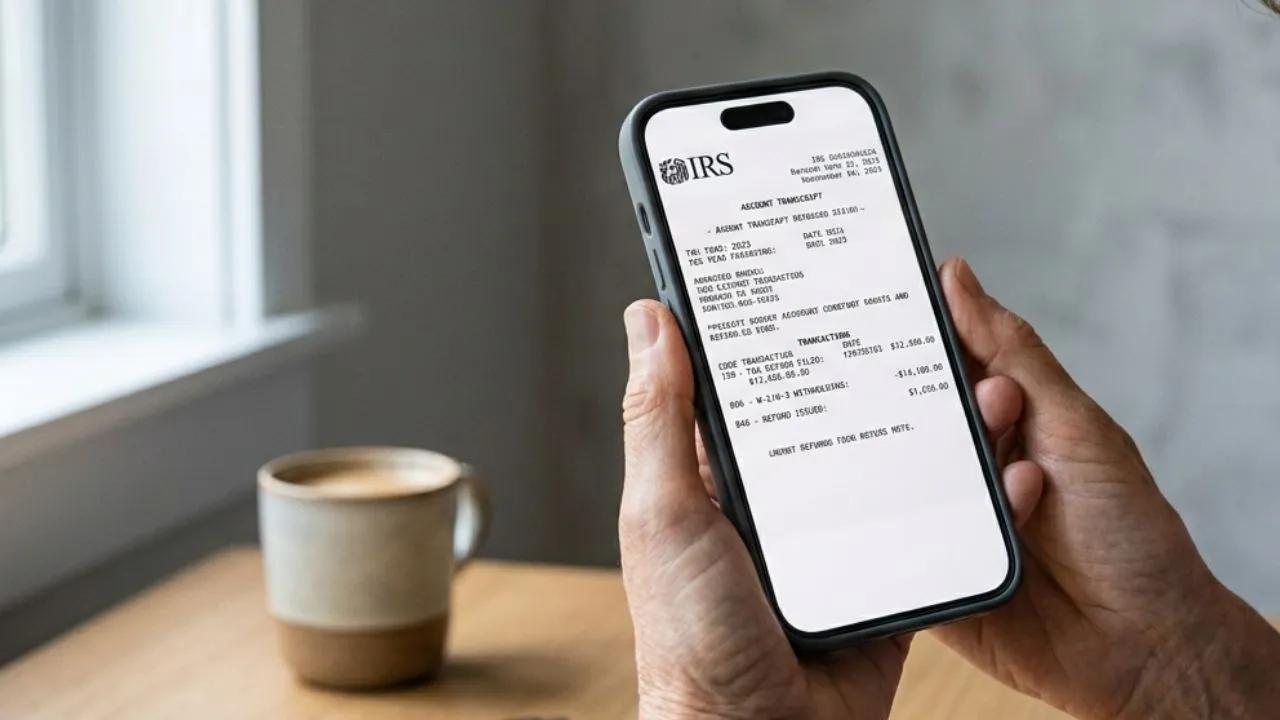
Updated: June 22, 2026 – IRS transcript codes are transaction identifiers posted to your Individual Master File account that record every action the IRS takes on your return. Code 150 confirms your return was filed and processed. Code 806 records federal withholding credits.
Code 846 is the refund issued code, confirming money has been authorized for release to your bank. Codes 570 and 971 indicate holds or notices. Code 768 posts the Earned Income Tax Credit. These codes update on weekly processing cycles, and reading them in sequence tells you exactly where your money is in the federal disbursement pipeline.
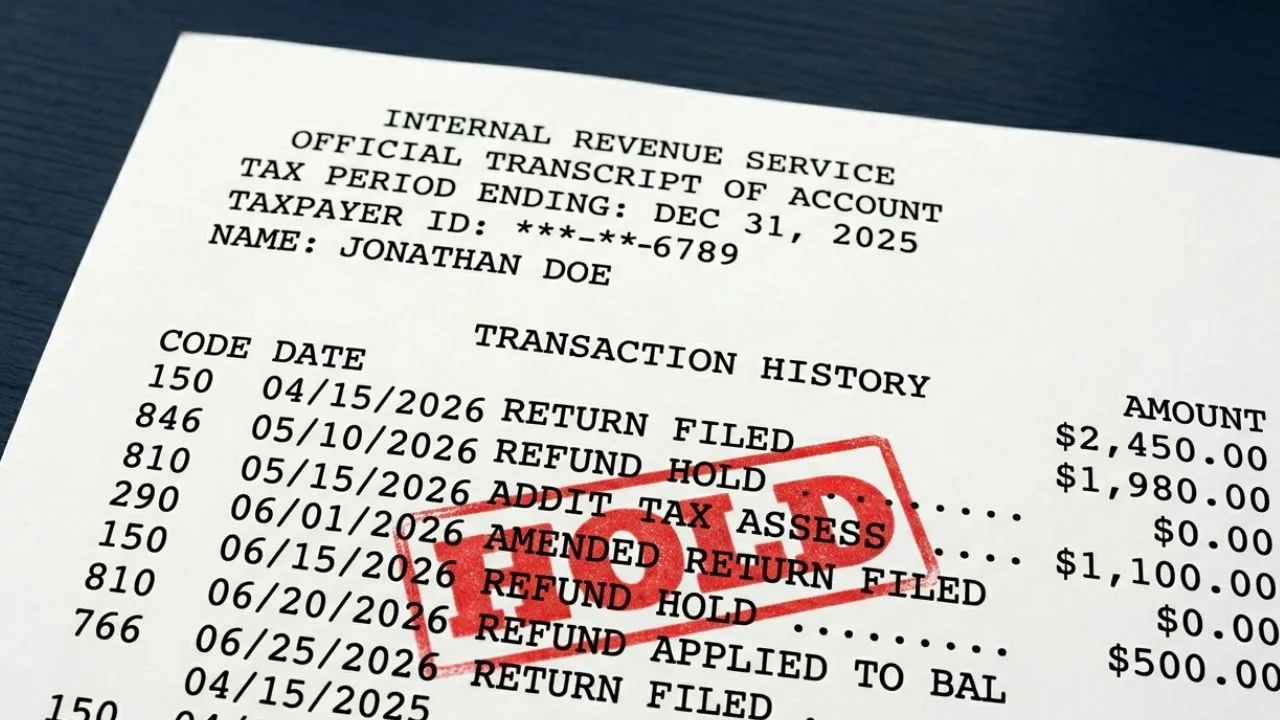
When you log into your IRS Individual Online Account and pull your tax transcript, you are reading the IRS Master File in its raw, unfiltered form. Every number in the transaction code column corresponds to a specific action taken by an IRS processing system, a revenue agent, or an automated pipeline rule. These are not status messages written for consumers.
They are internal accounting entries that govern the movement of real money between your account and the US Treasury. Understanding them gives you a level of operational transparency that the standard Where’s My Refund tool simply cannot provide.
The IRS processes approximately 150 million individual returns annually. Each one generates a sequential chain of transcript codes that record the return’s journey from initial filing through final disbursement.
For the overwhelming majority of straightforward returns, that chain runs from Code 150 through Code 846 without interruption. When something delays, holds, or modifies a refund, the transcript tells you precisely what happened and at what stage.
To access your transcript, you must authenticate through ID.me or IRS.gov’s identity verification system at the Individual Online Account portal. The Master File transcript, labeled “Account Transcript,” contains the full transaction code sequence. The “Tax Return Transcript” shows only line items from your return and does not include processing codes.
Code 150 What It Actually Means
Code 150 is the foundational entry in every individual return transcript. It posts when the IRS system has accepted, processed, and officially recorded your Form 1040 in the Individual Master File.
The dollar amount shown next to Code 150 is your total tax liability as computed from your submitted return, not a payment or a refund figure. It represents the baseline from which all subsequent calculations, credits, and withholding offsets are applied.
The date next to Code 150 is the processing date, meaning the date the IRS system formally entered your return into the Master File cycle. For electronically filed returns, this typically occurs within one to two weeks of your filing date. For paper-filed returns, the Master File entry can lag by eight to twelve weeks given manual transcription requirements. The IRS Individual Master File processing cycles explains the weekly batch architecture that determines exactly when Code 150 posts relative to your submission date.
The transaction code sequence the IRS uses flows through a federally standardized accounting system. Each code corresponds to a Document Locator Number entry, and the sequence is governed by Internal Revenue Manual provisions that define how each transaction affects account balance, refund eligibility, and penalty exposure. This is not a proprietary system. It is the operational backbone of the most complex revenue collection agency in the world.
Code 806 The Withholding Entry
Code 806 posts the total federal income tax withheld from your wages and other income sources during the tax year. This figure comes from the W-2s and 1099 forms your employers and payers submitted to the IRS, reconciled against what you reported on your return. The amount shown next to Code 806 is expressed as a credit, meaning it reduces your tax liability established by Code 150.
When your Code 806 credit exceeds your Code 150 liability, you have an overpayment. That overpayment is what the IRS will either refund or apply to a future tax period. The mathematical relationship between Code 150 and Code 806 is the foundational arithmetic of your refund calculation, before any additional credits are factored in.
For taxpayers claiming the Earned Income Tax Credit, Code 768 posts that credit amount to the transcript separately. The IRS Earned Income Tax Credit maximum details the current year credit amounts and how they interact with the total refund calculation visible in the transcript sequence.
Code 846 The Definitive Refund Signal
Code 846 is the most consequential entry in the refund transcript sequence. It posts when the IRS has formally authorized the disbursement of your overpayment to the US Treasury for transmission to your bank account or for issuance of a paper check. The date next to Code 846 is the IRS-side release date, meaning the date the payment file was submitted to the Bureau of the Fiscal Service at the US Treasury.
From that Treasury submission, the payment enters the federal ACH disbursement network. The Bureau of the Fiscal Service transmits the file to the Federal Reserve’s FedACH system, which processes the credit and delivers it to your bank’s routing institution for posting.
Standard settlement arrives at receiving banks at 8:30 AM Eastern Time on the settlement date. Most direct deposit refunds post to consumer accounts within one to five business days of the Code 846 date, depending on the individual bank’s posting schedule.
The IRS Code 846 refund issued complete guide covers the full lifecycle from the Code 846 posting date through final bank account credit. For the complete picture of how the federal payment infrastructure handles that transmission, the US money movement system maps every agency handoff from IRS authorization through Federal Reserve settlement.
Code 570 and Code 971 Hold Indicators
When Code 570 appears in the transcript sequence before Code 846, it signals that additional action is pending on the account. This is an automatic processing hold that the IRS system applies when the return requires manual review, identity verification, or offset screening. Code 570 does not mean your return is under audit. It means the automated pipeline has flagged a condition that requires resolution before the refund can be authorized.
The most common triggers for Code 570 include mismatches between reported income and third-party information returns, PATH Act freeze conditions for returns claiming the Earned Income Tax Credit or Additional Child Tax Credit prior to mid-February, identity verification requirements, or an outstanding federal debt that must be screened through the Treasury Offset Program. The IRS Code 570 additional action pending guide details every condition that generates this hold and the resolution timeline for each.
Code 971 typically posts alongside Code 570 when the IRS has issued a notice to the taxpayer regarding the hold. The date next to Code 971 is the notice issue date, and the notice number associated with it identifies which specific IRS correspondence was sent. Receiving a Code 971 means the IRS has communicated the hold reason to you in writing, and your next step is to respond to that notice through the channel specified in the correspondence.
For returns that experienced the PATH Act freeze, the February 15th PATH Act freeze and IRS hold explains the statutory basis for that specific hold and when Code 846 typically posts following the mid-February statutory lift date.
The Weekly Cycle Architecture
Transcript codes do not update in real time. The IRS processes individual account updates on a weekly cycle, with most consumer accounts updating overnight on Wednesdays for Thursday-morning visibility in the online portal. This means that if your Code 846 posts on a Thursday, it will typically reflect a refund release dated for that same week’s processing batch.
Certain high-volume filers and accounts flagged for manual review may fall into a daily processing cycle, which updates Monday through Friday. You can identify your cycle designation by reading your Cycle Code, an eight-digit entry in your transcript that indicates your processing batch assignment.
The first four digits are the tax year, the next two digits are the cycle week, and the final two digits indicate your day code within that week. A day code of 05 indicates a weekly processor. Codes 01 through 04 indicate a daily processor.
Understanding your cycle assignment tells you on which specific night to check your transcript for new code postings. It eliminates the experience of checking daily and seeing no change, because the IRS system simply has not run that week’s batch yet.
When Your Refund Goes to the Wrong Account
If Code 846 has posted but your bank has not received the deposit, the first step is to confirm the routing and account number the IRS used for disbursement by reviewing the “where’s my refund” tool, which shows the last four digits of the account on file. A mismatch at that stage indicates either a data entry error on the original return or a bank account change that was not captured before the refund file was transmitted.
The IRS refund wrong bank account what happens covers the exact recovery procedure, including the IRS trace request process and the timeline for reclaiming funds that were deposited to an incorrect account. The IRS refund pipeline how money reaches your bank explains the complete multi-agency transmission chain that occurs between Code 846 and your bank posting.
If your refund was subject to an offset and the amount deposited differs from the Code 846 figure, the Treasury offset program refund explained documents the offset program mechanics, including which federal and state debts qualify for offset and how to dispute an erroneous reduction.
When Something Goes Wrong and What to Do
If Code 846 has not posted within 21 days of your Code 150 date on an electronically filed return, the IRS considers the return potentially delayed and its own processing guidelines permit you to contact the agency directly. The primary contact channel is the IRS Refund Hotline at 1-800-829-1954 or the broader individual taxpayer line at 1-800-829-1040.
If your transcript shows a CP53E notice code, your refund has been frozen and the IRS has been unable to complete electronic disbursement. The IRS CP53E notice refund frozen details the specific conditions that generate this notice and the paper check reissuance timeline.
For returns where late interest has accrued because the IRS held your refund beyond the 45-day statutory processing window, the IRS interest on late refund what you are owed documents your entitlement to that interest, currently calculated at the federal short-term rate plus three percentage points, compounded daily.
The IRS transcript codes system is the most transparent window the federal tax system offers into the movement of your money. Code 150 through Code 846 is the standard unimpeded sequence. Every deviation from that path is documented in the same transcript with the same precision. IRS transcript codes, read correctly, leave no stage of the refund process unexplained.
What You Should Do Now
- Log into your IRS Online Account and pull your Account Transcript for the current tax year. Look for Code 150 first to confirm your return has been received and processed into the IRS Master File.
- Identify your Cycle Code to determine whether you are a weekly or daily processor, so you know when your transcript is most likely to receive its next update.
- If Code 570 appears without a subsequent Code 571 or Code 846, check your mail for a CP notice or IRS letter. The notice number will identify the specific issue and any action required.
- Once Code 846 posts, record the date and compare it with your bank’s ACH posting schedule. Most financial institutions post IRS refund deposits within one to five business days of the IRS release date.
- Access and verify your transcript only through the official IRS portal. Third-party transcript services create unnecessary identity-theft risk and provide no meaningful advantage over the IRS account system.