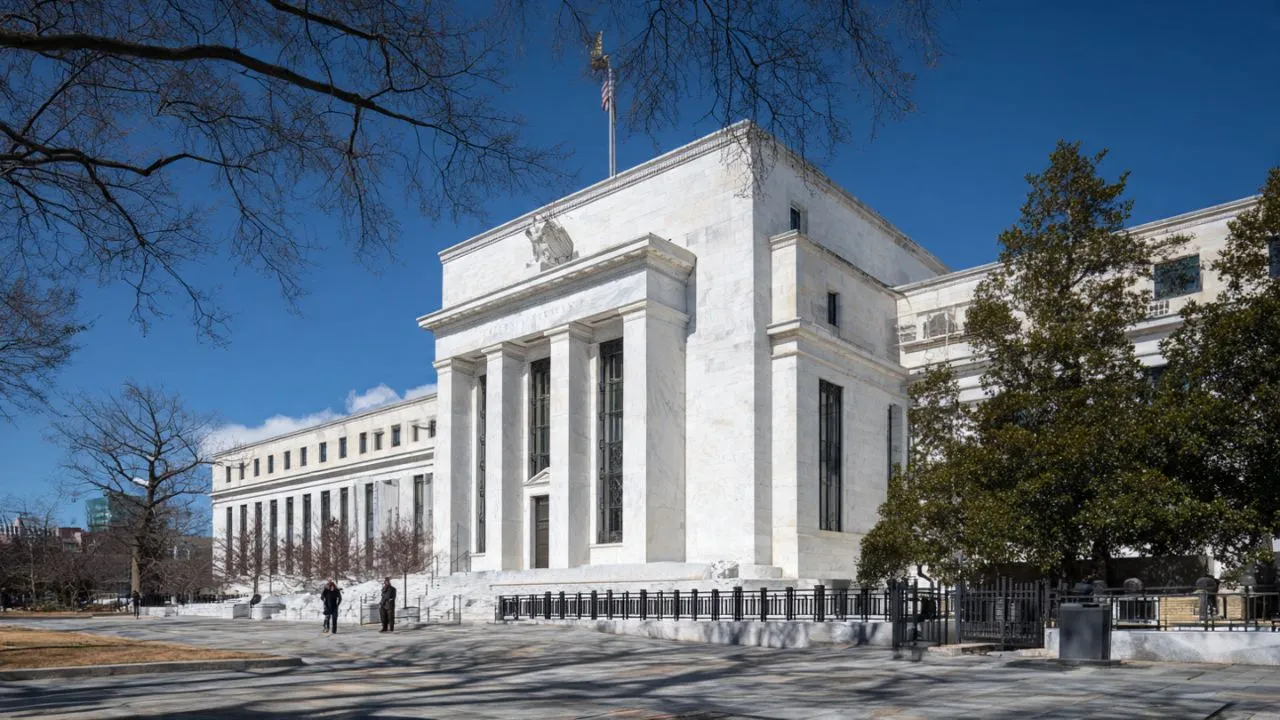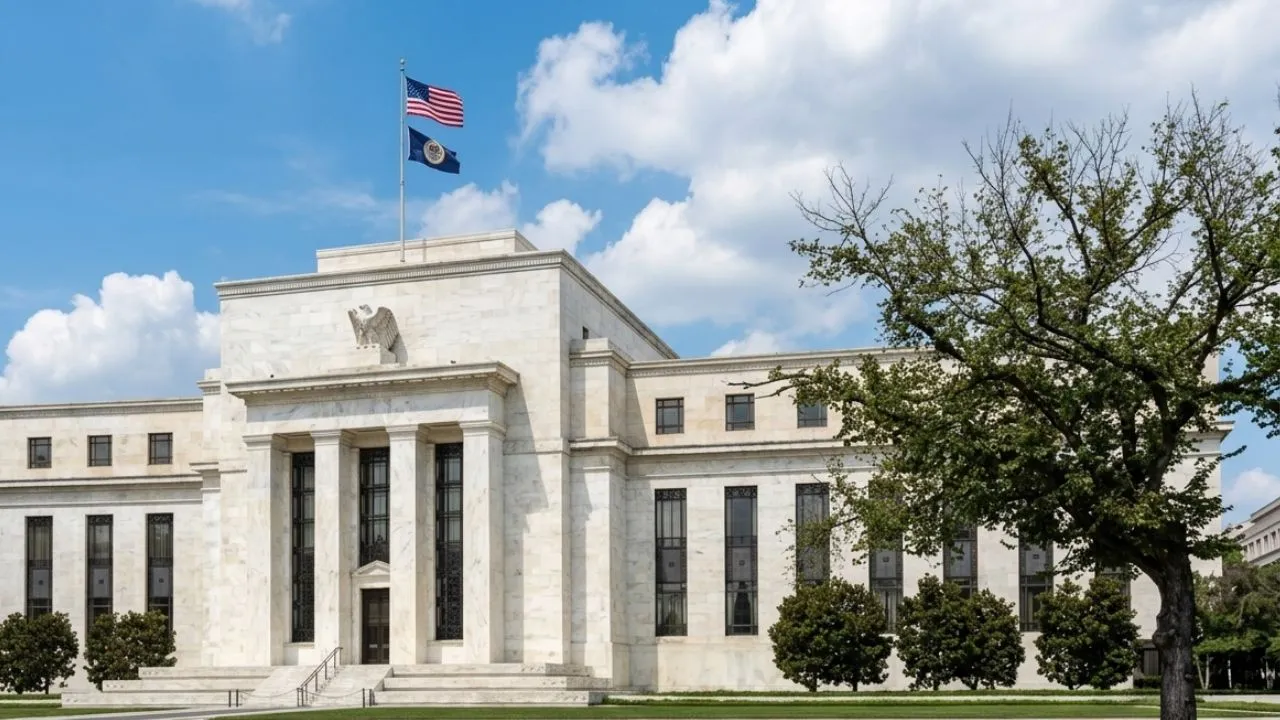


Total assets in United States money market funds climbed to a record $7.95 trillion for the week ending July 1, according to Investment Company Institute data released July 2, an increase of nearly $48 billion in a single week.
The surge arrived just eight days after the Federal Reserve published the results of its 2026 bank stress test, a routine annual exercise that this year produced an unusually large headline number, more than $708 billion in projected losses across the 32 largest banks in the country under a hypothetical severe recession. The two events are not officially linked by the Fed or by fund managers, but the proximity is difficult to ignore.
Understanding why requires looking at what the stress test actually found rather than just the size of the number. The hypothetical scenario assumed unemployment spiking to 10 percent, home prices falling 30 percent, commercial real estate values dropping 39 percent, and stock prices sliding 58 percent, a combination severe enough that few economists expect it to occur in full.
Even under those conditions, every one of the 32 banks tested stayed above its required minimum capital level, with the industry’s aggregate capital ratio falling by just 1.6 percentage points, from 12.8 percent to 11.2 percent. That is, on its face, a passing grade. The composition of the projected losses tells its own story.
Inside The Loss Numbers
Of the $708 billion in projected losses, roughly $200 billion came from credit card lending, $160 billion from commercial and industrial loans, and $75 billion from commercial real estate exposure, according to the Fed’s own published breakdown.
Readers who want the full methodology rather than a secondhand summary can review it directly through the stress test portal the Fed maintains for exactly this purpose. Vice Chair for Supervision Michelle Bowman framed the results as evidence the banking system remains fundamentally sound, and by the letter of the test, she is correct.
What the results also confirm is that consumer facing lending, credit cards above all, sits closer to the edge of a severe downturn than the commercial real estate exposure that dominated headlines during the last cycle.
Where The Cash Is Going
That backdrop helps explain why institutional cash managers have kept pushing money into government only funds rather than letting it sit in bank deposits earning less. Weekly data tracked through the FRED data tracker shows the current surge is not an isolated spike but the continuation of a trend that has pushed assets higher in seven of the past nine weeks.
Government funds, which invest primarily in Treasury bills and repurchase agreements rather than corporate debt, account for the overwhelming majority of the total, a preference that reflects how thoroughly institutional managers have prioritized principal safety over the extra yield prime funds and their commercial paper holdings can offer.
The Case For FDIC Limits
None of this means bank deposits are unsafe in any conventional sense. FDIC insurance coverage still protects standard deposit accounts up to the federal limit per depositor per institution, and the stress test itself exists precisely to confirm large banks can absorb severe losses without threatening that guarantee.
Still, readers who remember how quickly deposit anxiety can spread need only look at how a bank failure scenario actually unfolds for account holders to understand why some savers prefer the simplicity of instruments backed directly by the full faith and credit of the federal government rather than by insurance limits most people never bother to calculate against their actual balance.
3 Ways To Park Cash
For savers looking to replicate what institutional managers are already doing, the options are narrower than the marketing from any single bank might suggest but still genuinely competitive.
The most direct route is buying Treasury bills straight from the government, cutting out the fund fees and broker spreads that come with a bank issued product entirely. A quick primer on how bills work shows why the mechanism appeals to conservative cash managers, since the return comes from the discount to face value at purchase rather than a variable rate a bank can quietly lower.
Anyone weighing terms beyond a few months should study the broader relationship between bills notes bonds and how each instrument fits a different part of the yield curve, along with a fuller maturity and yield breakdown before committing new cash to any single term.
A Second Layer Of Safety
For savers specifically worried about inflation eroding a fixed return over a longer holding period, inflation protected securities adjust their principal against the same price index the Fed uses to set policy, a feature standard Treasury bills do not offer.
Those wanting a slightly longer duration government product with a fixed coupon rather than an inflation adjustment might instead look at the current bond yield available on savings bonds, a lower profile option that rarely appears in mainstream financial coverage despite carrying the same government backing as a Treasury bill.
How This Connects
The mechanics behind all of this trace back to the same institution making headlines this month for an entirely different reason. The Fed policy shift under its new chair sets the baseline yield every one of these instruments is priced against, while the general account explained shows how the federal government’s own checking account interacts with the same short duration debt market individual savers are now competing in for yield.
Layer in the Treasury account balance swings that follow every tax deadline and debt auction, along with the liquidity trap conditions some strategists have flagged in recent weeks, and the record money market figure looks less like a single event and more like the visible output of a much larger, mostly invisible plumbing system.
The Bigger Picture
None of this happens in a vacuum shaped only by a bank stress test. It connects to how the Fed controls interest rates across the entire economy, to the recurring debt ceiling mechanics fight that shapes how much short duration debt the Treasury can issue at any given moment, and ultimately to the same national money system that determines how quickly a dollar moves from a paycheck into an account a saver actually controls.
A record $7.95 trillion sitting in money market funds is not a warning sign on its own. It is simply where a very large share of cautious, well informed money has decided the safest version of a decent return currently lives, at least until the next stress test or the next Fed meeting gives it a reason to move somewhere else.