



The U.S. Treasury borrows money by selling debt securities, bills, notes, bonds, Treasury Inflation-Protected Securities, and floating rate notes, through a regular schedule of public auctions.
Investors bid for these securities, the Treasury accepts the lowest-cost bids up to the amount it needs to raise, and the proceeds fund the difference between what the federal government spends and what it collects in tax revenue.
With total public debt outstanding above $39 trillion in 2026, understanding exactly how this borrowing machine works has never mattered more, both for anyone holding Treasury securities directly and for anyone whose mortgage, savings account, or credit card rate is quietly shaped by Treasury yields.
This guide walks through the mechanics of the auction process, the different types of securities the Treasury issues, how the quarterly refunding process sets the borrowing calendar, and what all of this means for everyday financial decisions. For the bigger picture of how these Treasury operations connect to the rest of the federal payment system, see our guide on how U.S. money moves.
Why the Treasury needs to borrow
The federal government spends more than it collects in most years, and the Treasury Department is responsible for covering that gap. It does this by issuing debt securities that investors purchase in exchange for a promise of repayment plus interest.
This borrowed money funds everything from Social Security and Medicare payments to defense spending and interest on debt already outstanding.
As of mid-2026, debt held by the public, meaning debt owed to investors outside the federal government itself, stood above $31.9 trillion, while intragovernmental holdings, largely reflecting trust fund investments such as those tied to social security trust fund depletion projections, added roughly $7.8 trillion more to the total.
The types of securities the Treasury sells
The Treasury issues several distinct types of marketable securities, each suited to a different investment horizon and purpose. Understanding these categories is the foundation for understanding the entire borrowing process, and our companion guide on treasury bill note bond differences covers the mechanics in more depth.
Treasury bills are short-term securities maturing in four weeks to one year. They are sold at a discount to face value rather than paying a stated interest rate, and the investor’s return comes from the difference between the discounted purchase price and the full face value paid at maturity. Bills have become an increasingly large share of total issuance in recent years; in 2026, the Treasury’s own quarterly refunding data shows the 4-week bill averaging around $101 billion per single auction, making it the single largest recurring security offering.
Treasury notes carry maturities of two, three, five, seven, or ten years and pay a fixed interest rate, called the coupon rate, every six months until maturity, at which point the face value is repaid. Notes make up the largest single category of total marketable debt outstanding, exceeding $16 trillion of the roughly $31.9 trillion held by the public as of mid-2026.
Treasury bonds stretch out to 20 or 30 years and also pay semiannual fixed interest. Bonds account for roughly $5.45 trillion of debt held by the public, representing the longest-dated and typically higher-yielding end of the Treasury’s offerings.
Treasury Inflation-Protected Securities, or TIPS, adjust their principal value based on changes in the Consumer Price Index, protecting investors against inflation eroding their real return. The Treasury issues these in 5-year, 10-year, and 30-year maturities.
Floating rate notes, currently issued with a 2-year maturity, pay interest that resets weekly based on the most recent 13-week Treasury bill auction rate, giving investors a security whose yield adjusts along with short-term rates rather than staying fixed.
How a Treasury auction actually works
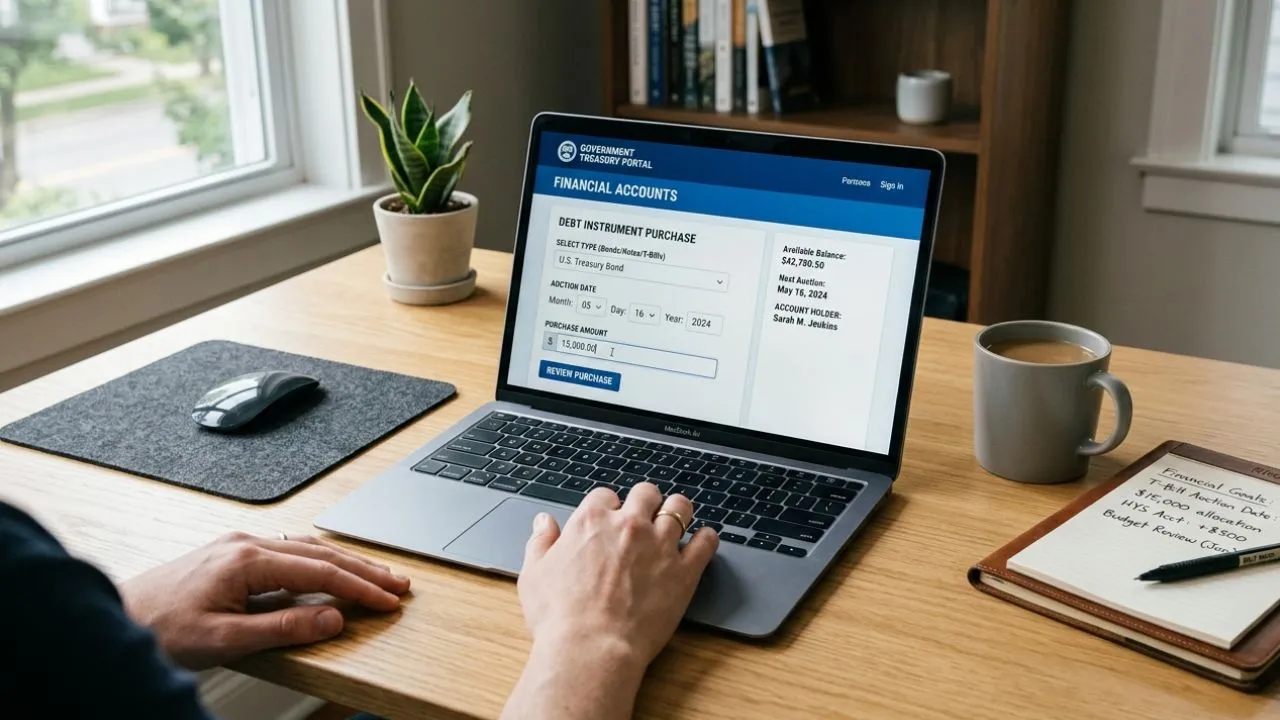
Every Treasury auction follows the same basic structure regardless of the security type. The Treasury first announces the auction, specifying the security type, the amount to be offered, and the auction date. Investors then submit bids in one of two forms.
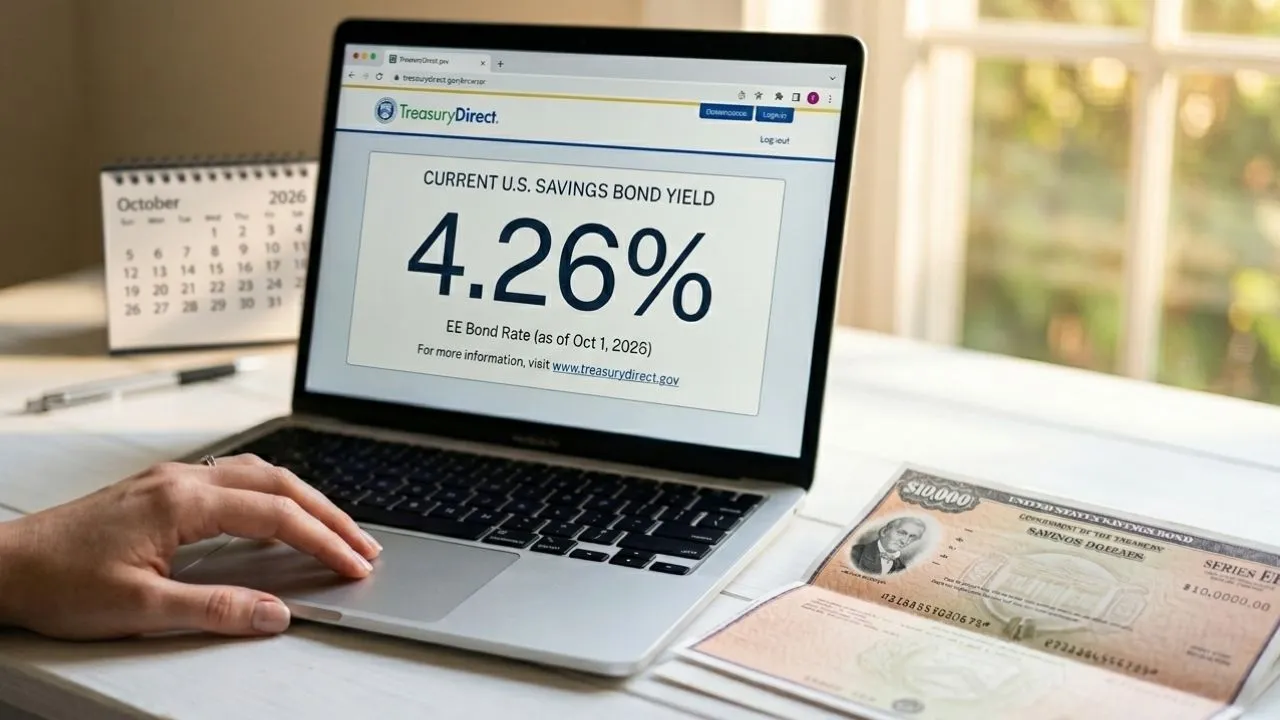
A competitive bid specifies the exact yield or discount rate the bidder is willing to accept, and these bids are ranked from lowest to highest yield. A noncompetitive bid simply agrees to accept whatever yield the auction determines, without specifying a rate, and is commonly used by smaller individual investors through treasurydirect, the Treasury’s own retail platform for buying securities directly.
Once bidding closes, the Treasury accepts competitive bids starting from the lowest yield and working upward until the full announced amount is sold. The yield of the final accepted bid becomes what is known as the “stop-out yield,” and every accepted bidder, competitive or noncompetitive, receives that same yield.
This single-price, or “Dutch,” auction format is designed to encourage aggressive, honest bidding since no bidder benefits from bidding above the eventual clearing yield.
Primary dealers, a group of banks and broker-dealers designated by the Federal Reserve Bank of New York, are required to bid at every Treasury auction to help ensure demand is met, and they often serve as the intermediary through which other institutional and retail demand flows into the auction process. Learn more about the specific mechanics of bidding in our us treasury auction process bidding guide.
The quarterly refunding process sets the borrowing calendar
Four times a year, generally the first Wednesday of February, May, August, and November, the Treasury holds what is known as the quarterly refunding, announcing its borrowing plans for the upcoming quarter. This announcement specifies the sizes of upcoming note, bond, and TIPS auctions, along with any changes to bill issuance strategy.
According to Treasury’s own press releases, the May 2026 refunding statement detailed a 3-year note, 10-year note, and 30-year bond auction package, alongside guidance that coupon and floating rate note auction sizes would likely remain stable for the following several quarters given current borrowing projections.
Between these quarterly announcements, the Treasury also issues a weekly schedule of bill auctions and monthly reopening auctions of previously issued notes and bonds, which add to existing securities rather than creating new maturity dates.
The Treasury Borrowing Advisory Committee, a group of private-sector market participants, meets ahead of each refunding to advise Treasury staff on market conditions and recommended issuance strategy, with minutes from these meetings published publicly for transparency.
How Treasury borrowing connects to the Federal Reserve
While the Treasury issues debt and the Federal Reserve sets interest rate policy, these two institutions operate independently but their actions constantly interact in financial markets.
When the Treasury increases bill issuance, for example, it can absorb cash that might otherwise sit in vehicles like the federal reserve reverse repo facility, since money market funds often prefer competitively priced, short-term bills over the Fed’s overnight facility when yields are comparable. This dynamic partly explains why reverse repo balances fell so sharply even as total Treasury debt outstanding continued climbing through 2026.
Separately, the Fed’s own holdings of Treasury securities, built up through past quantitative easing programs and gradually reduced through quantitative tightening fed balance sheet runoff, affect how much new debt the Treasury must sell to private investors to cover any given deficit, since maturing Fed-held securities that are not reinvested effectively increase the supply investors must absorb elsewhere.
What drives Treasury yields at auction
The yield an investor demands to hold a Treasury security reflects several factors working together: the current federal funds rate target set by the Federal Reserve, market expectations for future Fed policy, inflation expectations over the life of the security, and the overall supply and demand balance between how much debt the Treasury is issuing and how much investors, including foreign governments, pension funds, and individual savers, are willing to buy at a given price.
Our guide to the 10 year treasury yield explained walks through how this specific benchmark yield is used across the economy to price everything from mortgage rates to corporate borrowing costs.
Foreign holdings remain a significant, though shrinking, share of demand for U.S. debt. As of 2026, foreign governments and investors together hold roughly $9.35 trillion in U.S. Treasury securities, with Japan and the United Kingdom among the largest individual holders, while China’s holdings have declined to their lowest level since 2008.
The debt ceiling and its effect on borrowing
The Treasury’s ability to issue new net debt is legally capped by the statutory debt limit, commonly called the debt ceiling. When outstanding debt approaches this limit, the Treasury must rely on so-called extraordinary measures, accounting maneuvers that temporarily free up borrowing capacity without violating the ceiling, until Congress acts to raise or suspend it.
Our us debt ceiling how it works guide explains this process and the market risks associated with it in greater detail, including how prolonged impasses can disrupt the Treasury’s normal auction calendar and cash management operations.
What rising debt and interest costs mean going forward
As total marketable debt has grown, so has the cost of servicing it. The weighted-average interest rate on marketable Treasury debt stood at roughly 3.41 percent as of mid-2026, up from about 3.38 percent a year earlier, pushing net interest costs on the debt toward more than $1 trillion annually, a figure now exceeding both the Medicare and Medicaid budgets combined and closing in on the nation’s entire defense budget.
The Congressional Budget Office projects net interest as a share of total federal outlays will continue rising over the next several years, a trend that shapes ongoing fiscal policy debate, including many of the same discussions surrounding the social security payroll tax cap and other revenue-side proposals working their way through Congress.
Bottom line
The U.S. Treasury borrows money through a well-established system of public auctions covering bills, notes, bonds, TIPS, and floating rate notes, each suited to different maturities and investor needs.
This borrowing process runs on a predictable quarterly and weekly calendar, shaped by advice from market participants and constrained by the statutory debt ceiling.
With total debt outstanding above $39 trillion and annual interest costs surpassing $1 trillion, how the Treasury manages this borrowing process, and how it interacts with Federal Reserve policy, will remain one of the most consequential threads running through U.S. fiscal and monetary policy for years to come.









2 thoughts on “How the U.S. Treasury Borrows Money Works: Auctions, Bills, Bonds, and Debt Issuance @import url("https://fonts.googleapis.com/css2?family=Poppins:wght@400;500;600&family=Source+Sans+3:wght@400;500;600;700&display=swap"); /* ========================================= NORMAL BYLINE ========================================= */ .izo-clean-byline { display: flex; align-items: center; justify-content: space-between; width: 100%; max-width: 620px; gap: 16px; margin-top: 4px; margin-bottom: 16px; font-family: "Poppins", Arial, sans-serif; } .izo-clean-byline-content { display: flex; flex-direction: column; justify-content: center; align-items: flex-start; min-width: 0; gap: 4px; line-height: 1.12; transform: translateY(-4px); font-family: "Poppins", Arial, sans-serif; } .izo-clean-author-wrap { position: relative; display: inline-block; width: fit-content; line-height: 1.12; margin: 0; padding: 0; outline: none; } .izo-by-label { font-family: "Poppins", Arial, sans-serif; font-size: 14px; font-weight: 400; color: #111; line-height: 1.12; margin-right: 3px; } .izo-clean-author-name { position: relative; display: inline-block; font-family: "Poppins", Arial, sans-serif; font-size: 14px; font-weight: 600; color: #111; cursor: pointer; line-height: 1.12; padding: 0; margin: 0; text-decoration-line: underline; text-decoration-color: #111; text-decoration-thickness: 1px; text-underline-offset: 1px; } .izo-clean-author-name::after { display: none; } .izo-clean-meta { font-family: "Poppins", Arial, sans-serif; font-size: 11px; font-weight: 400; color: #555; line-height: 1.12; margin: 0; padding: 0; } /* ========================================= RIGHT ACTIONS GOOGLE + SHARE ========================================= */ .izo-byline-actions { display: flex; align-items: center; justify-content: flex-end; gap: 7px; flex: 0 0 auto; position: relative; top: 6px; } /* ========================================= GOOGLE SOURCE BADGE ========================================= */ .izo-google-source-badge { display: inline-flex; align-items: center; justify-content: center; width: 34px; height: 34px; min-width: 34px; flex: 0 0 34px; padding: 6px; margin: 0; box-sizing: border-box; background: #ffffff !important; border: 1px solid rgba(85,85,85,0.30) !important; border-radius: 6px; box-shadow: none !important; text-decoration: none !important; overflow: hidden; transition: border-color 0.18s ease, background-color 0.18s ease; } .izo-google-source-badge img { display: block; width: 100%; height: 100%; max-width: 100%; object-fit: contain; object-position: center; margin: 0; padding: 0; border: 0 !important; border-radius: 0 !important; background: transparent !important; box-shadow: none !important; } .izo-google-source-badge:hover { background: #ffffff !important; border-color: rgba(85,85,85,0.45) !important; box-shadow: none !important; transform: none !important; } .izo-google-source-badge:focus { background: #ffffff !important; outline: 1px solid rgba(85,85,85,0.45); outline-offset: 2px; box-shadow: none !important; } /* ========================================= SHARE BUTTON ========================================= */ .izo-share-button { display: inline-flex; align-items: center; justify-content: center; width: 34px; height: 34px; min-width: 34px; flex: 0 0 34px; padding: 7px; margin: 0; box-sizing: border-box; background: #ffffff !important; border: 1px solid rgba(85,85,85,0.30) !important; border-radius: 6px; box-shadow: none !important; color: #333333 !important; cursor: pointer; text-decoration: none !important; overflow: hidden; appearance: none; -webkit-appearance: none; transition: border-color 0.18s ease, color 0.18s ease, background-color 0.18s ease; } .izo-share-button svg { display: block; width: 18px; height: 18px; fill: none; stroke: currentColor; stroke-width: 1.8; stroke-linecap: round; stroke-linejoin: round; margin: 0; padding: 0; } .izo-share-button:hover { background: #ffffff !important; border-color: rgba(85,85,85,0.45) !important; color: #111111 !important; box-shadow: none !important; transform: none !important; } .izo-share-button:focus { background: #ffffff !important; outline: 1px solid rgba(85,85,85,0.45); outline-offset: 2px; box-shadow: none !important; } /* ========================================= AUTHOR DETAILS CARD ========================================= */ .izo-clean-author-tooltip { position: absolute; top: calc(100% + 10px); left: 0; width: 440px; max-width: calc(100vw - 40px); background: #fff; color: #333; border: 1px solid #e5e5e5; border-radius: 8px; padding: 16px; font-family: "Source Sans 3", Arial, sans-serif; font-size: 13px; font-weight: 400 !important; line-height: 1.55; box-shadow: 0 8px 24px rgba(0,0,0,0.10); opacity: 0; visibility: hidden; transform: translateY(5px); transition: opacity 0.2s ease, transform 0.2s ease, visibility 0.2s ease; z-index: 9999; pointer-events: none; } /* ========================================= IMAGE + BIO ========================================= */ .izo-tooltip-main { display: flex; align-items: flex-start; gap: 14px; width: 100%; } .izo-tooltip-image { width: 96px; height: 96px; flex: 0 0 96px; object-fit: cover; object-position: center; display: block; border-radius: 6px; margin: 0; padding: 0; } .izo-tooltip-bio { flex: 1 1 auto; min-width: 0; font-family: "Source Sans 3", Arial, sans-serif; font-size: 13px; font-weight: 400; line-height: 1.55; color: #333; margin: 0; padding: 0; } .izo-clean-author-tooltip strong { font-family: "Source Sans 3", Arial, sans-serif; font-weight: 400 !important; } /* ========================================= DESKTOP HOVER ========================================= */ .izo-clean-author-wrap:hover .izo-clean-author-tooltip { opacity: 1; visibility: visible; transform: translateY(0); pointer-events: auto; } /* ========================================= KEYBOARD / MOBILE TAP ========================================= */ .izo-clean-author-wrap:focus .izo-clean-author-tooltip, .izo-clean-author-wrap:focus-within .izo-clean-author-tooltip { opacity: 1; visibility: visible; transform: translateY(0); pointer-events: auto; } /* ========================================= POPUP FOOTER SOCIALS | READ PROFILE ========================================= */ .izo-tooltip-footer { display: flex; align-items: center; gap: 14px; margin-top: 16px; width: 100%; } .izo-tooltip-socials { display: flex; align-items: center; gap: 14px; margin: 0; padding: 0; } .izo-tooltip-socials a { display: inline-flex; align-items: center; justify-content: center; width: 24px; height: 24px; color: #222; text-decoration: none; border: none; transition: opacity 0.2s ease, transform 0.2s ease; } .izo-tooltip-socials a:hover { opacity: 0.72; transform: translateY(-1px); } .izo-tooltip-socials svg { width: 21px; height: 21px; fill: currentColor; display: block; } /* Grey separator */ .izo-tooltip-separator { display: inline-flex; align-items: center; justify-content: center; color: #b5b5b5; font-family: "Source Sans 3", Arial, sans-serif; font-size: 20px; font-weight: 400; line-height: 1; margin: 0 1px; } /* Read profile */ .izo-clean-author-tooltip .izo-profile-link { display: inline-block; font-family: "Source Sans 3", Arial, sans-serif; font-size: 13px; font-weight: 600; color: #1a73e8; text-decoration: none; border-bottom: 1px solid #1a73e8; line-height: 1.25; white-space: nowrap; } /* ========================================= MOBILE ========================================= */ @media (max-width: 650px) { .izo-clean-byline { display: flex; flex-direction: row; align-items: center; justify-content: space-between; width: 100%; max-width: 100%; gap: 7px; margin-top: 3px; margin-bottom: 14px; flex-wrap: nowrap; } .izo-clean-byline-content { display: flex; flex-direction: column; flex: 1 1 auto; min-width: 0; max-width: calc(100% - 68px); gap: 3px; line-height: 1.12; transform: translateY(-4px); } .izo-clean-author-wrap { line-height: 1.12; margin: 0; padding: 0; max-width: 100%; white-space: nowrap; } .izo-by-label { font-size: 12px; line-height: 1.12; margin-right: 3px; } .izo-clean-author-name { font-size: 12px; font-weight: 600; line-height: 1.12; padding: 0; margin: 0; text-underline-offset: 1px; white-space: nowrap; } .izo-clean-meta { font-size: 9.5px; line-height: 1.12; margin: 0; padding: 0; color: #555; white-space: nowrap; } /* ========================================= GOOGLE + SHARE MOBILE STAY ON SAME ROW ========================================= */ .izo-byline-actions { display: flex; flex-direction: row; align-items: center; justify-content: flex-end; gap: 5px; flex: 0 0 auto; white-space: nowrap; position: relative; top: 5px; } /* GOOGLE MOBILE */ .izo-google-source-badge { width: 28px; height: 28px; min-width: 28px; flex: 0 0 28px; padding: 5px; border-radius: 5px; background: #ffffff !important; border: 1px solid rgba(85,85,85,0.30) !important; box-shadow: none !important; margin: 0; } .izo-google-source-badge img { width: 100%; height: 100%; } /* SHARE MOBILE */ .izo-share-button { width: 28px; height: 28px; min-width: 28px; flex: 0 0 28px; padding: 6px; border-radius: 5px; background: #ffffff !important; border: 1px solid rgba(85,85,85,0.30) !important; box-shadow: none !important; margin: 0; } .izo-share-button svg { width: 15px; height: 15px; stroke-width: 1.8; } /* ========================================= MOBILE AUTHOR CARD ========================================= */ .izo-clean-author-tooltip { width: min(340px, calc(100vw - 32px)); max-width: calc(100vw - 32px); padding: 14px; left: 0; font-size: 12.5px; line-height: 1.5; } .izo-tooltip-main { gap: 11px; align-items: flex-start; } .izo-tooltip-image { width: 82px; height: 82px; flex: 0 0 82px; border-radius: 5px; } .izo-tooltip-bio { font-size: 12.5px; line-height: 1.5; } /* Mobile footer */ .izo-tooltip-footer { gap: 11px; margin-top: 14px; flex-wrap: nowrap; } .izo-tooltip-socials { gap: 12px; } .izo-tooltip-socials a { width: 22px; height: 22px; } .izo-tooltip-socials svg { width: 20px; height: 20px; } .izo-tooltip-separator { font-size: 18px; margin: 0; } .izo-clean-author-tooltip .izo-profile-link { font-size: 12.5px; line-height: 1.2; } }
ByAdarsha Dhakal

Adarsha Dhakal is the Founder and Editor of Investozora, an independent U.S. financial news publication he launched in August 2025. He covers IRS tax refunds, Social Security benefit payments, federal payment systems, Federal Reserve policy, and U.S. Treasury operations, explaining how government financial decisions affect the daily lives of American households. All reporting is sourced directly from official government records including IRS.gov, SSA.gov, FederalReserve.gov, and fiscal.treasury.gov.
|
Read full profile →
Published Jul 30, 2026 · 2:53 PM ET · Updated 1 month ago

”