The IRS has set the maximum Earned Income Tax Credit at $4,427 for tax year 2026 for eligible taxpayers with one qualifying child. That amount generally applies to returns filed in 2027. Taxpayers filing 2025 returns during 2026 instead face a one-child maximum of $4,328.
The IRS EITC 2026 maximum has increased to $4,427 for workers who qualify with one child, but the date attached to that number matters. It is not a new flat refund being sent to taxpayers during the 2026 filing season.
The IRS says its tax-year 2026 inflation adjustments generally apply to returns filed in 2027. Taxpayers still dealing with a 2025 return should use the 2025 EITC figures instead. Anyone trying to separate an EITC amount from the rest of a federal refund can also review Investozora’s broader tax refund guide.
That distinction matters because the IRS EITC 2026 figure can easily be confused with a current refund payment. The EITC is a refundable tax credit whose actual value depends on earned income, filing status and qualifying children. It is not an automatic $4,427 check for everyone who meets one basic condition.
The $4,427 maximum belongs to tax year 2026
IRS Revenue Procedure 2025-32 sets the 2026 maximum EITC at $4,427 for one qualifying child. The same table sets maximums of $664 with no qualifying children, $7,316 with two children and $8,231 with three or more children. The IRS separately states that these 2026 inflation-adjusted provisions generally apply to tax returns filed in 2027. IRS Revenue Procedure 2025-32 provides the underlying figures.
That creates an important difference for people filing during calendar year 2026. For tax year 2025, the maximum EITC is $649 with no qualifying child, $4,328 with one, $7,152 with two and $8,046 with three or more. Those are the figures taxpayers generally use for 2025 income reported on returns filed in 2026. The IRS publishes the figures in its EITC tables.
| Qualifying Children | 2025 Maximum | 2026 Maximum | Increase |
|---|---|---|---|
| None | $649 | $664 | $15 |
| One | $4,328 | $4,427 | $99 |
| Two | $7,152 | $7,316 | $164 |
| Three or more | $8,046 | $8,231 | $185 |
Investozora analysis: The one-child maximum increases by $99, or about 2.3%, from tax year 2025 to 2026. The other family-size categories also rise by roughly 2.3%, based on Investozora calculations using the IRS-published maximums. Readers who want the annual amounts together can compare Investozora’s EITC maximum guide.
For one qualifying child, the 2026 credit completely phases out at $58,863 for married couples filing jointly and $51,593 for taxpayers covered by the IRS table’s other filing-status category.
The IRS also sets the 2026 investment-income limit at $12,200. Meeting an income ceiling alone does not guarantee the maximum credit because the EITC rises and later phases out across specified income ranges.
“Refund Approved” does not mean a $4,427 payment was approved
The phrase Refund Approved has a specific meaning in the IRS refund tracker. Where’s My Refund? shows three stages: Return Received, Refund Approved and Refund Sent. After a return is processed and a refund is approved, the tool can provide a personalized refund date. IRS refund-status guidance explains those stages directly.
That status should not be confused with the maximum EITC amount. A taxpayer’s total refund can reflect income-tax withholding, refundable credits and other items on the return. The EITC may increase that refund, but the actual credit can be lower than the maximum depending on the taxpayer’s circumstances.
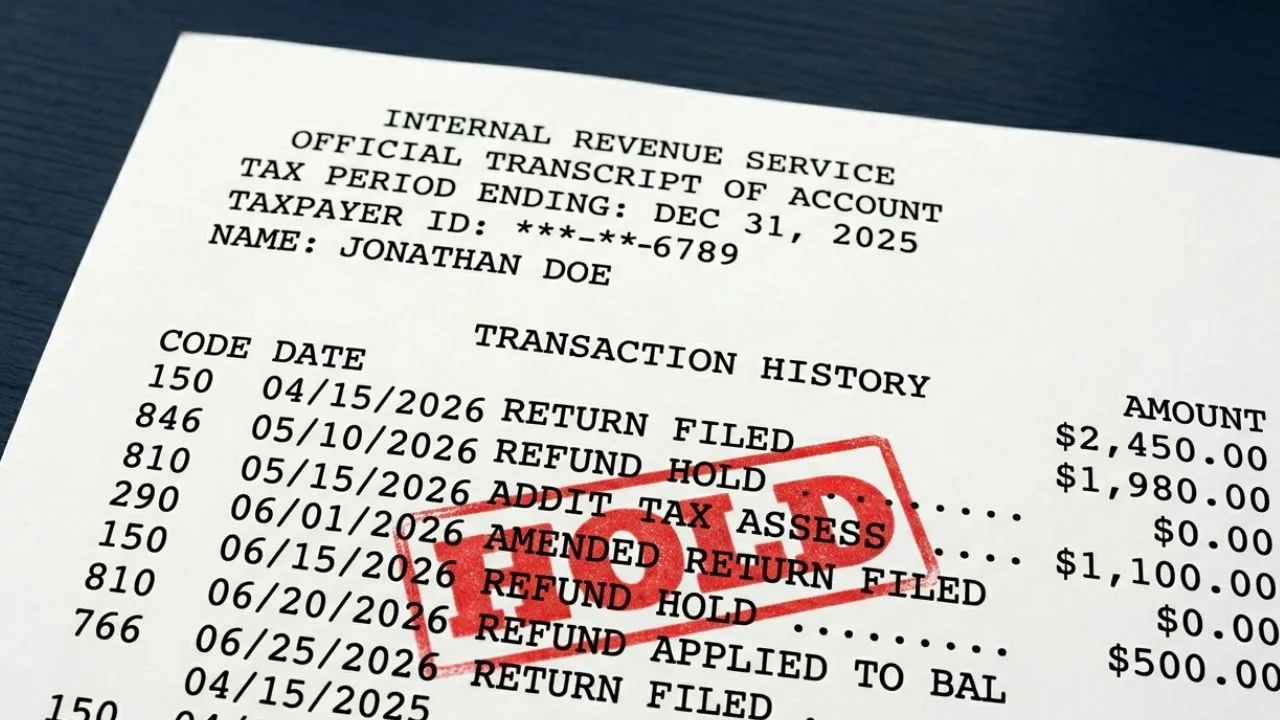
For taxpayers who already see a status message, Investozora’s refund status guide explains common IRS tracker messages in more detail. Those whose transcripts show a refund-issue entry can separately review what IRS Code 846 means before assuming that a bank deposit has already arrived.
The practical point is simple: a $4,427 maximum EITC and an IRS “Refund Approved” message describe two different things. One is a tax-year credit limit. The other is a processing stage for a particular taxpayer’s refund.
EITC eligibility still depends on income and family circumstances
The IRS bases EITC eligibility and the credit amount on earned income, adjusted gross income, filing status and the number of qualifying children. Earned income can include wages, salaries, tips and qualifying self-employment income. Certain other income, such as Social Security benefits or unemployment benefits, is not treated as earned income for this purpose.
Having one child also does not automatically establish EITC eligibility. Qualifying-child rules and other taxpayer requirements still apply. Investozora’s EITC eligibility guide provides a fuller explanation for households trying to determine whether a child and filing situation satisfy the rules.
The maximum should therefore be read as a ceiling, not an expected payment. Two households with one qualifying child can receive different EITC amounts because their earned income, adjusted gross income and filing circumstances differ.
For people filing a 2025 return now, the relevant maximum remains $4,328 for one qualifying child. The $4,427 maximum becomes relevant to tax year 2026 and generally to the return filed for that year in 2027.
What You Should Do Now
If the IRS is currently processing a 2025 return, use the 2025 EITC limits rather than the newer $4,427 figure. A taxpayer with one qualifying child should not assume the 2026 maximum applies simply because the refund is being received during calendar year 2026.
If planning for a 2026 return, keep the $4,427 maximum in context with the income phaseouts and other eligibility rules. The amount a taxpayer ultimately receives can be lower, and eligibility should be checked against the applicable IRS rules before estimating a refund.
Anyone waiting for an already-filed refund should rely on the IRS refund tracker for a personalized status rather than treating a general EITC maximum as a payment notice. “Refund Approved” means the IRS has approved the refund shown for that particular processed return; “Refund Sent” is the next tracker stage.
The IRS EITC 2026 increase can provide a larger tax benefit for eligible workers, but its most important detail is timing. The IRS EITC 2026 maximum of $4,427 for one qualifying child applies to tax year 2026, not automatically to refunds currently being processed from 2025 returns.
Methodology: Investozora compared the IRS’s published tax-year 2025 EITC tables with Revenue Procedure 2025-32 for tax year 2026. Dollar differences and percentage changes were calculated by Investozora and independently reviewed as of August 17, 2026.