
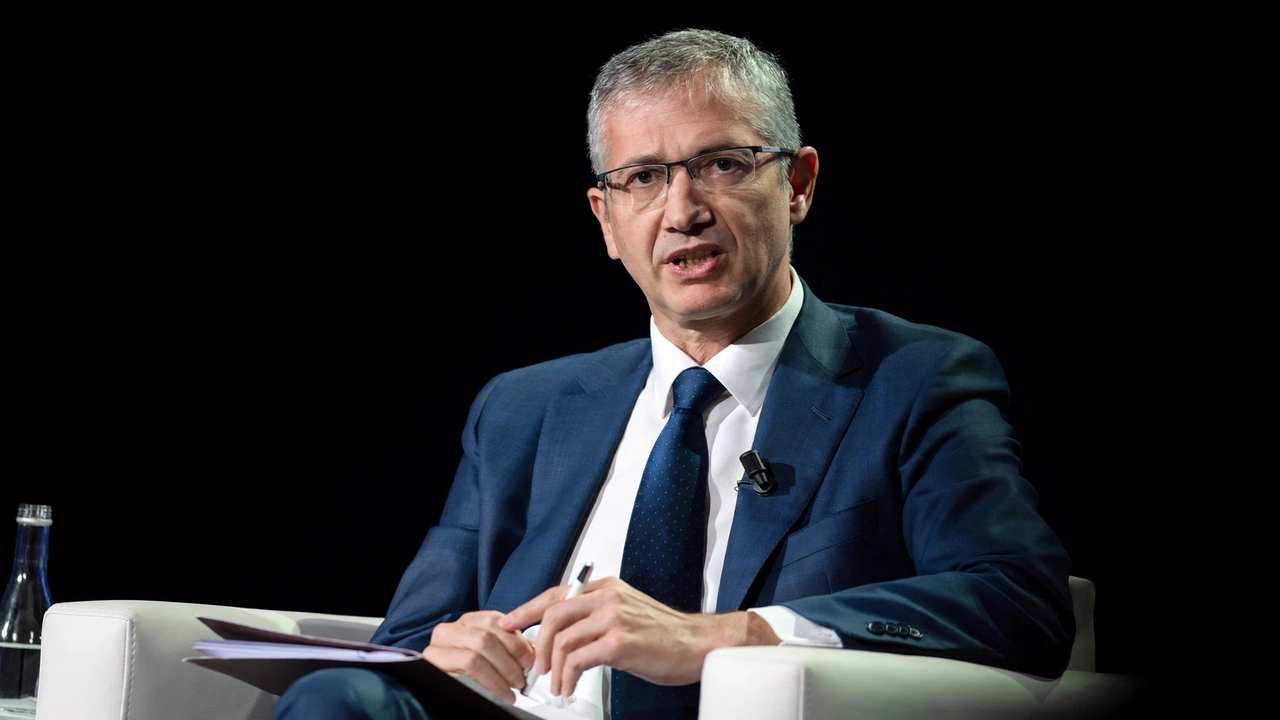
European Union leaders have nominated Spain’s Pablo Hernández de Cos to become the next president of the European Central Bank (ECB), choosing an experienced central banker to lead the institution as Europe faces renewed inflation pressures and economic uncertainty.
The European Council announced its decision on Thursday, November 26. Hernández de Cos is expected to succeed Christine Lagarde when she leaves office on February 7, 2027, subject to the completion of the formal appointment process.
The nomination comes at a difficult time for Europe’s economy, with rising energy prices complicating efforts to bring inflation under control. The leadership change also carries international significance as investors assess the direction of monetary policy in Europe and its relationship with U.S. interest rates.
Hernández de Cos previously served as governor of the Bank of Spain from June 2018 to June 2024, according to the institution’s official historical records. During that period, he participated in ECB monetary policy decisions as a member of its Governing Council.
He also chaired the Basel Committee on Banking Supervision between January 2019 and June 2024. According to his official professional biography, he became general manager of the Bank for International Settlements in July 2025, bringing additional international banking experience to his prospective new role.
His selection follows a competition between two candidates. The Eurogroup’s November statement identified Hernández de Cos and former Dutch central bank governor Klaas Knot as the candidates seeking to replace Lagarde.
Unlike the Federal Reserve chair appointment process in the United States, the ECB’s leadership selection follows a procedure established under European Union law. Under Article 283 of the Treaty on the Functioning of the European Union, the European Parliament and the ECB’s Governing Council must be consulted before the European Council completes the appointment.
If formally appointed, Hernández de Cos will serve a single eight-year term that cannot be renewed.
European leaders also selected Laurence Boone and Markus Brunnermeier to join the ECB’s six-member Executive Board. Boone is expected to replace Isabel Schnabel, who plans to leave on January 3, 2027, while Brunnermeier has been selected to succeed Philip Lane, whose term expires on May 31, 2027.
The leadership changes come as inflation moves further away from the ECB’s medium-term target of 2%, a numerical objective shared by the Federal Reserve, although the institutions use different inflation measures. The challenges facing both central banks have renewed attention on the inflation target and the economic costs of restoring price stability.
According to Eurostat’s latest figures, annual eurozone inflation reached 4% in October, up from 3.8% in September and 2.1% a year earlier. Energy accounted for the largest contribution to October’s annual inflation rate, adding 1.89 percentage points.
The ECB left its deposit facility rate unchanged at 2.50% at its October policy meeting. Policymakers warned that prolonged energy price pressures could increase inflation while weakening economic growth, a challenge also reflected in the broader global economic outlook.
For European households and businesses, the direction of ECB policy matters because it influences mortgage rates, savings returns and borrowing costs. Changes in European monetary policy can also influence currency markets, international investment flows and expectations surrounding U.S. dollar strength.
These connections make the ECB transition important to anyone following global financial developments, including American businesses and investors with exposure to European markets. However, Thursday’s nomination does not itself change interest rates or establish the direction of future monetary policy.
Lagarde, who announced her departure on October 29, will remain in office during the transition. The ECB’s official meeting calendar lists monetary policy decisions for December 17, 2026, and February 4, 2027, before her scheduled departure.
For now, the next step in the leadership transition is the consultation process involving the European Parliament and the ECB’s Governing Council. A formal appointment decision must follow before Hernández de Cos can take charge of Europe’s central bank.