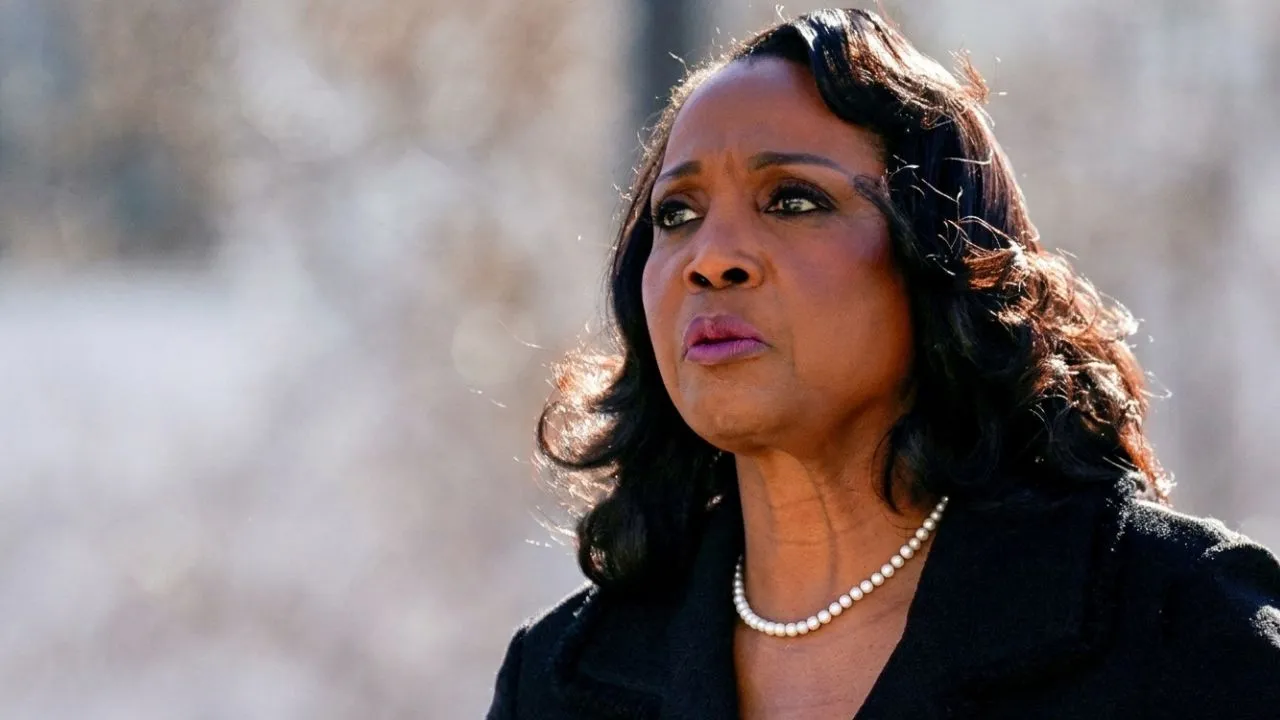


President Donald Trump has revived his effort to remove Federal Reserve Governor Lisa Cook, extending an unprecedented dispute over presidential power and the independence of the U.S. central bank after the Supreme Court rejected his earlier attempt to oust her.
The renewed pressure comes little more than a month after the Supreme Court denied the administration’s request to let Cook’s removal take effect while litigation continued. The June 29 ruling left Cook in office and established significant limits around the circumstances and procedures under which a president can remove a member of the Federal Reserve Board of Governors.
The White House on Aug. 7 published a new statement from Trump through its official website, linking to a presidential social-media post. The government page itself does not reproduce the underlying statement, limiting what can be independently established from the White House’s published record about the latest step.
The broader legal dispute, however, is now unusually well defined. Trump first attempted to remove Cook in August 2025 after allegations were raised that she had made false statements related to mortgage applications before joining the Federal Reserve.
Cook challenged the action in federal court, arguing that the allegations did not constitute the “cause” required under federal law and that she had not been given adequate notice or an opportunity to respond. The Supreme Court ultimately declined to let the removal proceed.
Supreme Court set a high bar for removing a Fed governor
The dispute centers on the unusual legal protection Congress gave members of the Federal Reserve’s governing board. Federal Reserve governors are appointed by the president, confirmed by the Senate and generally serve staggered 14-year terms. Under federal law, they may be removed by the president only “for cause.”
That protection is a central feature of the institution’s independence from day-to-day political control. The Supreme Court emphasized that distinction in its June decision, noting that Fed governors do not serve at the president’s pleasure. The court also rejected the administration’s argument that a president’s determination of “cause” is effectively beyond judicial review.
Instead, the majority said courts can examine whether the stated justification for removing a governor actually falls within the boundaries established by the Federal Reserve Act. Accepting an effectively unlimited removal power, the court said, would risk converting the statutory protection into something resembling at-will employment.
That finding carries implications well beyond Cook’s individual position. It reinforces the institutional separation underlying Federal Reserve independence and limits the ability of future presidents to replace governors simply because they disagree with monetary-policy decisions.
Cook was entitled to respond before any removal
The Supreme Court’s most immediate objection to Trump’s first removal attempt was procedural. The court held that Cook was entitled to notice of the allegations and at least some opportunity to respond before the president could make a final removal decision.
The justices said the administration had not provided sufficient process before Trump attempted to dismiss her in 2025. Cook needed an explanation of the evidence, an avenue to answer the charges and a deadline for responding before a final determination could be made.
The ruling did not, however, finally decide whether the underlying allegations against Cook could constitute legal “cause” for removal. That distinction leaves the administration with a potential path forward: provide the procedure the Supreme Court said was missing and then make a new determination that could itself face another round of judicial review.
The court also indicated that the seriousness of alleged misconduct and its connection to a governor’s professional responsibilities could matter when determining whether the statutory standard has been met. It cautioned against interpreting “cause” so broadly that almost any alleged mistake could become a pretext for removing a policymaker.
The case has become a test of Federal Reserve independence
Trump’s original action against Cook marked the first attempted presidential firing of a Federal Reserve governor in the central bank’s history, according to the Supreme Court. Cook’s current term is scheduled to run until 2038.
The case therefore reaches beyond a personnel dispute. It tests how much control a president can exercise over officials responsible for setting U.S. monetary policy.
That question matters because the seven-member Board of Governors plays a central role in the Federal Reserve’s interest-rate decisions, banking regulation and the broader operation of the Federal Reserve System.
The Supreme Court placed unusual emphasis on that institutional structure. The majority said both the reality and the appearance of independence are important to the Fed’s design and warned about the consequences of political interference in monetary policy.
The court also declined to treat the Federal Reserve like an ordinary executive agency whose officials can generally be removed by the president. That separation is particularly consequential when presidents publicly disagree with the central bank over the direction of interest rates.
Cook remains an active Federal Reserve governor
Cook has continued performing her duties while the removal dispute proceeds. On Aug. 5, the Federal Reserve published a speech from Cook at an economic luncheon in Anchorage, Alaska, where she discussed inflation, employment and the economic outlook.
Cook said the 12-month personal consumption expenditures inflation rate through June stood at 3.7%, with core inflation at 3.3%. She said risks had shifted more toward inflation and away from employment and indicated she remained prepared to support tighter policy if sufficient progress toward price stability failed to emerge.
Her continued participation illustrates why the legal battle could matter for the Federal Reserve’s policy outlook. Governors vote on monetary policy through the Federal Open Market Committee, meaning any eventual change in the Board’s composition could affect the balance of views inside the central bank, although no individual governor controls an interest-rate decision.
What happens next
Trump’s renewed effort does not by itself mean Cook will leave the Federal Reserve. The Supreme Court’s ruling requires a meaningful procedural process before a final removal decision and leaves federal courts with authority to review whether the president has identified legally sufficient cause.
That means another attempt to remove Cook could return quickly to the courts. The key questions would include whether she received adequate notice and an opportunity to respond, whether the government’s allegations are sufficiently serious, and whether they bear enough connection to her fitness to serve as a Federal Reserve governor.
For markets, the larger issue is not simply Cook’s seat. The dispute could define how insulated the Federal Reserve System remains from presidential influence when decisions over inflation, interest rates and financial regulation conflict with White House priorities.
For now, Cook remains on the Board, the Supreme Court’s restrictions remain in force, and any successful effort to remove her will have to clear a substantially higher legal threshold than the administration’s first attempt.