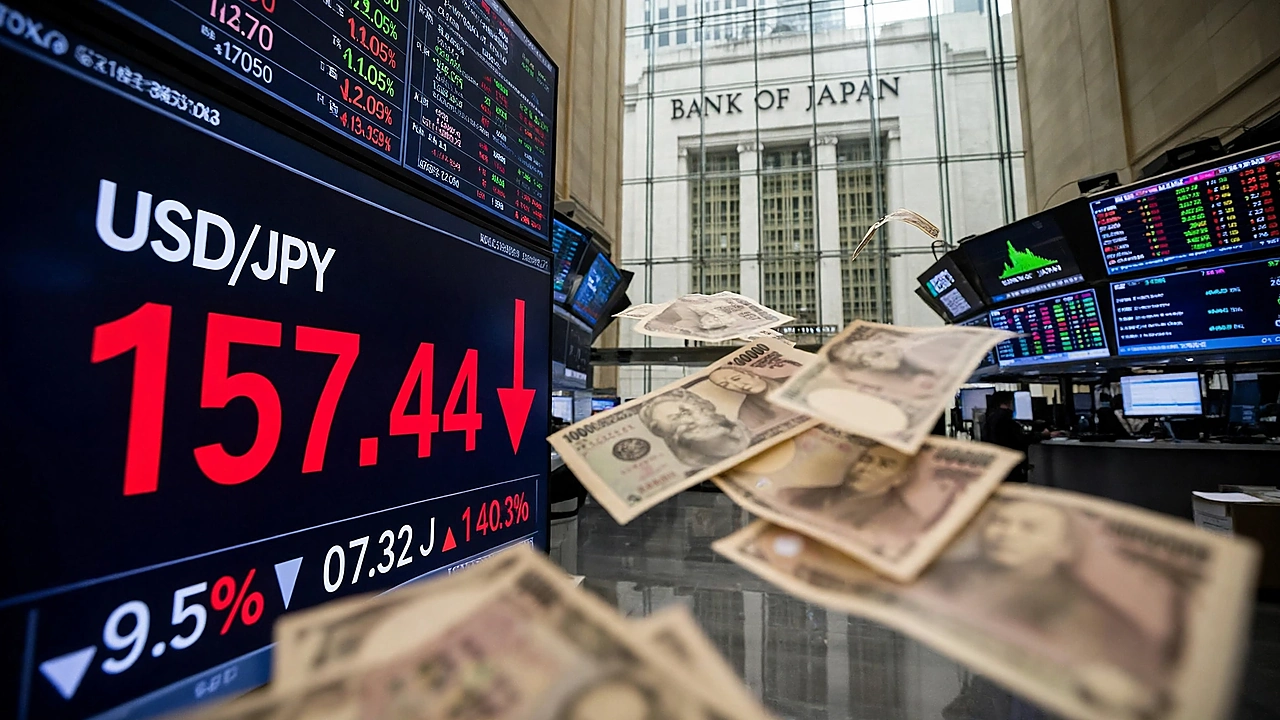


The Federal Reserve is approaching its October 28 interest rate decision with borrowing costs already elevated across the U.S. economy. The benchmark federal funds rate stands at 3.75%–4.00%, the latest published average 30-year mortgage rate is 7.32%, and credit-card accounts charged interest carried an average annual rate of 22.36% in the Federal Reserve’s latest available survey.
A decision to leave rates unchanged would prevent another immediate increase in the Fed’s policy target. It would not, by itself, reduce mortgage payments, lower outstanding credit-card balances or guarantee cheaper loans for households.
That distinction matters more than the headline decision alone. In my analysis, the question is not simply whether the Fed raises rates today, but how much of the borrowing burden is already embedded in market interest rates, lending contracts and expectations about future monetary policy.
The Federal Reserve calendar schedules the policy announcement for 2 p.m. Eastern time, followed by Chair Kevin Warsh’s news conference at 2:30 p.m. The decision had not been announced when this analysis was prepared.
At its September meeting, the Fed raised its target by 25 basis points, bringing the range to 3.75%–4.00%. The move marked a shift toward tighter policy as inflation remained above the central bank’s 2% objective.
Investozora’s earlier coverage examined that September rate increase and the economic conditions surrounding the October Fed meeting. The latest mortgage and consumer-credit figures now make it possible to examine what another pause would actually mean for households.
Mortgage Reality
Freddie Mac reported that the average 30-year fixed mortgage rate declined to 7.32% on October 22, from 7.40% the previous week. Although the decline provided some relief to prospective homebuyers, the rate remained substantially above the 6.19% average recorded a year earlier.
That is a difference of 1.13 percentage points, or 113 basis points. The contrast is particularly striking because the weekly decrease of eight basis points can appear encouraging when viewed without the longer comparison.
I calculated the financing cost for a hypothetical $400,000 home purchased with a 20% down payment, leaving a $320,000 mortgage amortized over 30 years. At Freddie Mac’s October 22 average rate of 7.32%, monthly principal and interest would be approximately $2,198.18.
At the year-earlier rate of 6.19%, the same loan would require approximately $1,957.82 per month. That produces a difference of $240.35 per month, or approximately $2,884 annually, before property taxes, homeowners insurance, mortgage insurance, closing costs and other expenses.
The calculation compares two hypothetical loans originated at different rates. It is not an estimate of how much existing homeowners’ payments increased, nor does it forecast future mortgage rates.
The most recent weekly decline offers another useful comparison. A $320,000 mortgage financed at 7.40% would carry a monthly principal-and-interest payment of approximately $2,215.62. At 7.32%, the payment falls to $2,198.18, a reduction of about $17.44.
In other words, the latest week’s improvement saves roughly $17 a month in this illustration, while the difference from the year-earlier borrowing rate remains approximately $240.
For households deciding whether a property is affordable, that difference can matter more than whether the Fed changes its benchmark by another quarter-point.
The historical movement also shows why mortgage pricing cannot be reduced to a single policy announcement. Freddie Mac reported a 6.95% average on September 17, as examined in Investozora’s earlier mortgage rate report. The October 22 average was 37 basis points higher.
That comparison establishes the change in published mortgage rates. It does not establish that September’s Fed increase independently caused the entire rise.
Freddie Mac’s survey primarily reflects conventional, conforming home-purchase lending for borrowers with strong credit profiles and substantial down payments. Actual offers can differ because of credit scores, loan size, points, property type and lender pricing.
The Mortgage Cost of Higher Rates
Investozora calculated how changing mortgage rates affect monthly payments on the same $320,000 loan. The comparison uses Freddie Mac’s published 30-year mortgage averages.
Investozora Mortgage Calculation
| Mortgage rate | Monthly principal + interest |
|---|---|
| 6.19% (Oct. 23, 2025) | $1,957.82 |
| 7.32% (Oct. 22, 2026) | $2,198.18 |
| 7.40% (Oct. 15, 2026) | $2,215.62 |
Investozora finding: The latest weekly decline reduces the illustrative mortgage payment by about $17 per month, but the payment remains approximately $240 higher than at the year-earlier mortgage rate.
Calculation Methodology: Monthly payments were calculated using the standard fixed-rate mortgage amortization formula, M = P × [r(1 + r)^n] / [(1 + r)^n − 1], where P = $320,000 loan principal, r = annual mortgage rate divided by 12, and n = 360 monthly payments. The annual difference is calculated from unrounded monthly payments multiplied by 12, while displayed monthly payments are rounded to the nearest cent. The estimates exclude property taxes, insurance, points, closing costs and other expenses. They compare hypothetical new fixed-rate loans, not actual changes to existing homeowners’ payments.
Data source: Freddie Mac Primary Mortgage Market Survey , October 22, 2026 release. Rates: 7.32% (Oct. 22, 2026), 7.40% (Oct. 15, 2026), and 6.19% (year-earlier comparison). Mortgage payments and differences independently calculated by Investozora.

The calculations also apply to newly originated hypothetical loans. Homeowners with existing fixed-rate mortgages generally do not see their contractual interest rates change simply because the Federal Reserve meets. That distinction is central to the mortgage payment impact of monetary policy: new borrowers, refinancing applicants and some adjustable-rate borrowers face different exposures.
Treasury Transmission
The federal funds rate primarily governs overnight lending conditions among financial institutions. It influences broader interest rates, but it does not directly establish the rate a bank must charge on a 30-year mortgage.
Longer-term Treasury yields, mortgage-backed securities pricing, investor demand, prepayment risk and lender margins all influence mortgage financing. The Federal Reserve’s H.15 interest data provide a useful illustration.
The 10-year Treasury constant-maturity yield stood at 5.13% on October 21, fell to 4.96% on October 22 and returned to 5.00% on October 26. Those movements occurred before the October 28 policy announcement. They show how longer-term market rates can change independently of a new Fed decision.
The 17-basis-point decline between October 21 and October 22 does not establish an equivalent change in mortgage rates. The instruments have different risk characteristics, and Freddie Mac’s weekly survey is not synchronized with every daily Treasury-market observation.
But the distinction explains why a rate hold cannot guarantee mortgage relief. Even with the policy rate unchanged, mortgage borrowing costs could increase if investors demand higher longer-term yields or if mortgage-market spreads widen.
They could also decrease if market conditions move in the opposite direction. My previous examination of Treasury yield mechanics addressed that separation between short-term monetary policy and the broader financing conditions affecting households.
For prospective homebuyers, the actual mortgage offer and whether the lender has locked its rate remain more directly relevant than the Fed’s benchmark alone. The Consumer Financial Protection Bureau’s rate-lock guidance explains why an unlocked mortgage rate can change before closing.
Credit Card Exposure
The connection between Fed policy and credit-card borrowing is more direct for accounts with variable interest rates, but even here, a pause does not automatically reduce the cost of outstanding debt.
The Federal Reserve’s G.19 credit report, released October 7 and covering August 2026, showed an average interest rate of 22.36% on commercial-bank credit-card accounts assessed interest.
The average across all credit-card accounts in the same survey was 21.19%. These are different measures. The higher figure represents accounts being charged interest; the all-accounts measure covers a broader group. Neither should be interpreted as the exact rate paid by every borrower.
Both observations also predate the Fed’s September rate increase. They establish an already-high borrowing-cost baseline, not a verified post-September response.
A major reason credit-card rates are sensitive to Federal Reserve policy is that many issuers calculate variable annual percentage rates using an underlying index, commonly the prime rate, plus an additional margin.
The Federal Reserve’s H.15 release recorded the bank prime loan rate at 7.00% on October 26. As explained in Investozora’s examination of prime rate mechanics, changes in that benchmark can affect variable-rate borrowing, although individual loan agreements determine when and how adjustments occur.
The CFPB’s variable APR guidance confirms that a variable credit-card rate can move with its specified index. If the Fed holds its target range steady, it does not independently require lenders to reduce existing credit-card APRs. Nor does it erase the interest already accruing on unpaid balances.
The distinction between preventing another increase and actually reducing borrowing costs is important for households carrying revolving debt. New credit-card offers may also reflect changes in underwriting, competition, creditworthiness and issuer margins. The policy rate is only one component of the final interest rate.
That is why I would not interpret a Fed pause as immediate household debt relief without evidence that the rates charged to borrowers have actually declined. Investozora’s earlier analysis of credit card APRs explains the contractual transmission process in greater detail.
Different Loan Contracts
Auto loans, personal loans, home-equity borrowing and fixed-rate mortgages also respond differently to monetary policy. In the August figures published by the Fed in October, the reported commercial-bank interest rate for 60-month new-car loans was 7.54%. The rate for 24-month personal loans was 11.90%.
These are historical survey observations, not live offers available on October 28. They also represent different credit products, borrower characteristics and lending terms, so comparing them directly does not establish that one category is universally cheaper or more expensive for an individual borrower.
For a new fixed-rate auto or personal loan, the rate negotiated at origination generally determines the contractual payment schedule. Subsequent Fed decisions do not automatically reprice that existing fixed-rate obligation.
Variable-rate home-equity lines of credit can be more sensitive to changes in their contractual indexes. Yet the effective impact still depends on reset provisions, lender margins and the borrower’s outstanding balance.
There is another important distinction on the other side of household finances. Keeping policy rates elevated can support returns on some interest-bearing deposits, but banks are not required to adjust savings-account yields in perfect step with the federal funds rate.
This creates a distributional difference: a saver earning interest and a borrower carrying expensive revolving debt may experience the same Fed decision very differently. The relevant measure is therefore not a universal household interest rate. It is the actual cost or return attached to each financial contract.
Inflation Tradeoff
The reason borrowing costs may remain elevated extends beyond one policy meeting. The Bureau of Labor Statistics reported that the September CPI report showed consumer prices rising 0.6% on a seasonally adjusted monthly basis and 3.7% over the previous 12 months.
The CPI excluding food and energy increased 0.3% during September and 2.6% from a year earlier. Those figures require a careful distinction. The sharp monthly increase in headline inflation does not mean every component experienced an equivalent acceleration. Gasoline contributed heavily to September’s headline increase, while underlying price pressures must be examined separately.
The Fed’s preferred inflation measure is the personal consumption expenditures price index, which uses different weights and coverage from CPI. The Bureau of Economic Analysis reported in its August PCE release that headline PCE inflation was 3.4% over 12 months, while core PCE inflation was 3.0%.
Both remained above the Fed’s 2% inflation objective. A key complication is that policymakers will announce their October decision before receiving the next complete monthly PCE report.
The BEA’s official release schedule places September personal income and outlays, including PCE inflation, at 8:30 a.m. Eastern on October 29. The advance estimate of third-quarter GDP is scheduled for the same time. That is 18.5 hours after the October 28 policy announcement, a timing issue examined in Investozora’s earlier PCE timing analysis.
The Fed can estimate inflation using data already available to policymakers, but those estimates are not identical to a subsequently published official release. The distinction matters because a rate hold based partly on financial conditions would not necessarily mean that inflation risks have disappeared.
The Fed’s September Summary of Economic Projections placed the median participant’s expected year-end 2026 federal funds rate at 4.1%, above the current target-range midpoint of 3.875%.
That figure represents participants’ individual assessments of appropriate future policy, not a binding commitment by the Committee. It nevertheless illustrates why an October pause and the possibility of later tightening are not contradictory.
Policy Divide
Recent commentary from former Federal Reserve officials and private-sector economists reflects a disagreement over timing, financial conditions and the cost of waiting.
Robert Kaplan, Goldman Sachs vice chairman and former Dallas Fed president, emphasized in comments reported by The Wall Street Journal this week that the Fed’s earlier communication had made an immediate October increase difficult to deliver without surprising markets. Claudia Sahm, a former Fed economist, took a different position in the Journal’s reporting, arguing that the economic evidence supported tightening sooner.
Their disagreement separates two questions: whether the latest inflation data justify higher rates, and whether policymakers have prepared financial markets for another immediate increase.
Kathy Bostjancic, Nationwide’s chief economist, told Reuters on October 26 that economic strength, consumer resilience and worsening inflation supported a further rate increase. Gregory Daco, EY-Parthenon’s chief economist, focused on the communication challenge. In his assessment reported by Reuters, a decision to hold would need a credible explanation so investors would not interpret patience as weakened commitment to controlling inflation.
The debate also concerns whether prevailing financial conditions are already doing enough to restrain the economy. William Dudley, former New York Fed president, explained to Reuters on October 28 that the central bank must consider long-term interest rates, equity valuations and their effects on household wealth rather than judging policy exclusively through short-term rates.
Patrick Harker, former Philadelphia Fed president, offered a more qualified assessment in the same Reuters reporting. He viewed overall financial conditions as closer to neutral, emphasizing the uneven strength of investment across sectors.
Cleveland Fed President Beth Hammack has expressed concern that financial conditions are not sufficiently restrictive to return inflation to target. Reuters revisited her earlier comments on October 28. In her October 12 remarks, Hammack also described financial conditions as closer to neutral than genuinely restraining demand, while arguing that restrictive monetary policy remained appropriate.
Investozora previously examined Hammack’s policy position and its implications for the Fed’s inflation debate. These are perspectives previously reported by The Wall Street Journal and Reuters, alongside Hammack’s earlier public remarks. They are not interviews conducted by Investozora.
The differences are substantive. Some economists place greater weight on inflation readings and resilient demand. Others emphasize long-term borrowing costs, already tighter financial markets or the risks associated with unexpectedly accelerating the tightening cycle. For borrowers, the dispute helps explain why an unchanged benchmark rate is not necessarily the same as easier credit conditions.
Next Evidence
The October decision will establish the Federal Reserve’s immediate policy choice, but the accompanying statement, voting record and Chair Warsh’s explanation will be needed to evaluate what that decision means for subsequent meetings.
If the Fed holds rates, the relevant distinction will be whether officials describe the pause as a temporary opportunity to assess incoming data or indicate a more durable change in their assessment of inflation and financial conditions.
If policymakers raise rates instead, the immediate question will shift to the additional pressure that higher short-term rates could place on variable-rate credit and whether markets interpret the move as part of a faster tightening path. Neither outcome alone will establish the direction of mortgage rates, bank lending margins or household debt-servicing costs.
The next official test comes at 8:30 a.m. Eastern on October 29, when the BEA releases September PCE inflation and third-quarter GDP. Those figures will provide additional evidence about whether inflation is becoming more persistent and how much economic activity can withstand elevated borrowing costs.
Until those results and the Fed’s actual decision are available, the measurable burden facing borrowers remains clear: the latest mortgage survey shows a 7.32% average rate, and the Fed’s last reported credit-card rate for accounts assessed interest stands above 22%. Whether the Fed changes its target today is a separate question from how quickly those costs can fall.