
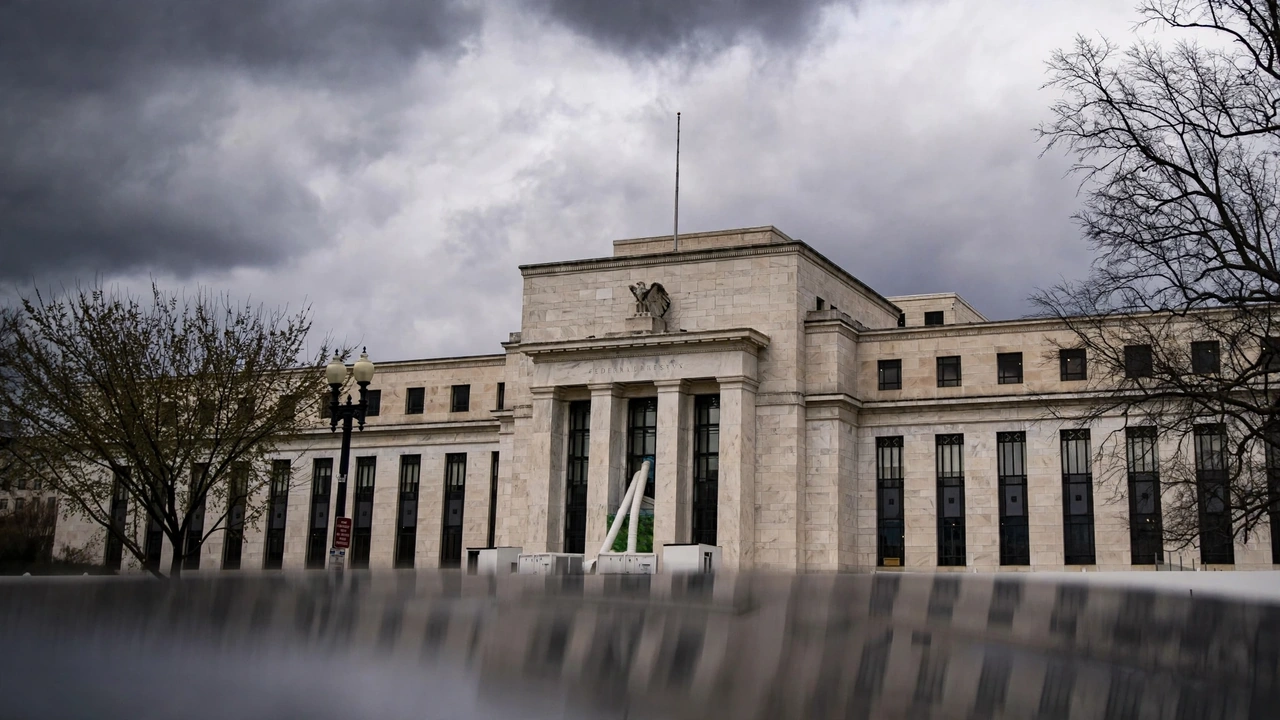
The Federal Reserve is closely watching a rapid increase in borrowing to finance artificial intelligence infrastructure, after advanced-computing-related debt issuance exceeded $680 billion through October 2026. The figure, disclosed in the central bank’s November 13 financial stability report, represents roughly five times the $130 billion issued during 2023.
But the most consequential finding is not simply how quickly AI debt is growing. The Fed’s analysis reveals that technology companies are building an increasingly complicated network of loans, long-term leases, guarantees and financing commitments that could leave their economic exposure substantially larger than their reported debt suggests.
The distinction matters for investors, lenders and businesses because the financial consequences of an AI slowdown may reach beyond technology stocks. I see the central question as whether the companies financing this extraordinary expansion can generate enough revenue to support their commitments without transmitting financial stress to the wider economy.
Why the $680 Billion Figure Matters
The Federal Reserve’s report includes a dedicated analysis titled Leverage in the Data Center Buildout, which documents how financing for advanced computing infrastructure has expanded. Investment-grade technology companies account for most of the recorded borrowing, but financing has increasingly spread across corporate bonds, private credit, structured debt and project finance.
Advanced-computing-related borrowing represented approximately 31% of nonfinancial investment-grade corporate debt issuance in 2026, up from less than 6% in 2023. That comparison is important because it shows how strongly one technology investment cycle has come to influence financing activity across the broader corporate bond market.
The $680 billion represents debt issuance during the measured period, not the entire amount of unpaid borrowing. The Fed separately estimated that outstanding public debt associated with advanced computing exceeded $1.1 trillion in October, while private transactions make the complete total harder to establish.
The issuance calculation also excludes certain private placements that are difficult to track. In my assessment, this limitation makes the published numbers useful indicators of the expansion’s scale, rather than a complete inventory of every financing obligation connected to AI.
The Larger Obligations Beyond Debt
One of the most revealing parts of the report concerns obligations that do not appear in the same way as conventional borrowing. The Fed identifies more than $1 trillion in undiscounted leases that have not yet commenced and more than $2 trillion in other commitments, including contractual purchase arrangements and residual-value guarantees.
These figures are not all immediately payable debts, nor can they be directly added to outstanding loans as though they were identical financial liabilities. The report explicitly distinguishes the undiscounted value of these future commitments from the discounted measurement of liabilities recorded on corporate balance sheets.
That accounting distinction is central to understanding the risks. A technology company can support the construction of a data center through a long-term leasing agreement while another business obtains the financing and records the project debt.
Consider a hypothetical developer building a data center to serve a major computing customer. If the customer signs a sufficiently credible long-term capacity agreement, lenders may use the expected payments to evaluate whether the developer can repay its construction debt.
The arrangement can distribute financing responsibilities across multiple businesses while still connecting their financial fortunes. If the underlying demand disappoints, the consequences depend on the specific contracts, guarantees, collateral values and ability of the parties to meet their obligations.
This is where I believe the Fed’s warning becomes particularly important: reported borrowing at one company may not capture the full range of economic commitments connecting it to other participants.
How AI Financing Connects Companies
The report describes how major technology companies, data center developers and graphics-processing-unit manufacturers have become financially interconnected. Large computing businesses may commit to long-term data center leases, while semiconductor manufacturers may provide guarantees involving the future value of chips used as collateral.
These arrangements can help smaller developers and AI companies obtain financing that would otherwise be more expensive or unavailable. They also create a situation in which the financial health of one company increasingly depends on the revenue, spending plans and commitments of another.
Some transactions include equity investments alongside financing and commercial agreements, creating what the Fed describes as circular financing. Money can move through investments, infrastructure development, computing purchases and contractual revenue commitments within a closely connected group of businesses.
Such arrangements do not automatically indicate improper activity or an unsustainable business model. Nevertheless, I think they complicate the task of identifying who ultimately bears a financial loss when projected demand or collateral values fall short.
The potential spillovers have become especially relevant as enthusiasm around advanced computing influences AI stock valuations and broader market expectations. Expanding infrastructure can support future earnings, but the value investors place on those earnings still depends on whether commercial demand develops as expected.
What Changed Since the Previous Report
The Federal Reserve had already identified AI-related financing and elevated asset valuations as areas of concern in its May 2026 report. The November report goes further by providing a detailed examination of data center borrowing structures, contingent obligations and potential financial connections.
It also records a notable change in how financial-market participants assess the risks. In a September–October survey of 23 professional contacts, 87% mentioned artificial intelligence as a significant financial-stability concern, compared with 50% in the spring survey.
Those percentages describe the concerns raised by surveyed market professionals, not the probability of an AI crash. The Fed specifically cautions that these responses should not be interpreted as the official views of its Board or the Federal Reserve Bank of New York.
The shift nevertheless illustrates how quickly AI financing has moved into discussions traditionally dominated by interest rates, credit conditions and broader market vulnerabilities. It also puts the technology’s potential economic benefits alongside questions about the financing required to deliver them.
The Connection to the 1990s Technology Boom
The Federal Reserve compares the current investment cycle with the broadband and telecommunications expansion of the late 1990s and early 2000s. Its analysis measures capital spending and debt issuance relative to economic output, allowing the two periods to be compared more meaningfully than by nominal dollar amounts alone.
According to the report, capital spending by five major technology companies has followed a broadly similar path to the earlier telecommunications investment cycle, although the current pace has accelerated. The Fed suggests that advanced-computing investment could soon move beyond the earlier cycle’s relative pace.
That finding warrants attention without implying that history must repeat itself. The report also explains that strong cash flows at major technology companies have allowed them to finance considerable investment without relying on debt to the same extent as telecommunications firms during the earlier expansion.
This difference helps explain why I would resist treating the AI boom as an inevitable replay of the dot-com collapse. The sustainability of today’s expansion depends on business profitability, financing structures, demand for computing capacity and the obligations companies assume along the way.
How Financial Risks Could Spread
The Fed identifies several groups of financial institutions with exposure to advanced-computing investments. Conventional debt obligations associated with large technology companies are held primarily by mutual funds, pension funds and insurers, while riskier portions of some specialized financings are held by high-yield funds, business development companies and private debt vehicles.
The largest U.S. bank holding companies also have close to $1 trillion in combined exposure to large technology firms, data center developers, related financing vehicles, private credit businesses and utility companies. The report notes that these exposures are evaluated through annual supervisory stress testing.
That amount should not be interpreted as $1 trillion in expected losses or exclusively as data center loans. It measures a broader collection of financial exposures involving businesses connected to the computing infrastructure expansion.
The Fed’s concern is that weaker-than-expected returns on investment could reduce corporate valuations, tighten credit conditions and discourage further spending. A sharp correction could also interact with existing market leverage, particularly if investors respond by selling assets to reduce financial risk.
Those mechanisms matter beyond technology companies. Higher Treasury yields and tighter credit markets can influence borrowing conditions elsewhere in the economy, although the Fed has not established that AI financing has already caused a measurable increase in household loan rates.
Why the Fed Is Not Predicting a Collapse
There is an important counterargument to the more alarming interpretation of the report: the largest technology companies generally retain considerable financial strength. Their existing businesses generate revenue that can help support investment, while the long-term economic returns from AI remain uncertain rather than definitively negative.
The Fed’s November assessment also describes the banking system as sound and resilient, with high regulatory capital ratios and moderate overall funding vulnerabilities. That broader conclusion is inconsistent with portraying the $680 billion issuance figure as evidence that a banking crisis has already begun.
The Federal Reserve’s financial stability framework distinguishes between vulnerabilities building within the system and adverse events that might eventually expose them. Monitoring those vulnerabilities is a preventive responsibility, not a forecast that every identified risk will materialize.
This distinction also separates financial stability from routine interest rate decisions. Monetary policy responds to economic conditions, while supervision and financial-stability analysis examine whether banks, lenders and markets can absorb shocks without disrupting credit to households and businesses.
What the AI Boom Means for Investors
For equity investors, the immediate issue is whether spending on data centers and computing infrastructure can eventually generate sustainable profits. Expectations surrounding technological growth have already played an important role in AI market movements, making earnings performance and capital spending increasingly important considerations.
Bond investors face a related question about repayment capacity and the financial obligations supporting infrastructure projects. A company with substantial future purchase commitments can have a different financial risk profile from one whose exposure consists mainly of conventional bonds.
For banks and institutional lenders, the challenge is understanding how apparently separate borrowers may be connected through guarantees, leasing arrangements and common sources of revenue. A project that appears financially independent may still depend heavily on a small number of technology customers.
The economic consequences also extend to the interaction between investment, inflation and productivity. Federal Reserve Chair Kevin Warsh has discussed the AI inflation outlook, including how infrastructure spending can increase near-term demand before longer-term efficiency gains become apparent.
Those forces may affect the broader economic outlook, but neither higher AI spending nor rising debt issuance establishes the direction of future interest rates. The ultimate consequences depend on profitability, economic growth, financing conditions and the resilience of exposed institutions.
What the Fed Will Be Watching Next
The most important unresolved question is how AI-related obligations will evolve as companies move from constructing infrastructure toward generating returns from it. Future corporate filings, debt issuance, refinancing conditions and actual demand for computing services should provide more evidence about whether financing pressures are increasing or stabilizing.
The Fed’s analysis also leaves uncertainty about the total stock of private borrowing and the valuation of contingent commitments. Better disclosure and consistent measurement would make it easier to determine where financial exposure is concentrated and how losses might spread during a downturn.
I view the November findings as an important development in the financial story surrounding artificial intelligence. The debate is no longer limited to whether AI can transform the economy or whether technology stocks are expensive; it increasingly concerns how the enormous investment required to build that future is financed.
The $680 billion debt boom shows the scale of that transition, while the much larger contractual commitments reveal why the Fed is paying close attention. The central issue is not whether AI investment will fail, but whether the financial system can manage the risks if its returns arrive more slowly than investors and lenders expect.