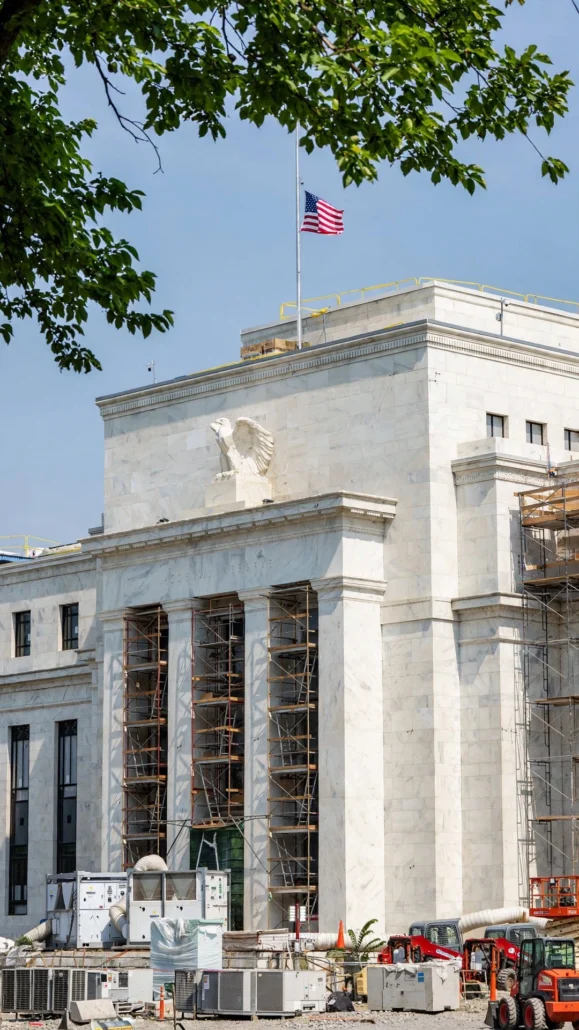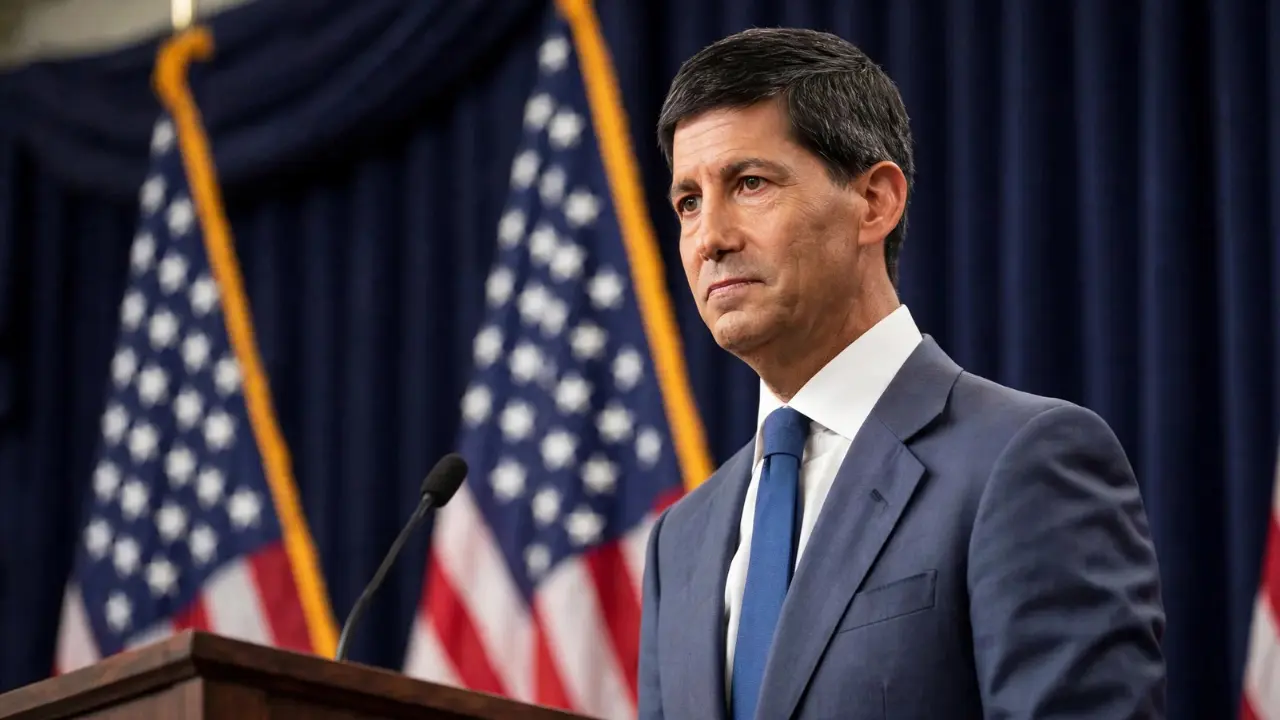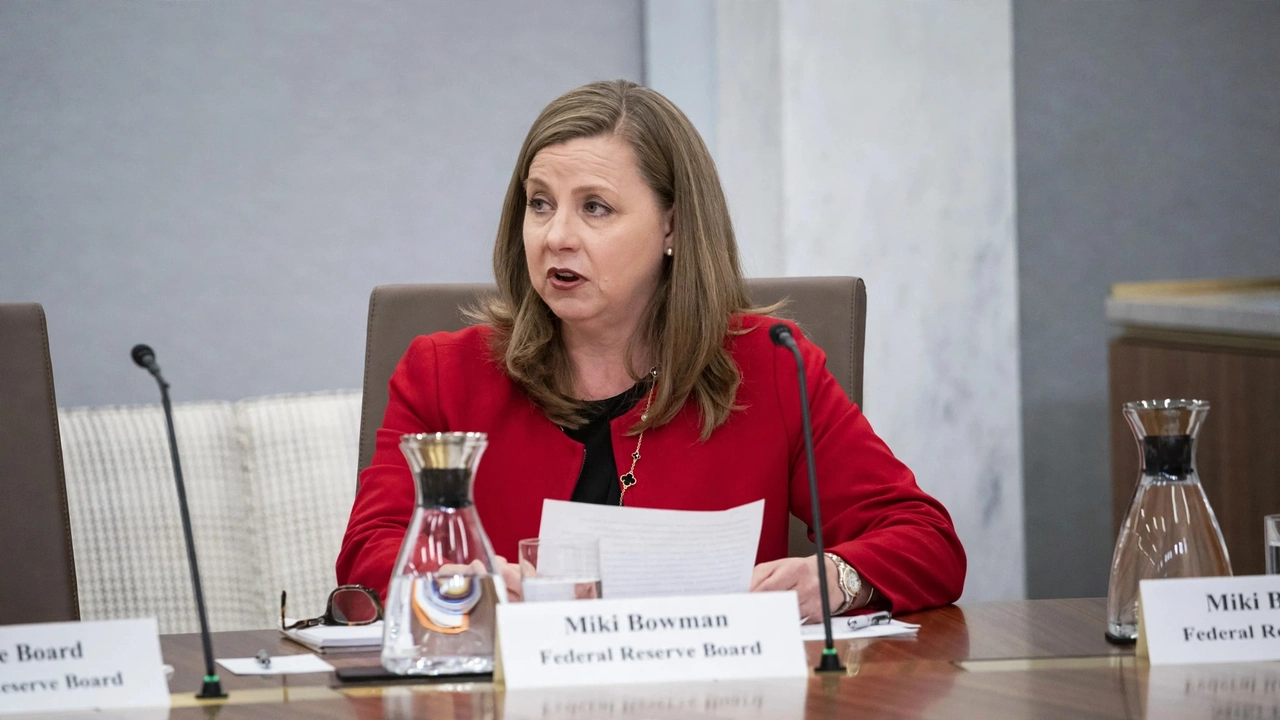
The Federal Reserve’s October 27–28, 2026, FOMC meeting will conclude with an interest rate decision at 2:00 p.m. Eastern Time on Wednesday, October 28, followed by Fed Chair Kevin Warsh’s scheduled press conference at 2:30 p.m. The decision comes after the Fed unanimously raised its benchmark rate by 25 basis points in September, leaving the federal funds target range at 3.75%–4.00%.
As of October 25, the central question is whether policymakers will pause after September’s increase or tighten policy further as inflation remains elevated. September’s latest CPI, producer-price and employment reports provide important evidence, while the Fed’s September projections and meeting minutes offer additional context.
October will not include a new Summary of Economic Projections or dot plot, making the policy statement and Warsh’s remarks especially relevant to the outlook for December.
When Is the October 2026 FOMC Meeting?
The Federal Open Market Committee meets eight times a year on a pre-announced schedule. According to the Federal Reserve’s official meeting calendar, the October 2026 meeting is scheduled for October 27 and 28.
As with every regularly scheduled FOMC meeting, the policy statement and interest rate decision are released at 2:00 p.m. Eastern time on the second day of the meeting, which falls on Wednesday, October 28, 2026.
The October meeting does not include a new Summary of Economic Projections (SEP) or dot plot, which are normally released with the March, June, September and December decisions. However, the Federal Reserve’s official October calendar confirms that a post-meeting press conference is scheduled for Wednesday, October 28, at 2:30 p.m. Eastern Time.
Investors will therefore have two major announcements to monitor: the FOMC policy statement and interest rate decision at 2:00 p.m., followed by Chair Kevin Warsh’s press conference 30 minutes later.
Without updated economic projections, the statement’s wording and Warsh’s explanations may provide particularly important context for how officials are assessing inflation, employment and the remaining December meeting.
Where Rates Stood Heading Into October
The Federal Reserve enters its October 27–28 meeting with the federal funds target range at 3.75%–4.00%, following a unanimous quarter-percentage-point increase on September 16, 2026. The decision marked a departure from the earlier pattern of unchanged rates, which had continued through July under Chair Kevin Warsh.
The September increase was approved by a 12–0 vote as policymakers cited solid economic activity, resilient domestic spending and inflation remaining above the Fed’s 2% objective. Our detailed coverage of the FOMC rate decision history through 2026 tracks each meeting’s outcome and the reasoning behind it.
The September decision established a new starting point for October. In its September rate hike report, Investozora documented the move to 3.75%–4.00% and its implications for the Fed’s policy path.
The subsequent September meeting minutes showed that most participants viewed another increase as likely appropriate by year-end, although they emphasized that future decisions would depend on economic conditions. That leaves October unresolved: holding rates steady would preserve September’s tightening, while another quarter-point increase would lift the target range to 4.00%–4.25%.
Key Economic Data the Fed Will Weigh
Several specific data releases carry outsized weight heading into any FOMC decision, and October 2026 is no exception. The Consumer Price Index is the most closely watched inflation gauge ahead of any Fed meeting.
Both the headline CPI figure and the core CPI, which excludes volatile food and energy prices, factor into the committee’s assessment of whether inflation remains on a path toward its long-run target. Our guide to how the CPI is measured by the Bureau of Labor Statistics explains exactly what goes into this number each month.
The monthly jobs report, released by the Bureau of Labor Statistics, gives the Fed its clearest read on labor market strength through the unemployment rate, nonfarm payroll growth, and wage growth figures.
A labor market that is cooling faster than expected typically strengthens the case for a rate cut, while persistently strong hiring and wage growth can push the committee toward holding rates steady for longer. Our analysis of how jobs reports affect the Fed’s rate path covers this relationship in more depth.
The Producer Price Index, which measures price changes at the wholesale level before they reach consumers, often serves as an early signal for where consumer inflation may be headed in the following months, making it a data point the Fed weighs even though it receives less public attention than CPI.
Personal Consumption Expenditures inflation, the Fed’s officially preferred inflation gauge, also factors heavily into the committee’s internal deliberations, even though CPI tends to dominate public and media attention around each meeting.
What the Latest Inflation and Jobs Data Show Before October 28
The final major economic reports available ahead of the October FOMC meeting present a mixed picture of persistent price pressures and relatively limited job growth. Together, they help explain why the timing of any additional rate increase remains an important question for policymakers.
The Bureau of Labor Statistics’ September Consumer Price Index, released October 14, showed headline consumer prices rising 0.6% during the month and 3.7% from a year earlier. Energy was a major contributor, with gasoline prices increasing 9.1% in September. Core CPI, which excludes food and energy, rose 0.3% for the month and 2.6% from a year earlier. The difference between headline and core inflation illustrates why policymakers must assess whether energy-driven price increases are temporary or are spreading into broader inflation expectations and costs.
Wholesale inflation also accelerated. The September Producer Price Index, published October 15, showed final-demand producer prices increasing 1.3% for the month and 6.3% over 12 months. These increases do not translate automatically into consumer inflation, but they highlight potential cost pressures that businesses may absorb or pass through over time.
Meanwhile, the September employment report, released October 2, showed nonfarm payrolls increasing by 29,000 and the unemployment rate at 4.2%. Both measures changed little during the month, underscoring the need to distinguish a relatively stable unemployment rate from the slower pace of payroll growth.
The Fed’s preferred inflation measure provides another important comparison. According to the Bureau of Economic Analysis’ August Personal Income and Outlays report, headline PCE inflation was 3.4% over 12 months, while core PCE inflation was 3.0%. Those figures refer to August, not September. The September PCE report is scheduled for October 29, one day after the October interest rate decision, so it will not be available at the time of the announcement.
The combined data offer competing considerations. Stronger headline and producer-price inflation provide reasons for continued vigilance, while limited payroll growth highlights the employment side of the Fed’s dual mandate. No single report determines the October outcome; policymakers must evaluate the broader trajectory of inflation, economic growth and labor-market conditions.
What Markets and Economists Expect From the October Fed Decision
Despite September’s rate increase and continued inflation concerns, most economists surveyed shortly before the October meeting expect the Federal Reserve to leave interest rates unchanged on October 28.
A Reuters survey conducted October 16–20 found that 94 of 100 economists expected the Fed to maintain its 3.75%–4.00% target range at the October meeting. All 100 respondents forecast another increase in December. These survey findings represent economists’ expectations, not an announced Federal Reserve decision or a guarantee of future policy.
The distinction is important because a pause in October would not necessarily signal that the Fed’s tightening cycle has ended. As Investozora explains in its October 28 Federal Reserve rate outlook, policymakers must weigh the latest economic evidence against the higher interest rate path outlined in September’s projections.
The Fed’s September meeting minutes provide additional context. Most participants assessed that another rate increase would likely be appropriate before the end of 2026, but they stressed that each future meeting would be evaluated independently.
The September dot plot also raised the median projected federal funds rate for year-end 2026 to 4.1%, compared with 3.8% in June. These projections indicate how individual policymakers assessed the appropriate policy path in September; they do not establish the outcome of the October or December meetings.
Federal Reserve Chair Kevin Warsh has also avoided committing to a specific October decision. During an October 16 discussion with IMF Managing Director Kristalina Georgieva, Warsh discussed how artificial intelligence investment could add to near-term demand before longer-term productivity benefits emerge. As detailed in Investozora’s report on Kevin Warsh, AI investment and October interest rates, he did not provide a definitive signal about the upcoming vote.
For investors, the central issue on October 28 will extend beyond whether the Fed changes rates. The decision statement and Warsh’s press conference may help clarify whether policymakers see September’s increase as sufficient for now, how they assess the latest inflation readings, and what evidence could justify another move before the end of the year.
The FOMC Blackout Period
In the days leading up to the October meeting, Federal Reserve officials, including regional bank presidents and Board of Governors members, observe what is known as the blackout period, during which they generally do not speak publicly about monetary policy.
For the October 27–28, 2026 meeting, the regular FOMC communications blackout period runs from October 17 through October 29. Under Federal Reserve rules, the restriction begins at 12:00 a.m. Eastern Time on the second Saturday before the meeting and ends at 11:59 p.m. Eastern Time on the day following its conclusion.
During this period, participating officials generally refrain from publicly discussing their monetary policy views, leaving investors to evaluate published economic data, earlier policy statements and previously delivered remarks rather than expecting new meeting-specific guidance.
What a Hold, Cut, or Hike Would Mean
A hold at 3.75%–4.00% would leave September’s quarter-point increase in place while giving policymakers additional time to assess whether inflation is moving toward their objective.
Such a decision would not, by itself, rule out further tightening later in 2026. Investors would need to examine the accompanying statement and Warsh’s press conference to understand how officials are balancing inflation risks against economic activity and employment.
A rate cut would ease borrowing costs across the economy, typically translating into somewhat lower rates on new mortgages, auto loans, and credit cards, while also generally softening the yield offered on savings accounts and CDs. Our guide to how fed rate cuts affect savings rates explains this relationship, which works in the same direction but in reverse for a cut versus a hike.
A rate hike, although not the consensus forecast for October following September’s increase, would raise borrowing costs further and typically push yields on savings products higher, while increasing pressure on variable-rate debt such as credit cards and adjustable-rate mortgages tied to the prime rate. Our explainer on the prime rate and the Federal Reserve covers exactly how Fed policy changes translate into the rate banks charge their best customers.
How the October Decision Affects Treasury Yields and Social Security
Fed policy decisions ripple well beyond consumer loan rates. Treasury yields, particularly on the 10-year note, tend to move in anticipation of and in reaction to FOMC decisions, which in turn affects mortgage rates nationally. Our analysis of treasury yields and Fed policy explains this transmission mechanism in detail.
There is also a less obvious but genuine connection between Fed policy and Social Security. Because the annual Social Security cost-of-living adjustment is calculated from a measure of consumer inflation, and Fed policy exists specifically to influence that same inflation trajectory.
The two systems are deeply intertwined even though they operate through entirely separate federal institutions. Our explainer on how the Federal Reserve and Social Security COLA interact walks through this connection step by step.
The 2026 FOMC Meeting Calendar in Context
Every FOMC meeting follows the same decision-making framework, but not every meeting carries the same level of market significance. Four meetings each year include the Federal Reserve’s Summary of Economic Projections (SEP) and the closely watched dot plot, while the remaining meetings focus primarily on the policy statement and interest rate decision.
Understanding where the October meeting fits within the annual calendar helps explain why investors often rely on earlier projections rather than expecting new long-term guidance in late October. The table below compares all eight scheduled FOMC meetings in 2026 and highlights which meetings include updated economic projections.
| Meeting | Dates | Includes SEP/Dot Plot |
|---|---|---|
| January | 27–28 | No |
| March | 17–18 | Yes |
| April | 28–29 | No |
| June | 16–17 | Yes |
| July | 28–29 | No |
| September | 15–16 | Yes |
| October | 27–28 | No |
| December | 8–9 | Yes |
Although the October meeting will not produce a new dot plot, investors can compare its policy decision and Chair Kevin Warsh’s remarks with the projections released in September. Those projections raised the median year-end federal funds rate estimate to 4.1% for 2026, signaling that participants anticipated a higher policy-rate path than they had in June.
The next scheduled update to the Fed’s economic projections will accompany the December 8–9 meeting, making the October statement and press conference an important checkpoint between the two projection releases.
What Investors and Households Should Watch Between Now and the Meeting
By October 25, the principal September inflation and employment reports have already been released, providing the Fed with important evidence ahead of its October 27–28 deliberations. Investors will focus on whether the committee views the latest price pressures as requiring immediate additional tightening or believes September’s increase provides enough restraint while further data are evaluated. The September PCE inflation report is scheduled for October 29, after the decision.
For mortgage borrowers, savers, investors and households with variable-rate debt, two times matter on Wednesday, October 28: the FOMC interest rate announcement at 2:00 p.m. Eastern and Chair Kevin Warsh’s press conference at 2:30 p.m.
Market rates may respond to both the decision and the forward-looking policy discussion. Fixed mortgage rates, in particular, can move in response to longer-term Treasury yields and expectations rather than simply matching a change in the federal funds rate.
How This Fits Into the Broader Federal Reserve Policy Picture
This preview sits within our full FOMC coverage cluster. For the complete history of 2026 rate decisions leading into this meeting, see our guide to Federal Reserve rate decisions explained, and for a broader look at how the Fed’s tools work overall, visit our foundational guide to how the Federal Reserve controls interest rates. For a complete map of how Fed policy connects to the wider system of Treasury operations and bank payments, see our central resource, How U.S. Money Moves.
What Time Is the October 2026 FOMC Rate Decision?
The Federal Open Market Committee will release its policy statement and interest rate decision at 2:00 p.m. Eastern Time on Wednesday, October 28, 2026, the second and final day of the meeting. This announcement includes the committee’s decision on the federal funds target range and any changes to its monetary policy stance.
Financial markets, including stocks, bonds, and Treasury yields, often react immediately after the statement is published. Investors and economists closely analyze the wording of the statement for clues about the Federal Reserve’s future policy direction.
Will the October 2026 FOMC Meeting Include a Press Conference?
Yes. The Federal Reserve has scheduled an FOMC press conference for Wednesday, October 28, 2026, at 2:30 p.m. Eastern Time, following the interest rate decision and policy statement at 2:00 p.m. The press conference will feature Fed Chair Kevin Warsh.
Although October is not a Summary of Economic Projections meeting and will not include a new dot plot, the scheduled press conference gives investors an opportunity to hear the Chair explain the policy decision and address questions about inflation, employment and the outlook for future interest rates. The Federal Reserve’s official October 2026 calendar confirms both the announcement and press-conference times.
What Was the Federal Funds Rate Before October 2026?
Immediately before the October 27–28, 2026 FOMC meeting, the Federal Reserve’s target range for the federal funds rate stands at 3.75%–4.00%. That range took effect following the September 16 decision to raise rates by 25 basis points. The September increase was approved unanimously by the Federal Open Market Committee.
The previous target range of 3.50%–3.75% applied through the July meeting and remained in place until September’s increase. The October meeting therefore begins from a higher rate level, with policymakers evaluating whether to maintain the new range or make another adjustment. The Federal Reserve’s September 16 policy statement provides the official record of that change.
Does the October FOMC Meeting Affect Social Security Payments?
No. The October 2026 FOMC decision does not directly change Social Security benefit amounts or payment schedules. The Social Security Administration has announced a 3.6% cost-of-living adjustment for 2027, beginning with Social Security benefits payable in January 2027.
The annual adjustment is calculated using the Consumer Price Index for Urban Wage Earners and Clerical Workers (CPI-W), comparing the third quarter of the current year with the third quarter of the last year in which a COLA was determined.
Federal Reserve monetary policy can influence inflation over time, but it does not directly set Social Security benefits or determine the annual COLA. The October decision may affect broader financial conditions, including borrowing costs and savings yields, without changing the already announced 2027 adjustment.
The Bottom Line
The Federal Reserve’s October 27–28, 2026 meeting comes at a critical point in its policy cycle, following September’s unanimous quarter-point increase to a 3.75%–4.00% federal funds target range. The October decision, due at 2:00 p.m. Eastern on Wednesday, October 28, will show whether the committee chooses to pause or adjust rates further as inflation remains above its objective.
Recent data show headline consumer inflation at 3.7% in September, substantial producer-price increases and limited payroll growth. Most economists surveyed by Reuters expect rates to remain unchanged in October, while the Fed’s September projections and minutes indicate that additional tightening remains under consideration before year-end.
With no updated dot plot scheduled, investors will look to the policy statement and Chair Kevin Warsh’s 2:30 p.m. press conference for clarity on the committee’s assessment of inflation, economic growth and future interest rates. The implications extend to Treasury yields, mortgages, savings accounts, business financing and other rate-sensitive areas of the U.S. economy.